REVIEW · VISAYAS
Full-Day Historical Heritage Guided Tour of Tacloban and Palo
Book on Viator →Operated by Ma. Lourdes Bernadette Ruiz · Bookable on Viator
Some history tours feel like a lecture. This one feels like a timeline you can touch, from WWII landing sites to Super Typhoon Haiyan shipwreck stories, plus the local Waraynons culture that explains how people rebuilt. I especially like how the guide blends big events with human-scale experiences, and how you get both church history and storm survival in one day.
Two standout bonuses: the included lunch means you can keep going without hunting for food, and the pacing works for a 6–7 hour day even with travel between stops. I also like the practical mix of photo-friendly viewpoints (hello, bay views) and meaningful monuments that don’t feel like quick photo ops.
One thing to consider: this tour depends on good weather, and the schedule is built around multiple outdoor memorials and scenic stops, so heavy rain or strong conditions can affect how comfortable the day feels.
In This Review
- Key Highlights You’ll Care About
- WWII, Yolanda, and the Waraynons: What This Day Actually Feels Like
- Stop 1: Sto. Nino Shrine and Heritage Museum Gets You Oriented Fast
- Stop 2: Leyte Landing Memorial and the MacArthur Connection
- Stop 3: Palo Cathedral (Metropolitan Cathedral of Our Lord’s Transfiguration) and WWII Survival
- Stop 4: M/V Eva Jocelyn Shrine Makes Haiyan Feel Real
- Stop 5: Tacloban City Hall Hilltop Views (Cancabato Bay)
- Stop 6: Leyte Provincial Capitol Building and Government in Wartime
- Stop 7: San Juanico Bridge, Once the Longest in the Philippines
- Stop 8: Madonna of Japan and the Symbol of Peace
- Stop 9: Sto. Nino Church in Tacloban and Faith After Storms
- Price and Value: Is $51 for 6–7 Hours Fair?
- Logistics That Matter on a Day Like This
- Who This Tour Fits Best
- Tips to Get More From the Day (Without Overthinking It)
- Should You Book This Tour?
- FAQ
- How long is the Tacloban and Palo historical heritage guided tour?
- What time does the tour start?
- Is pickup included?
- What’s included in the price?
- Are admission tickets included or extra?
- Is this a private tour?
- What sites will we visit?
- Is the tour suitable for most travelers?
- What happens if the weather is poor?
- What is the cancellation window for a full refund?
Key Highlights You’ll Care About
- WWII to Haiyan in one route: you’ll move from MacArthur-era sites to 2013 Yolanda memories.
- A guide who connects details to context: many guests praise kuya Jeff for making history feel personal.
- Stops with real-world stakes: churches that served as WWII hospitals and a shipwreck shrine tied to Haiyan.
- Tacloban Bay views from the hill: City Hall makes a great short stop for photos and orientation.
- San Juanico Bridge and peace monuments: two iconic landmarks with clear meanings, not just scenery.
- Lunch included: fewer logistics headaches during a long, active day.
WWII, Yolanda, and the Waraynons: What This Day Actually Feels Like
This is a guided, full-day tour focused on Leyte’s heritage, with the emotional center of gravity shifting from World War II to Super Typhoon Haiyan (Yolanda). The route threads together memorials, churches, and landmarks so the story grows more human as you go—less about dates only, more about what those events did to everyday lives.
You’ll also hear about the culture of the people locals call Waraynons. That matters because it’s one thing to read about recovery, and another to hear how recovery shows up in community life, faith, and rebuilding priorities. The day has a “slow revelation” quality: each stop adds a layer.
The tour runs about 6–7 hours including travel, starting at 8:30am. It’s private, so your group goes together in one vehicle (air-conditioned, with pickup offered). You’ll use a mobile ticket, which makes the first part of the day simpler.
You can also read our reviews of more tours and experiences in Visayas.

Stop 1: Sto. Nino Shrine and Heritage Museum Gets You Oriented Fast
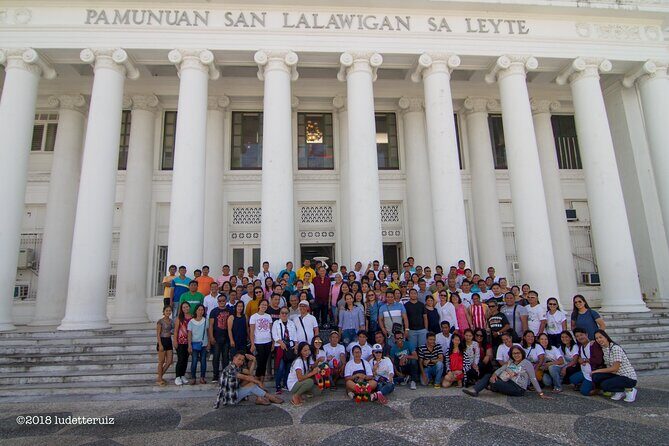
You start at the Sto. Nino Shrine and Heritage Museum, where the tour begins with religion, art, and local identity. There’s an admission ticket included here, so you don’t start the day hunting for entrances or extra fees.
What makes this stop interesting is the museum angle: it includes art collections gifted to the Marcos family during the time of the late President Ferdinand Marcos Sr. That detail adds a layer beyond “church museum.” It shows how national politics and local culture can leave physical traces in the places you visit.
Plan on about 30 minutes. This is not a marathon museum stop, but it gives you context you’ll feel later when you visit other churches and memorials on the route.
Stop 2: Leyte Landing Memorial and the MacArthur Connection

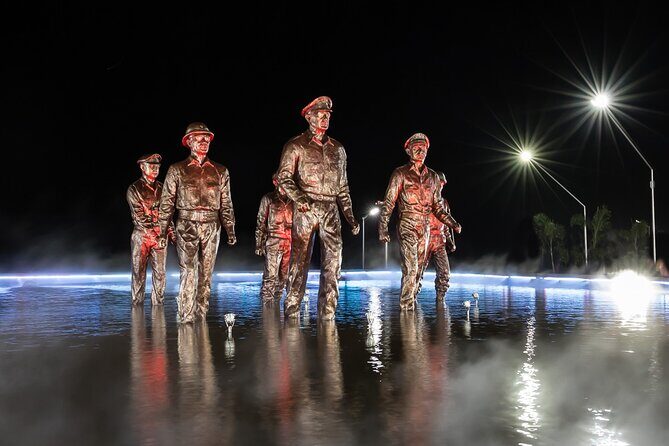
Next comes the Leyte Landing Memorial, built to commemorate General Douglas MacArthur’s landing in Leyte Gulf. This is part of the campaign to liberate the Philippines from Japanese occupation, and the landing is linked with the largest naval battle in the region during WWII.
It’s a short stop—about 15 minutes—and that’s a good thing. You don’t get stuck for long at one point. You get the meaning, then move on so the story stays connected instead of turning into a long detour.
If you care about the landing history, this stop helps you understand the rest of the day. The route isn’t random: it keeps returning to how WWII changed Leyte and how those events echo into later memorials.
Stop 3: Palo Cathedral (Metropolitan Cathedral of Our Lord’s Transfiguration) and WWII Survival
In Palo, you’ll visit the Metropolitan Cathedral of Our Lord’s Transfiguration, commonly called the Palo Cathedral. This one is in the center of Palo, and it’s a quick 15-minute stop.
Here’s why it hits: during World War II, the cathedral was converted into a hospital for wounded Allied Forces soldiers. So while you’re standing in a religious space, the tour frames the building as a wartime refuge—something physical that helped people live through an era of chaos.
This is also a good stop for your own eye. Notice the building and how churches often function as community anchors. Even when they get damaged or repurposed, they remain symbols people return to.
Stop 4: M/V Eva Jocelyn Shrine Makes Haiyan Feel Real
Then you shift from WWII to Super Typhoon Haiyan (2013). The M/V Eva Jocelyn Shrine is tied directly to the shipwrecks caused by the storm.
The basic story is powerful and specific: 17 ships ran aground during Haiyan, and the M/V Eva Jocelyn is one of them. The tour explains that the ship was pushed into the middle of a street by the water surge. This is not a vague memorial. It’s tied to a tangible object and a concrete image of what the storm did.
Expect about 15 minutes here. It’s short, but it’s the kind of stop that changes how you look at everything else afterward—because you can’t treat the day like only “history.” You’re standing in the footprint of a disaster that still shapes local memory.

Stop 5: Tacloban City Hall Hilltop Views (Cancabato Bay)
Tacloban City Hall is up on a hill, and the short stop—around 15 minutes—is partly for history and partly for orientation.
The city hall sits above Cancabato Bay, so this is a rare moment on the route where you can reset and take in the view. It’s practical sightseeing: you get a sense of where the city sits, and you can connect that to the memorial themes you’ve been hearing about all morning.
If you like photos, this is one of your best bets, because the viewpoint naturally gives you scale. Bring your camera, and also bring a moment of patience for sun and wind.
Stop 6: Leyte Provincial Capitol Building and Government in Wartime
Next is the Leyte Provincial Capitol Building in Tacloban. The tour frames it as a historic government site: it served as Leyte’s seat of government until 2019, and it also served as the seat of the Philippine Commonwealth government from October 23, 1944 to February 25 (as listed on the tour description).
That date range keeps the wartime thread alive. You’re not only seeing how the war hit civilians; you’re seeing how governments tried to function while conditions were unstable.
Like several other stops, it’s about 15 minutes. This keeps the day moving, but it also means you should pay attention when the guide links the building to what was happening around it.
Stop 7: San Juanico Bridge, Once the Longest in the Philippines
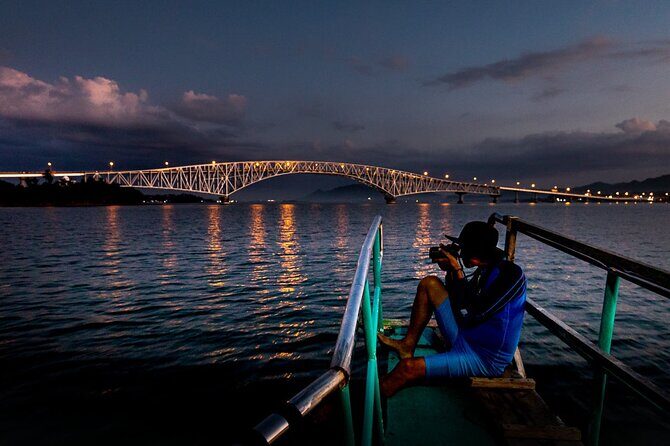
You’ll then stop at San Juanico Bridge, described as once the longest bridge in the Philippines at 2.16 kilometers, spanning seawater between Leyte and Samar.
This stop is both iconic and useful. It’s the kind of landmark that helps you understand the geography of Leyte: bridges here aren’t just pretty—they connect communities and shape travel routes. The tour also treats it as a signature site for Leyte and Samar.
At 15 minutes, you won’t exhaust it. But you’ll come away with a clear sense of why it matters and how to point it out later when you talk about the region.
Stop 8: Madonna of Japan and the Symbol of Peace
The Madonna of Japan monument is one of the more emotional places on the list, but not in a heavy-handed way. It’s presented as a symbol of peace between Filipinos and Japanese people, erected 33 years after WWII in memory of brave soldiers who fought and died in battle.
It’s a short 15-minute stop, yet the message is lasting. You’re moving from wartime suffering to a monument built to promote reconciliation. That contrast is one of the reasons this tour feels more than a set of sightseeing stops.
Stop 9: Sto. Nino Church in Tacloban and Faith After Storms
You finish with Sto. Nino Church in Tacloban. This stop is described as a landmark that has battled typhoons and earthquakes over the years.
During Super Typhoon Haiyan, the church was partially damaged, but it provided cover—meaning it served as shelter when people needed protection most. Expect another 15-minute visit.
It’s a fitting end point. The whole day has been about survival, rebuilding, and how communities keep holding onto faith and identity. Standing in a church that has faced repeated disasters gives the day an emotional closure that isn’t just dramatic storytelling.
Price and Value: Is $51 for 6–7 Hours Fair?
At $51 per person, this tour is priced like a solid value day, especially because you get more than just transportation. You receive an air-conditioned vehicle, lunch, and entry included for the first stop at the Sto. Nino Shrine and Heritage Museum.
Many of the other sites are listed with free admission, so your costs stay predictable. And because it’s private, you’re not squeezed into a “everyone in one van” feeling—your group stays together.
The bigger value question is time and mental energy. A route that touches multiple major themes—WWII landing, wartime hospital conversion, typhoon shipwreck memories, and peace monuments—can easily turn into a chaotic self-planned day. Here, you get a guide to connect the dots and keep you from missing the meaning.
Logistics That Matter on a Day Like This
This tour runs roughly 6–7 hours, including travel between stops. Starting at 8:30am helps you beat the worst heat and light conditions, and it also means you’re less likely to run behind schedule.
Pickup is offered, and you travel by AC vehicle, which matters in Tacloban and Palo where weather can change quickly. You should also plan for mostly walking inside or around key points, with short stops rather than long hikes.
The tour description notes that it requires good weather. So if the day looks stormy, don’t assume the same level of comfort and photo time.
Who This Tour Fits Best
This is a great match if you want history with a human pulse. It fits:
- people who care about World War II in the Philippines, especially Leyte’s role in liberation
- people who want to understand Super Typhoon Haiyan beyond the headlines
- anyone interested in religious landmarks that doubled as community infrastructure during crisis
- visitors who like clear, story-driven guiding rather than rapid-fire sightseeing
It might be less ideal if you only want light, casual sightseeing and don’t want emotionally heavy themes. This route doesn’t sugarcoat what Haiyan did, and that’s part of its strength.
Tips to Get More From the Day (Without Overthinking It)
If you’re the type who likes context, arrive ready to ask questions. The best parts of the tour are the story connections, and a good guide will steer you into understanding why these places matter.
In the reviews, kuya Jeff is singled out as friendly and well-prepared, and that’s consistent with the way this tour is built: he’s not just naming stops, he’s helping you connect WWII and Haiyan through Leyte’s lived experience.
If you want the best photos, keep your phone/camera ready for the hilltop Tacloban City Hall viewpoint and the San Juanico Bridge moment. Those are your high-return picture windows on a day that also includes reflective stops.
Should You Book This Tour?
Book it if you want one guided day that explains Leyte’s story through WWII, Haiyan, churches, and iconic landmarks, with lunch included and a guide who can make the details click. The route is short at each stop, but the themes build in a way that feels coherent instead of scattered.
Skip it if you prefer lighter topics, dislike emotionally intense disaster history, or you’re traveling when weather is unstable and you’d rather keep a low-risk plan.
Overall, this is a practical way to see Tacloban and Palo while learning what happened there and why people still remember it.
FAQ
How long is the Tacloban and Palo historical heritage guided tour?
The tour is about 6 to 7 hours, including travel time from each attraction.
What time does the tour start?
The start time is 8:30am.
Is pickup included?
Pickup is offered as part of the experience.
What’s included in the price?
The tour includes an air-conditioned vehicle and lunch. A mobile ticket is also provided.
Are admission tickets included or extra?
Admission ticket for Sto. Nino Shrine and Heritage Museum is included. Other listed stops on the route are marked free admission.
Is this a private tour?
Yes. It is a private tour/activity, and only your group will participate.
What sites will we visit?
You’ll visit Sto. Nino Shrine and Heritage Museum, Leyte Landing Memorial, Palo Cathedral, M/V Eva Jocelyn Shrine, Tacloban City Hall, Leyte Provincial Capitol Building, San Juanico Bridge, Madonna of Japan, and Sto. Nino Church.
Is the tour suitable for most travelers?
The tour notes that most travelers can participate.
What happens if the weather is poor?
The experience requires good weather. If it is canceled due to poor weather, you’ll be offered a different date or a full refund.
What is the cancellation window for a full refund?
You can cancel up to 24 hours in advance for a full refund.