REVIEW · PANAY ISLAND
WaterColors – Open Water Diver Certification in Boracay
Book on Viator →Operated by WaterColors (HK) Limited · Bookable on Viator
Getting your PADI open-water certification on Boracay sounds simple. Then you see the full 4-day plan—and it turns into a real, confidence-building course. What makes WaterColors interesting is the way it moves from classroom work to confined water practice, then out into the open sea, all under a PADI-qualified instructor.
I especially like two things about this setup. First, the training flow is structured and paced: theory, then skill practice in shallow water, then open-water sessions on a boat. Second, the instructors stand out for the same traits people keep praising—calm explanations and hands-on support—with names like Jimmy and Darwin mentioned again and again.
One consideration: you’ll have to do the paperwork and health questionnaire in advance, including sharing your height and weight at booking and bringing the required forms. If that part isn’t ready, it can slow you down before the course even starts.
In This Review
- Key Highlights You’ll Actually Feel
- Why Boracay Works for PADI Open-Water Certification
- WaterColors on White Beach: Location and What It Means for Your Schedule
- What’s Included (and Why That Value Matters)
- Day 1: Registration, Theory, Confined Water Skills, Then Your First Open-Sea Session
- Day 2: More Confined Practice, Then More Open-Water Sessions
- Day 3: Theory, Confined Training, and Open-Water Session 4
- Day 4: Skills Catch-Up, Final Exam, Certification Paperwork, Then Celebrate
- Instructor Support: The Names You’ll Hear (Jimmy, Darwin) and the Style That Pops
- Equipment, Transport, and the Pace of a 15-Person Max Group
- Price and Value: What You’re Paying For at $545
- Practical Tips Before You Go (So Day 1 Doesn’t Get Weird)
- Who Should Book This Course (and Who Might Hesitate)
- Should You Book WaterColors for PADI Open-Water Certification in Boracay?
- FAQ
- FAQ
- How many days is the WaterColors open-water certification course?
- What does the course cost per person?
- What’s included in the price?
- What’s not included?
- Where is the meeting point in Boracay?
- What age can participate, and how many people are in a group?
- Do I need medical paperwork before starting?
- Can I fly and then start the course within 24 hours?
- What happens if weather cancels the experience, or if I need to cancel?
Key Highlights You’ll Actually Feel
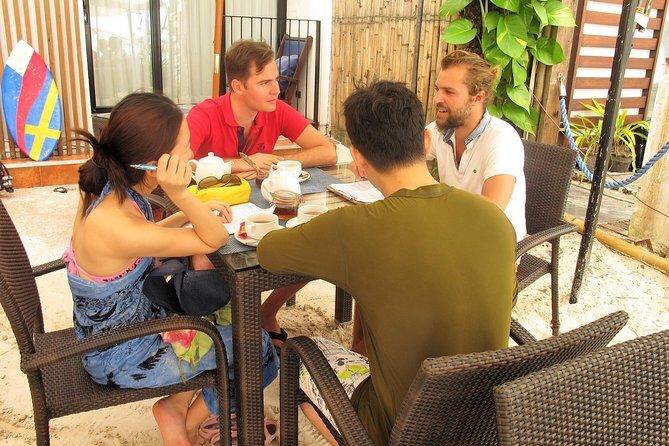
- Small group size (max 15) helps you get more attention during skills practice.
- Classroom → confined water → open sea is a clear ladder of comfort and control.
- PADI materials + certification processing are handled for you, not just taught.
- Gear and boat transport are included, so you’re not chasing logistics day by day.
- Instructor style comes up repeatedly (Jimmy, Darwin), described as patient, relaxed, and focused on safety.
- Day 4 is catch-up time, which matters if anything slips due to conditions or your pace.
Why Boracay Works for PADI Open-Water Certification
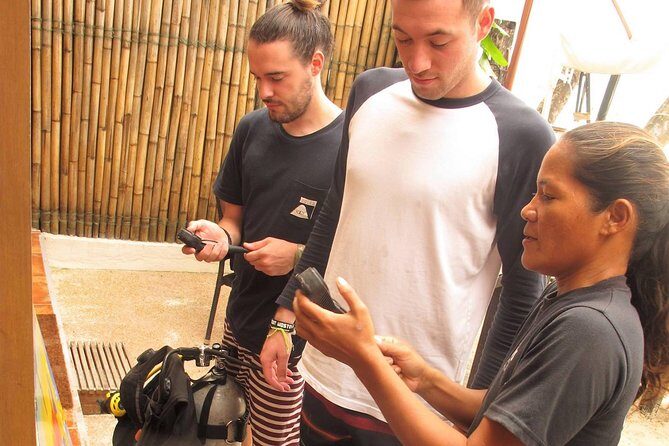
Boracay is one of those places where scuba training can feel like more than a checkbox. You’re on Panay Island with easy access to the coast, and the course is designed specifically around getting you qualified so you can enjoy the island’s underwater areas with confidence.
The big practical benefit is that the course matches the environment. Instead of jumping straight to open sea, you start in the classroom and then build skills in controlled, shallow settings before you go farther out. That matters because open-water work is new for most people, and the course plan gives you a repeatable path to learn it.
You can also read our reviews of more tours and experiences in Panay Island.
WaterColors on White Beach: Location and What It Means for Your Schedule
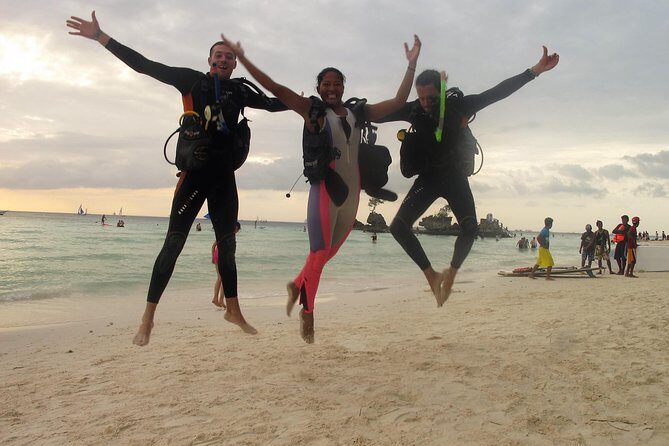
You meet at WaterColors on White Beach, Station 1, near Willy’s Rock and by Balabag Plaza. That’s a convenient part of Boracay because you’re not tucked far away from the main strip—useful when you’re doing an intensive multi-day course and don’t want extra travel friction.
The resort is listed as open 8:00 AM to 8:00 PM, and the meeting point is described as near public transportation. Translation: you’re more likely to be able to get to training without scrambling for private rides every day.
Also, the experience is set up for a maximum of 15 travelers, which tends to create a more manageable pace. If you prefer training that doesn’t feel crowded, this cap is a real plus.
What’s Included (and Why That Value Matters)
At $545 per person, the price can feel steep if you’re comparing it to a casual day tour. But for a certification course, what matters is what you don’t have to organize yourself.
Here’s what’s included:
- A PADI-qualified scuba instructor
- PADI course materials and certification processing
- Scuba equipment
- Boat transport to and from the training areas
This is the kind of package where you show up and you’re set up. You’re not coordinating equipment rentals, you’re not arranging transport each training day, and you’re not paying separately for course materials and certification paperwork processing. That’s where the real value lives.
Day 1: Registration, Theory, Confined Water Skills, Then Your First Open-Sea Session
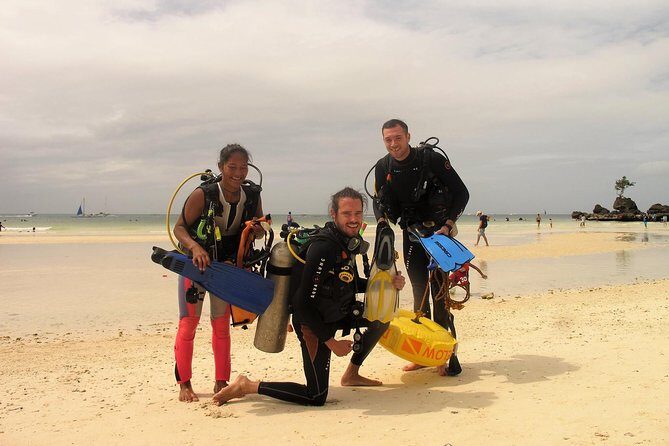
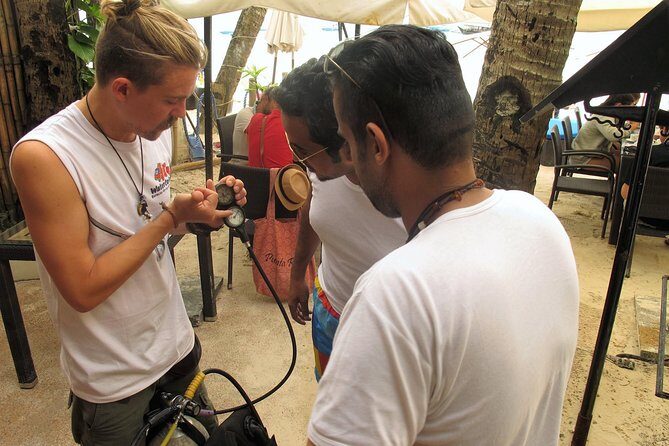
Day 1 starts with registration and documentation at 10:00 AM, followed by dive theory work that includes a briefing, video, reading, knowledge reviews, quizzes, logbook steps, and a debrief. Even if you’re not the type who loves tests, this structure is useful because it turns scuba into skills you can follow, not vibes you guess at.
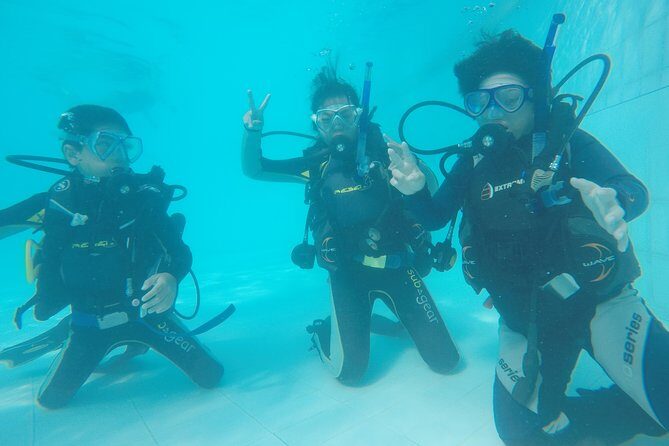
After a lunch break, you shift to confined water training. The instructor brings you to the beach for shallow practice and then moves you to water deep enough that you can’t stand. That progression is key: you learn the motions in a safer environment before you’re forced to manage everything while you’re fully supported by the equipment.
Then you head out for your first open-water session from a boat at the depth required for the course. By the end of the day, you’re also logging what you did and wrapping up theory notes.
Practical takeaway: Day 1 is about getting your bearings—mentally and physically. If you want a calmer start, plan to arrive rested and ready for instruction, not sightseeing mode.
Day 2: More Confined Practice, Then More Open-Water Sessions
Day 2 begins again with confined water training at 8:00 AM, so you’ll keep building on what you started learning yesterday. Then you move into your open-water session 2 at 9:00 AM.
Midday includes more theory work, lunch, then another confined water training block at 1:30 PM, followed by open-water session 3 at 3:00 PM. The day ends with logging and more theory review.
This “practice twice, then apply it” rhythm is why this course is set up to help you pass, not just float. You’re not only learning in one place—you’re learning the same skills in shallow water and then repeating what you practiced in open sea conditions.
Possible drawback to expect (not a dealbreaker): it’s a full schedule. If you dislike long training days or need lots of downtime, you’ll want to plan your Boracay evenings accordingly.

Day 3: Theory, Confined Training, and Open-Water Session 4
Day 3 starts with theory at 8:00 AM, then confined water training at 10:00 AM. After lunch, you go out for open-water session 4 at 1:00 PM.
The afternoon is built for logging and catch-up theory, or other items that might not have been fulfilled earlier. That’s an important detail: the course doesn’t treat you like a machine. Your instructor can use the extra time to make sure the training requirements are completed in a way that fits how your learning day goes.
If you’re a slower learner or you had an off morning, this flexibility is a big comfort.
Day 4: Skills Catch-Up, Final Exam, Certification Paperwork, Then Celebrate
Day 4 runs from 8:00 AM to 5:00 PM, and it’s primarily there to catch up on any skills, sessions, or theory you didn’t complete yet. Then there’s a final exam and paperwork for certification.
By the end, the experience is meant to end with the obvious payoff: you’re done, you’ve earned the credential, and you can celebrate. That matters because open-water certification is one of those activities where the endpoint is very clear—you’re not just paying for a day out.
Real-world tip: plan a calm last day. Don’t pack your evening with heavy plans right after the exam and final processing.
Instructor Support: The Names You’ll Hear (Jimmy, Darwin) and the Style That Pops
Across the feedback, the most praised theme is the instructor experience—especially the “calm, personal, relaxed” style. Names like Jimmy and Darwin come up repeatedly, with people describing clear explanations, patience, and a strong focus on safety.
Jimmy is described as humorous and supportive, with training that makes first-timers feel welcome and comfortable. Darwin is praised for patient instruction and attention, especially for people returning after a long break.
That’s not just nice to hear. It affects how quickly you learn. In a course like this, you’re juggling new physical tasks while managing nerves. When your instructor stays steady and checks that you’re okay, you spend less energy worrying and more energy learning.
Also, the center mentions staff like Martin and Ethel showing a warm, welcoming attitude when people stop by. That kind of shop culture matters when your schedule is intense—small comforts go a long way.
Equipment, Transport, and the Pace of a 15-Person Max Group
You’ll have scuba equipment provided, and you’ll have boat transport included for the training areas. That reduces the “what do I do now?” stress that can otherwise drain the fun out of an active course.
The group cap of 15 travelers is also meaningful. Even if you’re not thinking about it at first, in multi-stage learning, smaller groups often mean fewer delays and more time spent getting feedback instead of waiting.
And because the course is built around multiple sessions across four days, the pace can feel steady rather than chaotic. That’s a good thing when you’re learning skills for the first time.
Price and Value: What You’re Paying For at $545
Let’s talk money like a real traveler: $545 isn’t nothing. But a PADI open-water certification course isn’t a sightseeing activity—you’re paying for instruction, materials, certification processing, equipment use, and boat transport over multiple days.
If you were to DIY parts of this, you’d likely end up spending more than you expect once you add equipment rentals, transport, and course materials. Here, those core items are included, which keeps your budget cleaner.
What to watch: food and drinks are not included unless specified, and souvenir photos cost extra. Hotel transfers aren’t included either, and towels are also listed as not included—so you’ll want to bring your own towel or plan to grab one before training days.
Practical Tips Before You Go (So Day 1 Doesn’t Get Weird)
You’ll need to do the PADI medical paperwork before the course. The program asks you to complete and sign the PADI Diver Medical Form and also complete a health questionnaire through the provided links, then print and bring it to WaterColors.
You also have to advise your height and weight at booking. That’s not random admin—it helps the team plan what you’ll need for safe, appropriate gear setup.
One more timing consideration: diving within 24 hours of flying is not recommended. If you’re flying into Boracay the same day you start, you might need to adjust your schedule so you’re not doing your first underwater sessions while your body is still on airport time.
Finally, the experience requires good weather, and the schedule uses open sea time. If conditions shift, day order or timing can adjust.
Who Should Book This Course (and Who Might Hesitate)
This course fits best if you:
- Want an open-water certification that’s built around classroom learning plus real practice in confined water and open sea
- Like structured training that gives you multiple chances across four days
- Prefer a shop environment where people repeatedly mention patient instructors and personal support
You might hesitate if you:
- Don’t want to deal with medical paperwork and a pre-course health questionnaire
- Get stressed by full-day schedules
- Assume meals and transfers are covered (they aren’t)
Should You Book WaterColors for PADI Open-Water Certification in Boracay?
If you want a clear path from theory to open sea, with PADI-qualified instruction and a course format that supports first-timers, I think WaterColors is a strong choice. The value is better than it looks at first glance because the essentials—instructor, materials, equipment, and boat transport—are included.
If you can handle the prep work (forms, height/weight details, printed documents) and you’re okay with a packed schedule, booking makes sense. If not, you’ll probably feel the course pressure more than you need to.
FAQ
FAQ
How many days is the WaterColors open-water certification course?
The course runs for 4 days (approx.), starting with registration and theory, then progressing through confined water practice and open-water sessions, with a final exam and certification paperwork on the last day.
What does the course cost per person?
The price is listed as $545.00 per person.
What’s included in the price?
Included items are a PADI scuba instructor, PADI course materials and certification processing, use of scuba equipment, and transport by boat to and from the training spot.
What’s not included?
Not included are food and drinks (unless specified), souvenir photos, hotel transfers, and towels.
Where is the meeting point in Boracay?
The meeting point is at WaterColors Boracay on Boracay Highway Central White Beach, Station 1, near Willy’s Rock and by Balabag Plaza, beachfront area.
What age can participate, and how many people are in a group?
The minimum age is 10 years, and the maximum group size is 15 travelers.
Do I need medical paperwork before starting?
Yes. You must complete the required PADI Diver Medical Form and also complete a health questionnaire using the links provided, then print and bring the documents to WaterColors.
Can I fly and then start the course within 24 hours?
It’s stated that diving (scuba training) within 24 hours of flying is not recommended.
What happens if weather cancels the experience, or if I need to cancel?
The experience requires good weather. If it’s canceled due to poor weather, you’ll be offered a different date or a full refund. You also have free cancellation up to 24 hours in advance for a full refund. If you cancel less than 24 hours before the start time, the amount paid is not refunded.