REVIEW · CEBU
3-Hour Small Group Cebu City Tour
Book on Viator →Operated by Cebu Trip Tours · Bookable on Viator
Cebu’s stories click fast in three hours. This small-group tour strings together Cebu City’s big heritage stops with a simple plan, so you can walk in and understand what you’re seeing. You’ll move between landmarks without having to hunt buses, deal with confusing routes, or guess what matters most.
What I like most is the guide-led pacing—and the added touch of a photographer who helps with group shots. I also appreciate the convenience of pickup and drop-off in central Cebu, plus air-conditioned transport that keeps the heat from stealing your focus.
One thing to keep in mind: the schedule is tight, so this route does not include extra classics like Fort San Pedro. If you want that specific stop, plan to add it separately.
In This Review
- Key points before you go
- The “orientation” value of a 3-hour Cebu heritage route
- Getting picked up (and dropped) in central Cebu
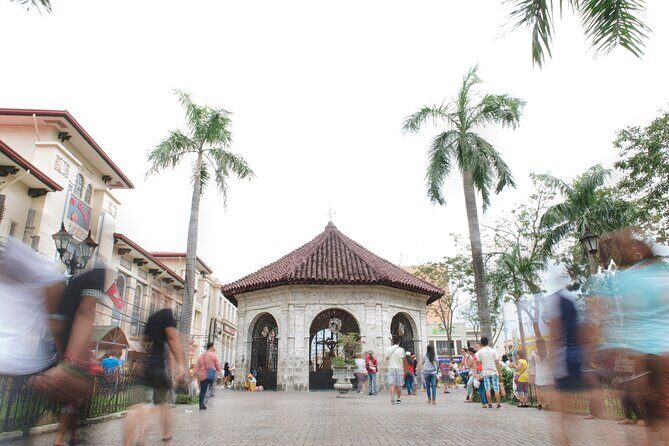
- Magellan’s Cross: the landmark you’ll understand in minutes
- Basilica Minore del Santo Niño: church rules that affect what you wear
- Taoist Temple in Beverly Hills: where Chinese Cebu shows up clearly
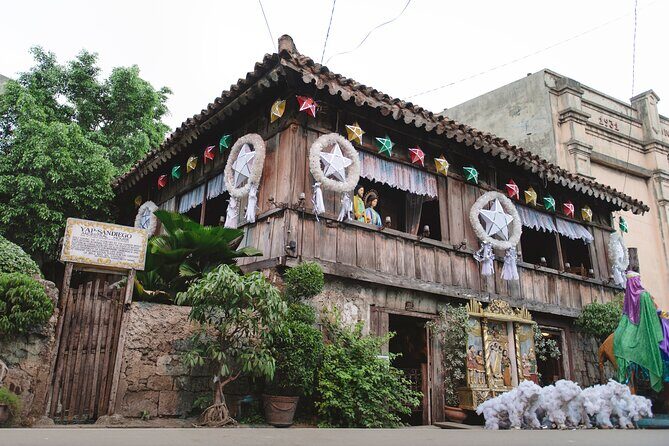
- Yap Sandiego Ancestral House: 17th-century Cebu through one family story
- Colon Street, Heritage of Cebu Monument, and Fuente Osmeña Circle
- Colon Street
- Heritage of Cebu Monument
- Fuente Osmeña Circle
- Price and value: what $38 buys you (and what it doesn’t)
- What the best reviews usually point to (and why it matters)
- The main catch: a tight plan means some popular extras are out
- Who should book this tour—and who should not
- Should you book the 3-Hour Small Group Cebu City Tour?
- FAQ
- How long is the 3-Hour Small Group Cebu City Tour?
- How many people are in the group?
- What are the main stops on the tour?
- Is pickup offered, and where?
- Where does the tour start and end?
- Are entrance fees included?
- Is food or drinks included?
- What dress code should I follow?
- Is free cancellation available?
Key points before you go
- Max 12 people: small-group energy without feeling like you’re in a crowd.
- Central pickup and drop-off: you start in Cebu City and end at Ayala Center Cebu.
- Well-chosen core sites: Magellan’s Cross, Santo Niño Basilica, Taoist Temple, and more.
- Admissions mostly handled: some sites are free, while others are listed as included.
- Photo help included: a photographer joins the guide to keep pictures easy.
The “orientation” value of a 3-hour Cebu heritage route
If Cebu feels big and messy when you’re on your own, this tour is built to fix that. You get a guided route that hits the landmarks people actually talk about—Magellan’s Cross, the Santo Niño Basilica, a Taoist Temple, a family ancestral house, and a few key streets and monuments—without forcing a full-day commitment.
The main win is how efficiently time is used. Each major stop is short (often around 10–15 minutes), which means you do not get lost in details. Instead, you get the big story behind each place, then you’re free to come back later on your own if something grabs you.
And yes, that “short and sweet” style will suit some people more than others. If you prefer slow museum-style pacing, three hours can feel like a sprint. But if you want to get your bearings fast and cover the highlights, it’s a practical fit.
You can also read our reviews of more city tours in Cebu


Getting picked up (and dropped) in central Cebu
This tour starts at SM City Cebu on Juan Luna Avenue at 8:00 am. You’ll end at Ayala Center Cebu, and the tour provides drop-off there.
That matters because Ayala Center Cebu is a convenient hub for food, coffee, ATMs, and onward plans—especially if you’re staying somewhere in Cebu City. The tour also includes an air-conditioned vehicle, so you’re not sweating through the whole day’s sightseeing plan.
Two pickup notes to watch:
- Pickup is included for Cebu City hotels.
- Mactan Resort pick up and drop off is not included, so you’ll want to plan your connection into Cebu City.
Also, you’ll use a mobile ticket, which is handy if you hate digging through printed vouchers.
Magellan’s Cross: the landmark you’ll understand in minutes
You’ll start at Magellan’s Cross, tied to the arrival of Portuguese and Spanish explorers ordered by Ferdinand Magellan in March 15, 1521.
Here’s what makes this stop work on a short itinerary: the cross isn’t just a photo spot. Your guide can connect it to the moment European contact took a serious turn in Cebu. You’ll see a Christian symbol that people treat like a historical anchor, which makes it easier to understand why later sites in the city carry similar colonial-era weight.
Admission is listed as free, and the stop is around 10 minutes. That’s enough time to:
- get a clear look
- take photos
- hear the quick context
If you like religion history, you might want to return later for a longer look. But for a first sweep of Cebu, this works.
Basilica Minore del Santo Niño: church rules that affect what you wear
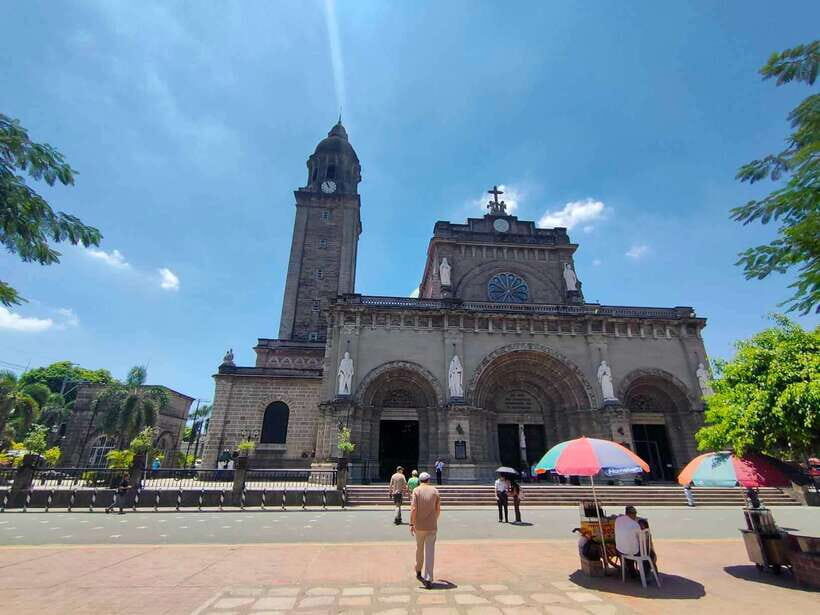
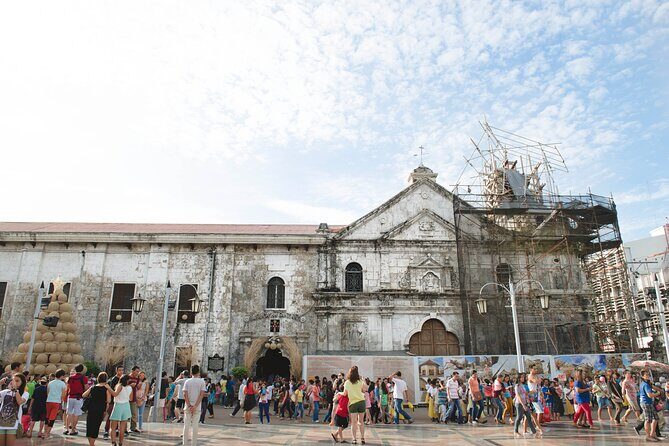
Next is Basilica Minore del Santo Niño, described as the oldest Roman Catholic church in the Philippines. It’s connected to the spot where the Santo Niño de Cebu image was found during Miguel López de Legazpi’s expedition.
This stop tends to be the most personally memorable for many people because it blends history with living religious practice. In other words, it’s not just old stones behind glass. It’s a working church space.
One practical detail: sleeveless shirts are an issue here. The listing flags that rule directly, so you should bring something that covers your shoulders—an easy light layer works great in Cebu’s heat.
Time is about 15 minutes, and admission is listed as free. That’s short, so don’t expect a long sit-down experience. Think of it as a guided orientation to why this church matters, then keep moving.
Taoist Temple in Beverly Hills: where Chinese Cebu shows up clearly
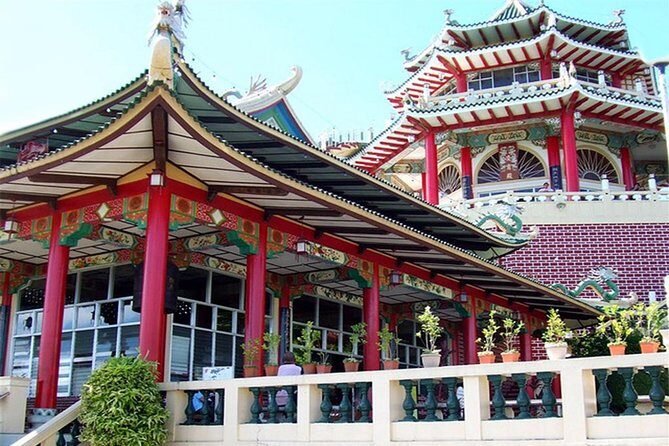
The tour then heads to the Philippine Taoist Temple, located in the Beverly Hills Subdivision area of Cebu City.
What I like about putting this on the same route as Santo Niño is that it shows Cebu’s layers. In a single morning, you go from Spanish-era Christian roots to an active Chinese community site.
The temple is described as having been built by Cebu’s substantial Chinese community in 1972. Admission is listed as included, and the stop is about 15 minutes.
This is a good place to slow down just a touch, even if the time is short. Look at the details and symbols while your guide explains what they represent. If you’re the kind of person who reads about cultural heritage but struggles to place it on a map, this stop helps.



Yap Sandiego Ancestral House: 17th-century Cebu through one family story
Then you’ll visit Yap Sandiego Ancestral House, a family-owned landmark with dates placed between 1675 and 1700. It was originally owned by Chinese merchant Don Juan Yap and his wife Doña Maria Florido.
This is where the tour shifts from famous monuments to everyday-history energy. A heritage house like this is powerful because you can picture the people behind the big events. It also helps you understand how commerce and families shaped the city over centuries.
The stop is about 15 minutes, and admission is listed as included.
For the short time window, this stop does best when you keep your questions simple:
- What does the architecture suggest about wealth and trade?
- How did these families fit into Cebu’s bigger story?
Even if you don’t become a history nut by the end, you’ll leave with a clearer sense of how older Cebu worked.
Colon Street, Heritage of Cebu Monument, and Fuente Osmeña Circle
After the ancestral house, the tour moves through a set of city landmarks that are quick but meaningful—basically the “walk and connect the dots” part of the morning.
Colon Street
You’ll pass Colon Street, described as a historical street in downtown Cebu City often called the oldest and shortest national road in the Philippines, named after Cristóbal Colón. Even if you only get a brief look, it’s useful because it ties directly to the theme of Spanish influence across the city.
Heritage of Cebu Monument
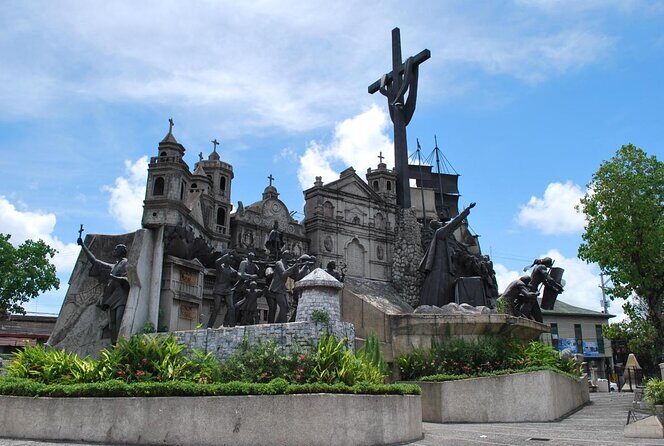
Next comes the Heritage of Cebu Monument, described as a tableau of sculptures made of concrete, bronze, brass, and steel. It shows scenes related to events and structures tied to Cebu’s history.
This stop is listed as free and around 10 minutes. The big value is interpretation: you’re not just staring at materials. You’re seeing a “timeline made into sculptures,” which is perfect for a short tour.
Fuente Osmeña Circle
Finally, you’ll reach Fuente Osmeña Circle, in uptown Cebu City. It’s described as a rotunda park with a fountain in the center and a key landmark for the Queen City of the South.
Time here is not clearly stated in the snippet, but it functions as a good landing point in the route. It’s also visually pleasant after several heritage-heavy stops.
Price and value: what $38 buys you (and what it doesn’t)
At $38 per person for a roughly 3-hour experience, this tour is priced in the “easy yes” range for most first-timers. You’re paying for:
- guided routing through multiple key sights
- a small group size (up to 12 travelers)
- an air-conditioned vehicle
- pickup and drop-off in central Cebu City
- a coordinator
- a mix of free and included admissions at the stops listed
What you should not expect at this price:
- food and drinks (not included)
- extra stops beyond the set route
So if you want a one-ticket morning that covers the most talked-about heritage spots, you’re getting real value. If you’re the type who wants to linger at each landmark for an hour, this price is still fair, but you’ll likely feel the pressure of the schedule.
What the best reviews usually point to (and why it matters)
The standout praise here is pretty clear: the guide support is strong, and the tour flow feels efficient even with limited time. One review specifically called out Chen as polite and an excellent guide, plus the presence of a photographer. That combination can make a big difference on short itineraries—especially when you’re trying to collect memories while still learning the meaning behind each stop.
In plain terms: it helps you avoid the classic problem of a whirlwind tour that gives you photos but no context. Here, you’re far more likely to leave with a mental map and a few stories you can repeat later.
The main catch: a tight plan means some popular extras are out
The most practical downside is also the simplest: with only three hours, the route cannot include everything people might hope for.
A common example is Fort San Pedro, which is not part of this stated set of stops. That’s not a mistake—it’s how this tour is built. If Fort San Pedro is a must for you, you’ll want to schedule it separately rather than counting on it here.
The other consideration is shopping time. One note mentioned that souvenir shopping spots weren’t ideal and that the tour leans toward an Island Souvenirs store. If you’re the kind of shopper who needs variety, plan to do most of your browsing later around Ayala or other parts of Cebu City.
Who should book this tour—and who should not
This tour is a great match if:
- you want a guided intro to Cebu City’s key heritage landmarks
- you prefer small group pacing (12 max) over big bus chaos
- you’re short on time and need a plan that reduces guesswork
- you like getting context so your photos mean something
You might skip it or add extra stops separately if:
- you want long, slow time inside each site
- Fort San Pedro is one of your top must-dos
- you’re hoping for a major shopping spree as part of the tour
Should you book the 3-Hour Small Group Cebu City Tour?
I think this is a smart booking for most first-timers who want their morning to count. The value is strongest in the combination of small group size, guided stops, air-conditioned transport, and admissions handled across several major landmarks.
If you go in knowing it’s a quick route (not a full-day deep slow experience), you’ll get a lot out of it. And the fact that it ends at Ayala Center Cebu makes it easy to turn the rest of your day into food, shopping, or a self-guided return visit to any place you want to linger at.
Book it when you want orientation. Add Fort San Pedro and extra browsing when you want more.
FAQ
How long is the 3-Hour Small Group Cebu City Tour?
It runs for approximately 3 hours.
How many people are in the group?
The tour is limited to a maximum of 12 travelers.
What are the main stops on the tour?
The tour includes Magellan’s Cross, Basilica Minore del Santo Nino, the Philippine Taoist Temple, Yap Sandiego Ancestral House, Colon Street, Heritage of Cebu Monument, and Fuente Osmeña Circle.
Is pickup offered, and where?
Pickup is offered from Cebu City hotels, but Mactan Resort pickup and drop-off is not included.
Where does the tour start and end?
It starts at SM City Cebu on Juan Luna Avenue and ends with drop-off at Ayala Center Cebu in Cebu Business Park.
Are entrance fees included?
Admission is listed as free for Magellan’s Cross, Basilica Minore del Santo Nino, and the Heritage of Cebu Monument. Admission is included for the Philippine Taoist Temple and Yap Sandiego Ancestral House.
Is food or drinks included?
No. Food and drinks are not included.
What dress code should I follow?
The dress code is smart casual, and you should wear comfortable walking shoes. For the basilica, sleeveless shirts are flagged as an issue.
Is free cancellation available?
Yes. You can cancel for free up to 24 hours in advance for a full refund.