REVIEW · MANILA
2 Days Private Bataan Tour with Corregidor
Book on Viator →Operated by Jb Quemado · Bookable on Viator
Two days, one WWII story. I love the private car and how guide JB Quemado connects each stop into one clear chain of events, and I love the Corregidor time with extensive battlefield discussion on-site. One consideration: the schedule is emotionally heavy, and the Corregidor day depends on good weather.
This is built for people who don’t just want photos. You start early, you move efficiently between sites, and you get context that makes the places feel less like names on a map and more like decisions, routes, and consequences. The big advantage is privacy: it’s your group only, with a guide and driver handling the pace.
If you’re coming in as a history buff, this works especially well. If you prefer a slow, light day with coffee stops and minimal context, this probably isn’t the vibe.
In This Review
- Key things I’d plan for
- Why this Bataan + Corregidor route feels different than a standard tour
- Day 1: Capas, museum stops, and the Death March trail
- Capas National Shrine (Camp O Donnel) and POW history
- Bamban Museum of History: WW2 artifacts with a historian’s lens
- Bataan World War II Museum: the surrender site of Edward King
- Zero Kilometer Death March marker: where the route begins
- Day 2: Corregidor first thing, then Mount Samat and San Fernando
- Corregidor Island: the island fortress with on-the-ground discussion
- Mount Samat National Shrine (Dambana ng Kagitingan): final battle context
- San Fernando: the POW loading station
- What you’re really paying for: value at $1,150 per person
- Timing, tickets, and how the day actually runs
- Who this tour is best for (and who should think twice)
- Should you book this Bataan and Corregidor private tour?
- FAQ
- What is the duration of the Bataan tour with Corregidor?
- Where does the tour take place?
- What time does the tour start?
- Is this a private tour?
- Does the tour include pickup and mobile tickets?
- Which stops have admission included?
- Is Corregidor dependent on weather?
- What is the cancellation policy?
Key things I’d plan for
- Private, you-only group setup: your itinerary runs on your schedule, not a big bus herd.
- Guide-led battlefield talk at Corregidor: the discussions are the point, not a side note.
- Two linked regions across two days: Bataan memorial sites on day one, Corregidor on day two.
- Strong anchor stops with included entry: Capas, Bataan World War II Museum, and Mount Samat have admission included.
- Early start plus weather dependency: plan for a 7am start and keep flexibility in mind for Corregidor.
Why this Bataan + Corregidor route feels different than a standard tour
There are WWII tours that list locations. This one feels like it explains a sequence. You’re not bouncing around randomly; you’re walking the arc from surrender and captivity to the final stakes on Bataan and the island fortress of Corregidor.
I like that the pacing has structure. Day one sets the stage with the Bataan Death March trail and key sites tied to prisoner experiences. Day two then shifts to Corregidor, where the terrain and fortifications do a lot of the talking—especially once you have context from your guide.
Also, the private format matters more here than on a typical sightseeing day. When the subject is sensitive, you want room for questions and for your guide to adjust the pace. With your own group, you can spend an extra minute at a marker instead of being shoved along.
You can also read our reviews of more private tours in Manila

Day 1: Capas, museum stops, and the Death March trail
Day one is about grounding yourself in what happened after the Battle of Bataan. You start at 7:00am, and the day is arranged so the memorial sites don’t feel disconnected.
Capas National Shrine (Camp O Donnel) and POW history
Your first stop is Capas National Shrine, also known as Camp O Donnel, a former concentration camp for Filipino and American POWs after the Battle of Bataan. It’s one of those places where you quickly understand that geography is part of the story—captives weren’t just moved; they were processed into a different reality.
The stop is planned for about an hour, and admission is included. That time window is helpful: it gives you a chance to read, look, and absorb without turning it into a long slog.
Practical note: this is emotionally serious ground. If you’re someone who wants lots of breaks, you may want to plan a calm mindset for day one and let day two be your “big sights” day.
Bamban Museum of History: WW2 artifacts with a historian’s lens
Next up is the Bamban Museum of History, curated by a war historian. The idea here is not just to look at objects, but to see how artifacts fit into the broader WWII narrative.
You’ll spend about an hour here, and it lists admission as free. Donations are appreciated, so if you’re there, consider bringing a bit of cash for that—small gestures keep local history efforts alive.
This stop works well as a breather between heavy outdoor memorials. Museums slow you down in a good way, letting you shift from walking through memory to understanding what you’re seeing.
Bataan World War II Museum: the surrender site of Edward King
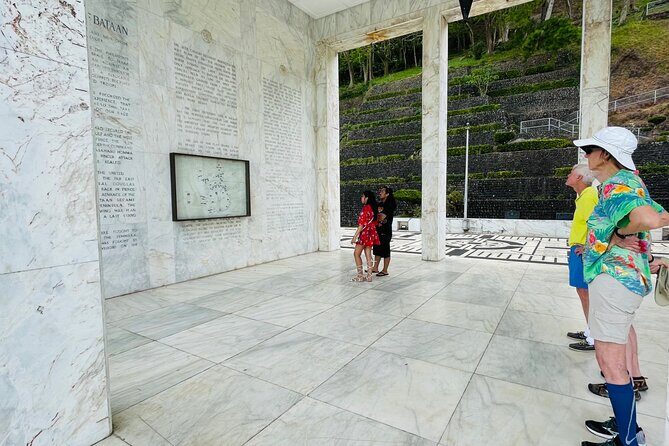
After that comes the Bataan World War II Museum, tied to a specific turning point: the surrender site of American general Edward King to the Japanese forces on April 9, 1945.
This stop is scheduled for about an hour, and admission is included. I like having a named person and an exact date in the middle of the day, because it gives the chaos a spine. It’s much easier to remember details later when you’ve anchored them to clear events.
If you care about the human side of history, this is the sort of stop where the guide’s narrative can make the place feel less abstract. You’re moving from general knowledge to a moment with consequences.
A few more Manila tours and experiences worth a look

Zero Kilometer Death March marker: where the route begins
Your final day-one stop is the Zero Kilometer Death March Marker, the starting point of the Death March. You’ll have about 30 minutes here, and admission is free.
This is short by design. A marker like this doesn’t need hours to land. It’s meant to connect your earlier learning to the route itself—like tightening a knot. If you’re carrying family history or you already know the story, this stop can hit especially hard.
Day 2: Corregidor first thing, then Mount Samat and San Fernando
Day two is the big physical contrast. You start early again—7am at the pier—take a 20-minute boat ride to Corregidor, then board a tour bus to circle the island. The Corregidor portion is planned for about seven hours, and admission is listed as free for that stop.
Then you finish the tour with two Bataan-related sites that fill in the story around the final battle and how POWs were moved.
Corregidor Island: the island fortress with on-the-ground discussion
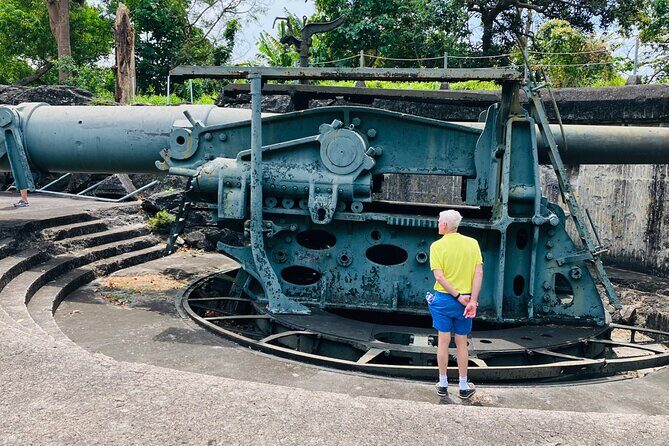
Corregidor is one of those places where the landscape does half the explaining. From the tour bus you’ll cover the island in a way that helps you understand how defense, elevation, and access routes mattered.
What sets this tour apart is that your guide adds extensive battlefield discussion once you’re on the island. You’re not just passing viewpoints; you’re getting the “why” behind what you see. That’s the difference between standing at a spot and actually grasping the battle logic.
Also, this is a private tour. That doesn’t guarantee the crowds vanish, but it does mean you’re not forced into a rigid group-flow. In practice, it tends to make the day feel more VIP because your guide can stop, answer questions, and set context without rushing to keep up with everyone else.
Timing tip: you’re starting with a boat ride and then moving all day. Pack patience in the morning. Once you’re on the island, the day becomes a steady sequence of understanding.
Mount Samat National Shrine (Dambana ng Kagitingan): final battle context
After Corregidor, the tour heads to Mount Samat National Shrine, also called Dambana ng Kagitingan. You’ll spend about two hours here, and admission is included.
This site is tied to the final battle of Bataan before the American surrender. I like that it comes after Corregidor rather than before, because it lets you view the island story and then return to the mainland stakes with fresh context.
Mount Samat tends to be where the narrative shifts from captivity routes toward endgame decisions. If you’ve been tracking the sequence from day one, this helps you see how the pieces connect.
San Fernando: the POW loading station
The last stop is San Fernando, specifically the train station where POWs were loaded before being sent to the concentration camp. You’ll have about 30 minutes, and admission is free.
This is a “small time, big meaning” stop. Stations don’t look like battlefields, but they’re part of the machinery of war. Even with limited time, it’s the kind of place that makes you rethink how far suffering can be tied to paperwork, logistics, and routes.
What you’re really paying for: value at $1,150 per person
At $1,150 per person for a two-day private tour, it’s not a casual add-on. The value comes from the private format and the structure of the itinerary, not from a long list of generic stops.
Here’s what that price buys you in practical terms:
- Private car with guide and driver for both days, so you’re not spending energy on logistics.
- A guided narrative that connects memorials, museums, and battlefield areas into one coherent WWII story.
- Multiple stops with included admissions, including Capas National Shrine, Bataan World War II Museum, and Mount Samat National Shrine.
- A full Corregidor day plan (pier departure, 20-minute boat ride, island bus tour), with time built in for the island discussion.
If you’re traveling as a family or a small group of history-minded adults, private pricing can start to look more reasonable compared to buying many separate taxis, entry tickets, and guided services. If you’re solo and hoping for a budget-friendly day, this one is more of a commitment—choose it if the topic is genuinely your focus.
Timing, tickets, and how the day actually runs
The tour starts at 7:00am. That early departure is a big deal on a day that includes a boat ride and an island circuit. I’d treat it like a full-day event, not a casual morning outing.
You’ll receive a mobile ticket, and pickup is offered. That helps a lot in Manila, where travel time can eat your day if you’re doing it yourself. Confirmation is provided at booking, and you’ll want to keep an eye on weather since the experience requires good weather for Corregidor.
One more practical point: wear shoes you can walk in for memorial grounds and museums. A lot of the stops aren’t “look-only.” You’ll be standing, reading, and moving at a human pace.
Who this tour is best for (and who should think twice)
This is best for:
- WWII history buffs who like context tied to specific places.
- People with a family connection to the Death March or to Philippine WWII history.
- Travelers who want a guided, narrative approach rather than a checklist of locations.
It might be a tough fit if:
- You want a light or purely scenic tour.
- You’re someone who gets mentally worn out by heavy historical sites quickly.
- Weather is a strict constraint in your travel window. Corregidor depends on good conditions, and if it’s canceled due to poor weather, you’ll be offered a different date or a full refund.
Should you book this Bataan and Corregidor private tour?
Yes, if you’re coming for WWII history with real guidance. The combination of Death March memorial context on day one and the battlefield discussion-driven Corregidor day on day two makes this feel like a complete story, not scattered sightseeing.
Skip it (or at least reconsider) if you’re looking for a relaxed, low-emotion trip. This is powerful history, paced as a full two-day arc, and you should be ready for that.
If you do book, I’d go in with one goal: understand the timeline. If you keep asking why each site exists in the story, the trip becomes much more than visits—it becomes clarity.
FAQ
What is the duration of the Bataan tour with Corregidor?
It runs for about 2 days, with a schedule that starts early on both days.
Where does the tour take place?
The tour is based in Manila, Philippines, with visits across Bataan and then Corregidor Island.
What time does the tour start?
The start time is 7:00am.
Is this a private tour?
Yes. It’s a private tour/activity, and only your group participates.
Does the tour include pickup and mobile tickets?
Pickup is offered, and you receive a mobile ticket.
Which stops have admission included?
Admission ticket is included for Capas National Shrine, Bataan World War II Museum, and Mount Samat National Shrine (Dambana ng Kagitingan). The Bamban Museum of History, Zero Kilometer Death March Marker, Corregidor Island, and San Fernando list admission as free.
Is Corregidor dependent on weather?
Yes. The experience requires good weather. If it’s canceled due to poor weather, you’ll be offered a different date or a full refund.
What is the cancellation policy?
You can cancel up to 6 days in advance for a full refund, and refunds change based on how many days before the start time you cancel.