REVIEW · CEBU
Cebu: Exploring Cebu City’s rich history and Uphill Tour
Book on Viator →Operated by Rides - Cebu Private Tours & Rental Cars · Bookable on Viator
Cebu history climbs and gardens win. This 8-hour Cebu City highlights day is a smart mix of old-world landmarks and a proper uphill break, from Fort San Pedro to Sirao Pictoral Garden. I like the way the stops keep moving (so you don’t waste a whole day stuck in one place), and I also like the photo-friendly garden payoff. The only real drawback: it’s a long day, and the terrain includes stairs and uphill areas.
You start at 9:00am with hotel pickup and drop-off, and you travel in a private air-conditioned car with a small group (max 6). That private transport matters in Cebu City, because traffic and distances can turn a self-guided day into an endurance test. If you’re going solo, this kind of setup is also easier on your time and nerves.
One more thing to plan around: the tour requires good weather, and if conditions are poor you’ll be offered a different date or a full refund. Also, the inclusions say entrance/admission fees are covered, but a couple of key stops list admission tickets as not included—so it’s worth confirming entry fees for Fort San Pedro and the garden before you go.
In This Review
- Key highlights worth your attention
- Cebu City in one day: history landmarks plus an uphill twist
- Fort San Pedro: triangular walls and a museum pocket of the past
- Magellan’s Cross and Basilica del Santo Niño: the Christianity landmark pair
- Heritage of Cebu Monument: local artist Eduardo Castrillo in Parian
- Yap Sandiego Ancestral House: bahay na bato with antique rooms
- National Museum of the Philippines – Cebu: artifacts, documents, and art
- Taoist Temple: 81 steps, ornate gates, and dragon details
- Sirao Pictoral Garden: Celosia blooms, windmills, and heart-shaped arches
- Price and logistics: does $75 feel fair for an 8-hour city day?
- Walking level and who this fits best
- My call: should you book the Cebu culture and uphill highlights day?
- FAQ
- FAQ
- How long is the Cebu City culture and uphill tour?
- What time does the tour start?
- Is hotel pickup and drop-off included?
- How many people are in the group?
- What’s included in the price?
- What’s not included?
- Is the tour affected by weather?
- Is there a lot of walking or stairs?
Key highlights worth your attention
- Small group, max 6 means you get more flexibility than the big-bus version
- Hotel pickup + private A/C car helps you beat Cebu City timing stress
- Fort San Pedro (1738) + a small museum gives context, not just sightseeing
- 81 steps at Taoist Temple is the day’s obvious uphill moment
- Sirao Pictoral Garden is the calm, colorful photo break many people love
- Guides that help with solo photos are a standout perk in at least one experience
Cebu City in one day: history landmarks plus an uphill twist
This is the kind of day that makes sense if you want a highlights sweep without turning your trip into a map-reading project. You’ll hit major religious sites, a colonial-era defense fort, a heritage monument, an old ancestral house, a national museum, and then finish with gardens and mountain views. The “uphill tour” part is real—most of the walking is manageable, but you’ll do stairs at the Taoist Temple and you’ll feel the climb as the route heads toward the viewpoints.
What I like about the structure is the variety. You’re not only looking at buildings; you’re also seeing how Cebu’s story layers together—Spanish influence, Christian landmarks, Filipino-Chinese heritage, and non-Christian spiritual space in the same day. It’s also a good pacing choice: most stops are around 30 minutes, with just enough time to look, photograph, and move on.
You can also read our reviews of more city tours in Cebu


Fort San Pedro: triangular walls and a museum pocket of the past
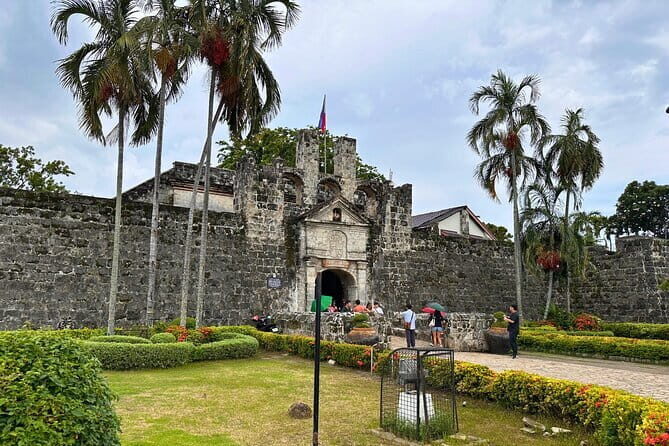
Your first stop is Fort San Pedro, built in 1738 and described as the oldest military defense structure in the Philippines. The fort’s layout is triangular, and you get well-preserved grounds plus a small museum with artifacts. For a first stop, it works well because it gives you a “why this city looked like this” mental picture.
Plan on about 30 minutes here. One practical caution: the stop notes say the admission ticket is not included, while the overall inclusions say entrance fees are included. That doesn’t ruin the tour, but it does mean you should confirm whether Fort San Pedro entry is covered for your exact booking.
If you like photos with texture—stone, angles, and old defense walls—this is a strong start. If you’re traveling with kids, the museum element helps keep things from feeling like only a big courtyard.
Magellan’s Cross and Basilica del Santo Niño: the Christianity landmark pair

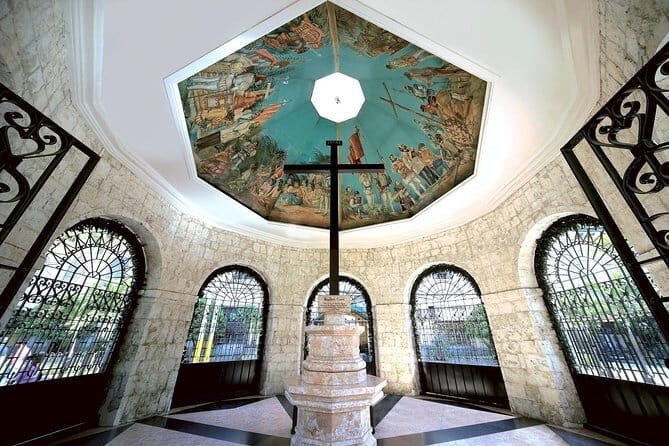
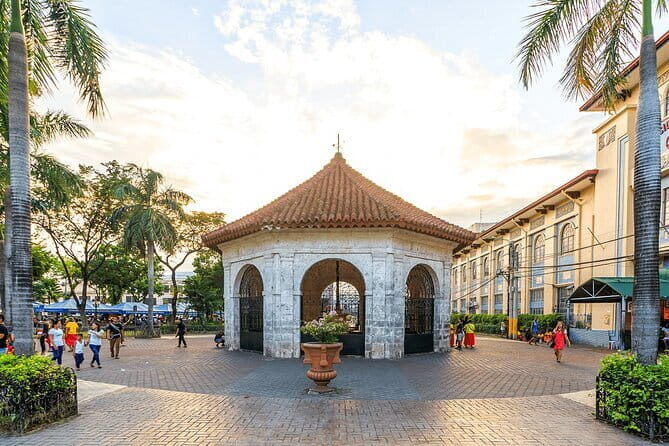
Next you’ll see Magellan’s Cross, planted in 1521 and tied to Ferdinand Magellan marking the arrival of Christianity in the Philippines. It’s a short stop (about 30 minutes) but it’s meaningful because it’s one of those historic reference points people associate with early European contact.
Then comes Basilica del Santo Nino, said to be the oldest Roman Catholic church in the Philippines, founded in 1565. The key attraction is the Santo Niño de Cebu statue, described as a gift from Magellan to Queen Juana. The time here is also about 30 minutes, and since admission is listed as free, you’ll feel the value instantly.
A small practical tip: these sites often pull in visitors, so keep your expectations focused on moments—quick photos, a look at the statue area, and a moment to read the context your guide shares. It’s not a “sit and relax” stop, but it is a “you get the story in front of you” stop.
Heritage of Cebu Monument: local artist Eduardo Castrillo in Parian

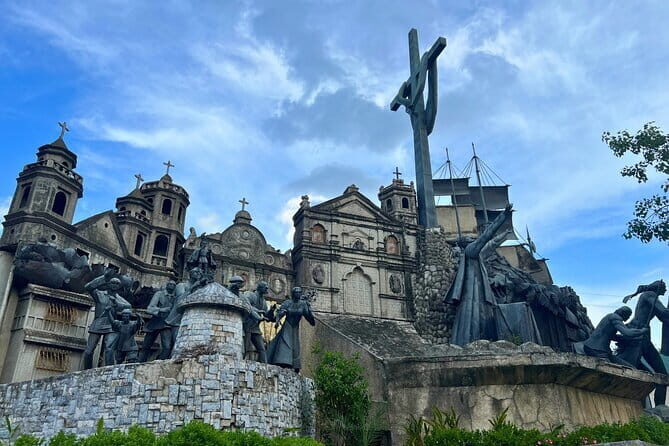
After the major religious landmarks, you’ll shift to the Heritage of Cebu Monument in the Parian district. This is artwork by local artist Eduardo Castrillo, with sculptures representing key historical events. It’s a 15-minute stop, which means it’s best for quick learning and a few good photos rather than a deep museum-style visit.
Why it’s worth your time: monuments like this are visual timelines. Instead of reading separate explanations all day, you get a “see it and connect it” moment that ties earlier stops to later ones. If you tend to remember pictures better than text, this stop can help you keep Cebu’s timeline straight.
The good news is the time budget is small. So even if you move fast, you won’t feel like you lost the day to one stop.
Yap Sandiego Ancestral House: bahay na bato with antique rooms
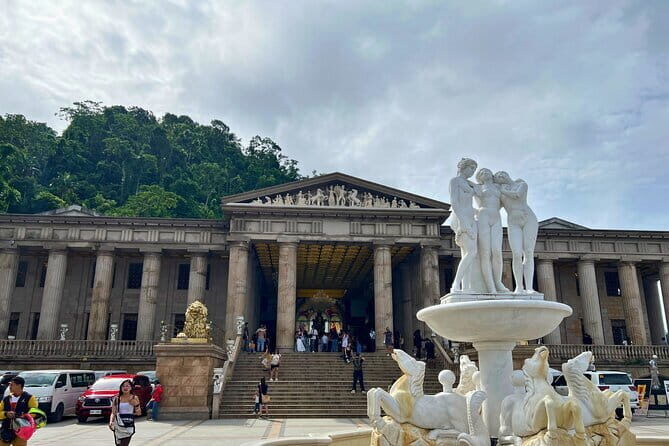
Then you’ll head to Yap Sandiego Ancestral House, one of Cebu’s oldest residences from the late 17th century. It’s the kind of place where you can feel the Filipino-Chinese heritage through the house style—described as a bahay na bato—plus the antique-filled rooms and intricate wooden carvings.
Expect about 30 minutes here. Like Fort San Pedro, the stop notes say the admission ticket is not included, even though the tour’s inclusions say entrance fees are included. This is exactly the kind of inconsistency you should clarify when you confirm your booking, so you don’t end up surprised mid-day.
If you like old architecture and interior details—woodwork, layout, and carved features—this is one of the stronger stops. It’s also one of the easiest places to wander slowly, even with a schedule, because the building details hold your attention.
You can also read our reviews of more historical tours in Cebu

National Museum of the Philippines – Cebu: artifacts, documents, and art
After the ancestral home, you’ll visit the National Museum of the Philippines – Cebu. This stop is about 30 minutes and is described as showcasing the region’s history through ancient artifacts, historical documents, and artistic masterpieces.
This is a good counterbalance to the outdoor and landmark-heavy stops. Forts, crosses, and temples can feel like “point-of-interest tourism,” but a museum helps you connect those scenes to bigger context. If you’re the type who likes to understand what you’re seeing (even a little), this is where you’ll get that payoff.
Admission is listed as free here, which helps the tour value. It’s also a good time of day to slow down for a moment and reset before the more physically involved stop at the Taoist Temple.
Taoist Temple: 81 steps, ornate gates, and dragon details
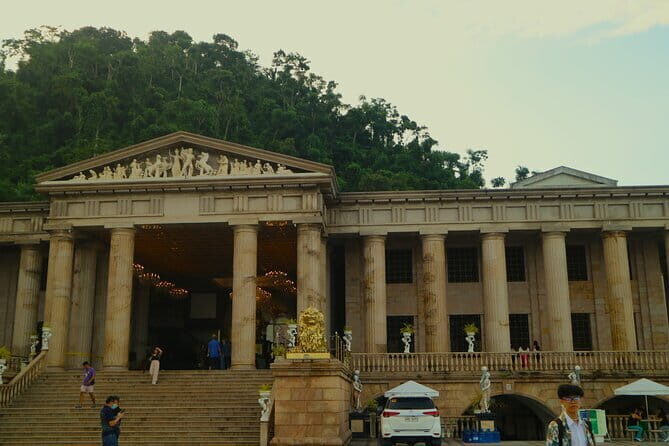
Now for the uphill moment: Taoist Temple. You’ll pass ornate gates and dragon sculptures, then climb 81 steps, described as representing the Taoist path to enlightenment. This is a 30-minute stop, and admission is listed as free.
The reason this portion stands out is that it’s both scenic and symbolic. You’re not just climbing for a view; the route is part of the experience. It can feel like your “workout reward” stop.
Practical consideration: if you’re not great with stairs, take it slowly and use your guide’s pacing. It’s not described as a long hike, but it is the only clearly stated stair climb of the itinerary, so plan footwear and energy accordingly.
Sirao Pictoral Garden: Celosia blooms, windmills, and heart-shaped arches
You’ll finish with Sirao Pictoral Garden, a 30-minute stop with colorful Celosia blooms, windmills, and heart-shaped arches. It’s also described as having serene mountain views, which makes it a perfect end-of-day treat.
This is where the best “photo and relax” energy comes in. One of the strongest signals from real-world experiences is that people love the garden time, and solo travelers especially value moments when someone helps take pictures. If you’re traveling alone, don’t be shy about asking your guide to set you up for photos—one guide named Joey Jay is specifically noted for helping with solo pictures.
One more practical note: the garden stop lists admission ticket not included, even though the overall tour includes entrance fees. Double-check your specific inclusions for this stop.
Also, if the day’s weather is off, this type of garden visit can change your mood fast. That’s exactly why the tour emphasizes good weather.
Price and logistics: does $75 feel fair for an 8-hour city day?
At $75 per person for about 8 hours, this tour can be good value if you want structure, transport, and mostly short stops. You get hotel pickup and drop-off plus a private air-conditioned car, and the tour caps the group at 6 travelers, which keeps it from feeling like a cattle call.
The included items that matter most are the practical ones: transportation and entrance/admission fees are listed as included, which reduces the mental load of planning. But there’s a caution flag in the details: Fort San Pedro, Yap Sandiego Ancestral House, and Sirao Pictoral Garden each list admission ticket not included, while the overall inclusions say fees are covered. Because of that, treat the $75 as potentially very fair—but confirm entry coverage for those specific stops before you lock it in.
Lunch isn’t included, so you’ll want to plan for food. The good thing about the itinerary’s stop lengths is that you can usually find a quick meal option before or after the more active portions.
Walking level and who this fits best
Most travelers can participate, and the stops are short enough that you can keep moving without getting stuck for hours. Still, you should expect some walking and stairs at the Taoist Temple with its 81 steps. If you’re fine with a staircase climb and you don’t mind an uphill day at the end, this works well.
This is also a strong fit for solo travelers because you’ll have a guide handling the routing and you can ask for photo help. It’s a reasonable choice for families too; at least one experience highlights that the tour is kid friendly, likely because the day is broken into manageable segments with plenty of visual rewards.
If your ideal day is mostly flat and slow, you might find the stairs and uphill drive less fun. In that case, you could still do some of these places on your own, but you’d lose the tight schedule and the convenience of pickup.
My call: should you book the Cebu culture and uphill highlights day?
If you want a full Cebu City day that hits the major icons and still leaves room for a calm garden finish, this is a great booking candidate. The strongest reason to choose it is the mix: colonial fort context, iconic Christian landmarks, Filipino-Chinese heritage, a museum reset, a symbolic stair climb, and a colorful garden ending.
Book it if you value private transport, a small group, and a schedule that keeps you from wandering in circles. Consider double-checking whether admission fees are covered for Fort San Pedro, Yap Sandiego Ancestral House, and Sirao Pictoral Garden, since the stop notes say ticket fees might not be included.
Skip (or choose something else) if you’re sensitive to stairs and uphill terrain, or if you prefer long stretches of unstructured time over a tightly guided day.
FAQ
FAQ
How long is the Cebu City culture and uphill tour?
It runs for about 8 hours.
What time does the tour start?
The start time is 9:00am.
Is hotel pickup and drop-off included?
Yes. Hotel pickup and drop-off are included.
How many people are in the group?
The tour has a maximum of 6 travelers.
What’s included in the price?
The tour includes hotel pickup and drop-off, transportation in a private air-conditioned car, and entrance/admission fees.
What’s not included?
Lunch and insurance are not included.
Is the tour affected by weather?
Yes. The tour requires good weather. If it’s canceled due to poor weather, you’ll be offered a different date or a full refund.
Is there a lot of walking or stairs?
Yes, there’s a stair climb at the Taoist Temple with 81 steps.