REVIEW · MANILA
Explore Intramuros: Introduction to Philippine History
Book on Viator →Operated by Explore Manila Tours · Bookable on Viator
Intramuros can feel like a time machine. This small-group tour is a fast, well-paced way to connect centuries of Philippine history—Spanish rule, Catholic influence, and the scars of WW2—using real landmarks inside Manila’s old walled city. I like that it starts in a landmark spot so you’re not hunting for your guide, and I also like the structure: you get the key sights without eating up your whole day.
What I especially like is that you don’t have to manage admissions mid-walk. Entrance fees are handled, plus the tour includes bottled water and an English-speaking guide, which makes the experience feel smooth in the heat. And because the group max is 15 travelers, it’s easier to ask questions and get answers that fit what you’re looking for.
One consideration: it’s a walking-focused tour in Intramuros, and the schedule is tight. If you’re the kind of person who loves lingering in museums, you might find the stop times a bit short unless you’re happy with a smart overview.
In This Review
- Key takeaways before you go
- Intramuros is the fastest Philippine history lesson
- Meeting at San Agustin Church and ending at Fort Santiago
- San Agustin Church: WW2 survivor and the start of your story
- Museo San Agustin: Spanish galleons and centuries of Catholic life
- Casa Manila: what upper-crust old Manila looked like
- WW2 remembrance at the Memorare Manila Monument
- Manila Cathedral: the seat of the Catholic Church in the Philippines
- Fort Santiago: Spanish military power and the independence storyline
- Walking pace, heat breaks, and small-group energy
- Price and value: what $55 covers (and what it doesn’t)
- Guide style and why it matters in a short tour
- Who should book this Intramuros history walk
- Quick timing plan for the rest of your day
- Should you book this Introduction to Philippine History tour?
- FAQ
- Where do I meet the guide?
- Where does the tour end?
- How long is the tour?
- How much is the tour?
- What’s included?
- Do I need to pay admission fees during the tour?
- Is transportation included?
- How big is the group?
- What happens if weather is poor?
- Can most people participate?
Key takeaways before you go
- San Agustin Church as your anchor: a huge starting point for understanding Spanish-era Manila and WW2 history
- Entrance fees handled: admissions aren’t a surprise cost during your walk
- A compact route with major stops: Casa Manila, Manila Cathedral, a WW2 remembrance monument, and Fort Santiago
- Small group size: up to 15 travelers keeps the tour interactive
- 3 hours, then you’re free: perfect for first-timers who still want the rest of the day on their own
Intramuros is the fastest Philippine history lesson
Intramuros is where Manila compresses centuries into a walk you can actually finish. You’re moving through a walled zone that shaped Spanish settlement patterns, Catholic power, and later the brutal disruptions of WW2. The best part is how the tour doesn’t just point at buildings—it explains how each site connects to the bigger story.
If you want a “start here” introduction before you wander on your own, this works well. You’ll get a clear mental map of what’s inside the walls, what each landmark represents, and why these places mattered to ordinary people as well as those in power. It’s the kind of orientation that makes your next steps feel less random.
You can also read our reviews of more historical tours in Manila


Meeting at San Agustin Church and ending at Fort Santiago
You meet your guide at San Agustin Church on General Luna St, inside Intramuros. That’s a smart choice because it’s a recognizable landmark area, and you don’t spend your first minutes stuck figuring out where to go. The tour ends at Fort Santiago, so you finish at another major historical site rather than backtracking to where you started.
The tour lasts about 3 hours. That means it’s a half-day commitment—enough time to hit the key places and get context, but not so long that it steals your whole day. Afterward, you’re free to roam, eat, and explore at your own pace.
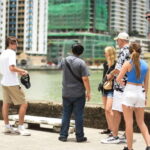
You’ll likely appreciate the size too: the group is capped at 15. Smaller groups mean you can keep your questions coming, and the guide can adjust the flow if people need a breather.
San Agustin Church: WW2 survivor and the start of your story
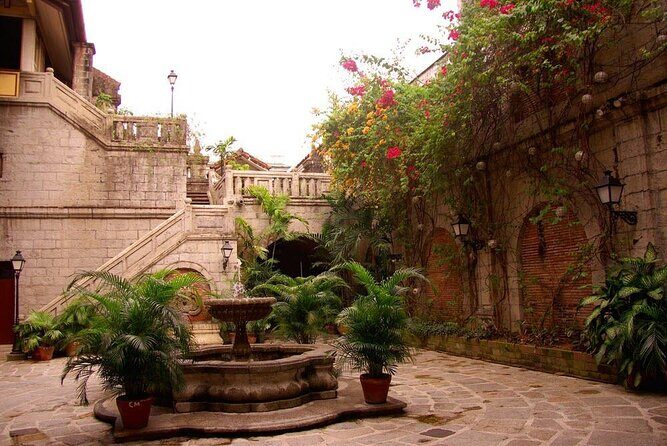
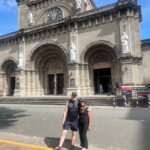
Your first stop is San Agustin Church (Immaculate Conception Parish). This is described as the oldest stone church in the country and the only survivor of Manila’s bombing during WW2. In other words: you’re starting your history walk at a place that physically endured a turning point.
That matters because it changes how you look at the building. Instead of seeing it as just another church, you’ll be thinking about survival, loss, and why certain sites survived when so much else didn’t. The tour timing here is brief—about 10 minutes—and admission is listed as free.
What to do with that short time: don’t rush past details. Even in 10 minutes, you can pick out elements that you later connect to the guide’s explanation. If you like photos, this is also an easy place to get a first set of good shots before you move into the rest of the route.
Museo San Agustin: Spanish galleons and centuries of Catholic life
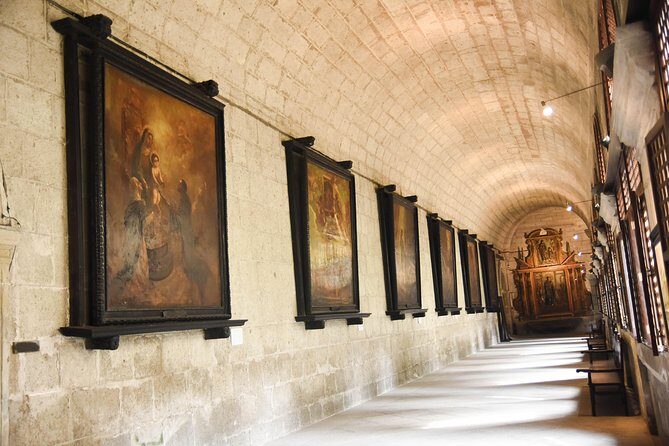
Right next door is Museo San Agustin, included for about 30 minutes. This stop focuses on the Spanish Galleon Trade, a network that connected the Philippines to the wider world. You’ll learn how Manila fit into global shipping and how that trade shaped what people bought, ate, built, and valued.
The museum also covers the Catholic Church across centuries, with artifacts that help you connect religion to day-to-day life and to Spanish influence. If you’ve ever wondered why churches and church institutions show up so strongly in the Philippines’ history, this is where that question gets a clear answer.
A practical note: museum time can feel slower in hot weather. But because the rest of the tour includes outdoor movement, this indoor block is a nice break from the sun.
Casa Manila: what upper-crust old Manila looked like
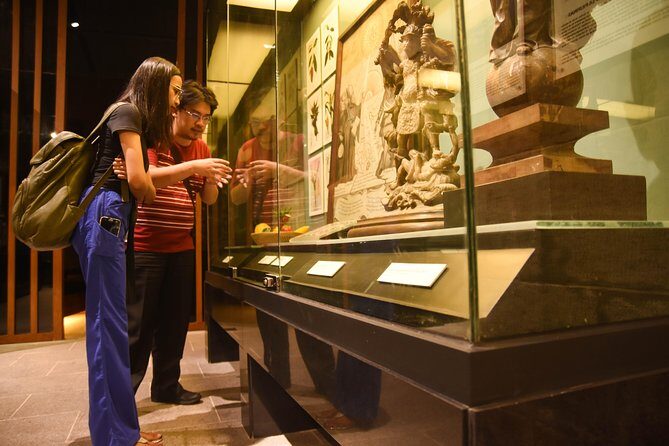
Next up is Casa Manila, a turn-of-the-19th-century house where you’ll see a recreation of how the upper crust lived. This is one of those stops that helps you understand history in a human way. Instead of staying stuck in big political dates, you’ll get a sense of domestic life—space, design, and how status showed up in the home.
You’ll spend about 30 minutes here, and admission is included. For many first-time visitors, this becomes a favorite because it shifts the focus from power centers (forts and churches) to daily spaces. If you enjoy architecture or want a break from battle and colonial themes, Casa Manila is a good counterbalance.
The only downside is the same one with any recreation: you’re seeing a curated picture of the past. Still, for orientation and clarity, it’s a smart use of time.


WW2 remembrance at the Memorare Manila Monument
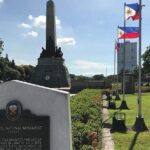
A short stop brings you to the Memorare Manila Monument, a memorial meant to remember innocent casualties of WW2. This is where the tour shifts from colonial influence and trade into the kind of history that shaped modern Manila’s identity through tragedy.
You’ll spend around 10 minutes here, with admission listed as free. The goal isn’t a long lecture at the monument. It’s a short, clear emotional anchor so you understand why WW2 isn’t just a footnote in Intramuros—it directly connects to why certain structures and spaces feel so heavy.
If you’re visiting with kids or teens, this stop can also be the one that makes history feel real rather than abstract, especially if you ask your guide to explain what the memorial represents in simple terms.
Manila Cathedral: the seat of the Catholic Church in the Philippines
Another brief stop is Manila Cathedral, described as the seat of the Catholic Church in the Philippines. Even though the time here is about 10 minutes, it’s meaningful as a symbol of religious authority and continuity.
Think of it as the “institution” stop after the church and museum stops you already saw. You’ve watched how Catholic life developed in the museum, you started your walk at a church that survived WW2, and now you’re looking at a central seat of the church’s presence in the country.
In a tour like this, short stops can work. You get a quick orientation without losing momentum—and you still have time to enjoy the bigger, story-driving sites.
Fort Santiago: Spanish military power and the independence storyline
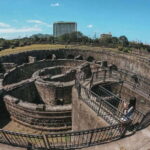
Your final major stop is Fort Santiago, the old Spanish military fort. You’ll spend about 30 minutes here, and admission is included. This is one of the best “wrap-up” sites because it holds multiple layers: military control, colonial impact, and the independence movement from Spain.
If earlier stops helped you understand Spanish influence and religious structures, this is where the tour shows how that influence also included force and resistance. The fort setting makes the discussion feel grounded; you can look at the space and better understand why fortifications mattered.
This ending point is also convenient. You finish inside Intramuros at a key landmark, so you’re not left stranded at a random edge of the city. It’s a strong last note for the 3-hour arc.
Walking pace, heat breaks, and small-group energy
This tour is designed to be a half-day overview, not a slow, sit-and-stare experience. The itinerary covers multiple sites in roughly 3 hours, so you’ll be on your feet and moving between stops. The walking in Intramuros is generally straightforward, but Manila weather can be relentless.
That’s why the included bottled water matters. It’s a small detail that makes a real difference when you’re bouncing between sun and shade. Some guides also seem to manage the pace well—people describe the structure and timing as just right, and even mention getting a break during the tour.
If you’re going in the hotter part of the day, wear breathable clothes and comfy shoes you trust. This is not the kind of tour where flip-flops are a good idea.
Price and value: what $55 covers (and what it doesn’t)
At $55 per person, the value here is mostly in what you don’t have to handle yourself. Entrance fees are included, so you’re not paying at each stop or calculating whether each admission is worth it. The tour also includes bottled water and an English-speaking guide.
You’re paying for interpretation—connecting sites like San Agustin, Casa Manila, WW2 memorials, and Fort Santiago into a timeline you can remember. For a first-time visitor, that kind of guided context can make the same landmarks you’d otherwise see on your own feel much more meaningful.
Not included: private transportation. That’s normal for a walking tour inside Intramuros. You should plan your own way to reach the start point at San Agustin Church.
If your budget is tight, this is still attractive because it’s only about 3 hours of paid time, and then you get the rest of the day free to keep exploring.
Guide style and why it matters in a short tour
Short tours live or die by the guide’s storytelling. The guides named in the experience feedback include Jian, Patrick, and Jerome, and the common thread is clear: people liked how the tour connected sites to language, culture, and the wider historical context.
For example, one solo visitor found the guide’s pace and humor made the history easier to hold in your head. Another person even ended up doing another guided tour later the same day, which usually means the first one built confidence for the rest of their itinerary.
When you book a tour like this, you’re not just buying access—you’re buying a way to understand what you’re looking at. With this one, the structure is designed so even brief stops add up to a clear picture.
Who should book this Intramuros history walk
I think this tour is a great fit if:
- You’re in Manila for a short stay and want a high-impact history introduction.
- You’re visiting Intramuros for the first time and want a map of what’s important.
- You’d rather spend 3 hours with context than 3 hours wandering without direction.
- You like history that connects religion, colonial power, and WW2 in one coherent thread.
It may be less ideal if you hate walking, plan to spend long hours in museums, or want a slow, museum-by-museum pace. The tour times are intentionally compact, so you’re meant to get the overview and then keep exploring afterward on your own.
Quick timing plan for the rest of your day
Because the tour ends at Fort Santiago, you can build your afternoon around being in that same area. After the guided portion, you’ll be better oriented about what you want to revisit, what you want to photograph again, and what looks interesting enough to research later.
It also helps that you don’t have to pay attention to admissions mid-route. You’ll spend your time listening, looking, and asking questions—then you can shift into free-exploring mode once the tour ends.
Should you book this Introduction to Philippine History tour?
Yes—if you want a smart, efficient way to understand Intramuros in one half-day. For $55, you get entrance fees covered, a clear sequence of major sites, bottled water, and an English-speaking guide, all capped at a small group size. The route hits the big names—San Agustin, Casa Manila, WW2 remembrance, Manila Cathedral, and Fort Santiago—without dragging into an all-day commitment.
Book it if you’re the type of traveler who likes history that feels tied to physical places. Just plan for walking and heat, and treat it as your foundation visit—not your only stop in Intramuros.
FAQ
Where do I meet the guide?
You meet at San Agustin Church on General Luna St, Intramuros, Manila.
Where does the tour end?
The tour ends at Fort Santiago, inside Intramuros.
How long is the tour?
The duration is about 3 hours.
How much is the tour?
The price is $55.00 per person.
What’s included?
Included are bottled water, all entrance fees, and an English-speaking guide.
Do I need to pay admission fees during the tour?
No. Admission fees are taken care of, so you do not pay on the spot for the included sites.
Is transportation included?
No private transportation is included.
How big is the group?
The tour has a maximum of 15 travelers.
What happens if weather is poor?
This experience requires good weather. If it’s canceled due to poor weather, you’ll be offered a different date or a full refund.
Can most people participate?
Most travelers can participate.