REVIEW · MANILA
Half-Day Manila City Tour
Book on Viator →Operated by Blue Horizons Travel and Tours, Inc · Bookable on Viator
Manila has two pasts, all in four hours. This half-day tour threads together Intramuros, Rizal Park, and the American Cemetery, with an English-speaking guide to connect the dots as you walk. It’s a practical way to see major Manila landmarks without doing the city-transport math yourself.
I especially love that entrance fees are included, so you’re not hunting ticket lines mid-day. I also love the English-speaking guide format, and you’ll feel it in the way guides like Jonas, Amy, and Joan explain what you’re looking at and why it mattered.
One possible drawback: traffic can slow the day, so you’ll want to keep expectations flexible if the route feels less direct than you hoped.
In This Review
- Key highlights to look for
- Why this half-day tour works for first-timers in Manila
- Price and value: what you pay for (and what you don’t)
- Hotel pickup in Manila Bay or Makati: the easiest start
- Casa Manila: colonial daily life in the walled city
- Rizal Park and the Bagumbayan connection
- San Agustin Church: oldest church energy, 1607 facts
- Intramuros walls: where Manila’s government power lived
- Fort Santiago and Manila Bay: defense plus a working harbor
- Manila American Cemetery: a WWII stop that lands
- The guide factor: punctual, English-strong, and sometimes flexible
- Timing, walking pace, and who should book
- What to bring for a smooth half-day
- Should you book the Half-Day Manila City Tour?
- FAQ
- FAQ
- How long is the Half-Day Manila City Tour?
- What’s included in the tour price?
- Does the tour include food or drinks?
- Are entrance fees covered for each stop?
- Do I need a printed ticket?
- Is hotel pickup available from anywhere in Manila?
- How big is the group?
- What if the weather is bad?
- Is the tour refundable if I cancel?
Key highlights to look for
- Entrance fees handled: You pay once and then focus on the sites.
- Hotel pickup from Manila Bay or Makati: Fewer logistics headaches at the start.
- Small group size (max 6): Easier questions and pacing.
- English-speaking guide: Stories connect Spanish-era Manila to later chapters.
- WWII remembrance in a calm setting: A moving stop that people tend to remember most.
- All in about 4 hours: Great for first-time orientation.
Why this half-day tour works for first-timers in Manila
Manila can feel like a lot on day one: big distances, fast schedules, and plenty of traffic. This tour is built to fix that. In a short window, you cover the central spine of Manila—Spanish-era walls, major memorials, and the big public spaces tied to national identity.
What makes it click is the way the tour structure turns sightseeing into understanding. You’re not just collecting photos of churches and fortifications. You’re learning what each place represents, from colonial daily life to wartime memory. If you want your first Manila day to feel organized (and not like you’re winging it), this format is a strong fit.
You’ll also appreciate the small-group feel. With a maximum of 6 travelers, you’re more likely to get answers to your questions instead of hearing everything through a loudspeaker.
You can also read our reviews of more city tours in Manila


Price and value: what you pay for (and what you don’t)
At $107.70 per person for about four hours, this isn’t a bargain tour—but it’s also not an inflated one once you see what’s included. You get a professional English-speaking guide, hotel pickup (limited to Manila Bay or Makati area hotels), and entrance fees to all sites.
That matters because Manila sightseeing costs can add up quickly once you start paying separate admissions and figuring out transport on your own. Here, the tour package handles the entry fees and transfers, so your “budget effort” stays low.
Two things to note: food and drinks are not included, and the pace is designed for a half-day. If you’re the type who wants to linger for an extra hour at every stop, you may need to schedule a second visit later on your own.
Hotel pickup in Manila Bay or Makati: the easiest start
The tour offers hotel transfers from hotels located in the Manila Bay or Makati area. That’s a big deal because getting to Intramuros and the surrounding sights without a plan can be time-consuming—especially when traffic decides it’s the star of the show.
Pickup timing is confirmed in advance, with the pickup time advised at least a day prior. You also have a clear rule for timing at the hotel: the maximum waiting time outside the entrance is 30 minutes from your pickup time. If you miss that window, the tour is treated as a no-show.
My advice: be ready a bit early. Manila days can shift fast, and the tour runs on a tight half-day rhythm.
Casa Manila: colonial daily life in the walled city
Casa Manila is where the story starts in a hands-on way. It’s a museum in Intramuros focused on Spanish colonial-era lifestyle, showing how people lived during the period of Spanish rule in the Philippines.
You get about 30 minutes here, which is just enough time to get oriented without feeling rushed beyond control. The key value of Casa Manila is context. Before you walk into the thick stone and gates of Intramuros, you understand what the spaces were for and how daily life shaped the city.
If you like history that connects to everyday details—food routines, household design, and the rhythms of the time—this is a strong opening stop. And because it comes early, it colors how you’ll see the later churches, walls, and forts.
Rizal Park and the Bagumbayan connection
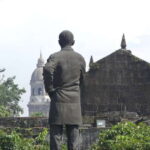
Rizal Park is not just a park. It’s a piece of national memory. The tour covers Rizal Park (formerly known as Bagumbayan during Spanish colonial rule), and it’s a place where Manila’s political and cultural story becomes very visible.
Jose Rizal is closely tied to this area, and guides often use that to explain why the site matters beyond its greenery and open space. Even if you’re not a museum person, Rizal Park is the kind of stop that helps you understand why people treat certain places like symbols rather than just scenery.
You’re given time for this stop (about 30 minutes), so it’s enough to look around and absorb the atmosphere, but not enough to turn it into a half-day wandering session. Treat it as a meaningful checkpoint, then keep moving with the group.
A few more Manila tours and experiences worth a look




San Agustin Church: oldest church energy, 1607 facts
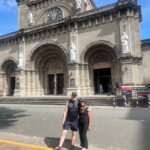
San Agustin Church—also known as Immaculate Conception Parish—is one of the most important stops on the route. It’s Roman Catholic, under the patronage of the Order of St. Augustine, and it was completed in 1607. That date alone gives you the right mindset: you’re seeing a site that has been standing for centuries.
You’ll get around 30 minutes here, and the real payoff is the explanation of how religious orders and Spanish-era power worked together. The church isn’t just a pretty exterior; it’s a physical clue to Manila’s colonial structure.
This is also a good place to slow down for photos and people-watching, because it’s a stop where your guide’s story helps you look beyond the surface.
Intramuros walls: where Manila’s government power lived
Intramuros is the walled city—at the height of the Spanish Empire, it was synonymous with Manila itself. The area served as the seat of government and political power, which helps explain why the city was designed with walls and controlled access.
You’ll spend about 30 minutes here, which is enough to get a feel for the scale and the layout. You don’t have time to wander every side lane deeply, but you do get a curated route through the key sights. That’s exactly the advantage of a guided half-day: you’re not trying to “solve” Intramuros by yourself while also dealing with transport and timing.
If you’re the kind of person who likes to understand a place’s rules—who could enter, why certain areas mattered, and how the city was organized—Intramuros is the anchor stop that ties the whole day together.
Fort Santiago and Manila Bay: defense plus a working harbor
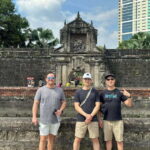
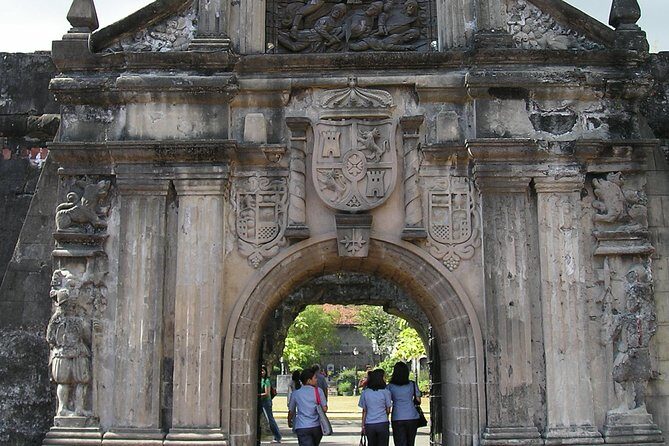
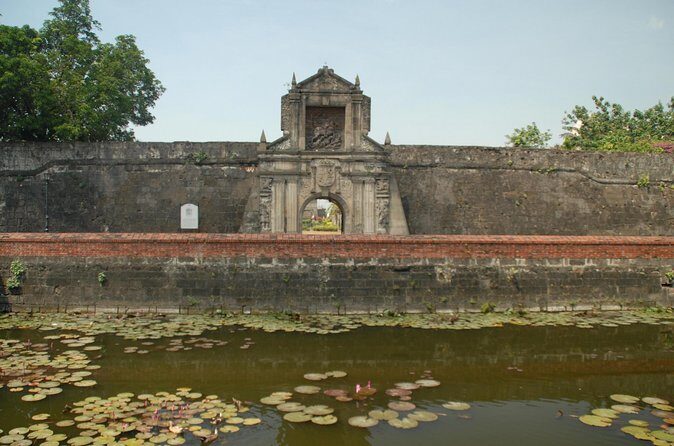
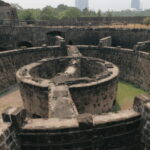
Fort Santiago is built into the story of Manila’s defenses. It was first built by Spanish navigator and governor Miguel López de Legazpi for the newly established city of Manila. As part of the structures of the wall, it represents the military side of how the Spanish controlled and protected the city.
Expect about 30 minutes here, which lets you take in the fortress setting and connect it to what you saw earlier in Casa Manila and Intramuros. It’s a useful mental shift: you go from daily-life museum details to the reality that this city was also a fortified outpost.
Then there’s the stop at Manila Bay, a natural harbor serving the Port of Manila. This is where you broaden your perspective. After walking walls and fortresses, it helps to see the waterfront role Manila played as a major shipping and harbor area—part of the city’s engine, not just its stage.
Manila American Cemetery: a WWII stop that lands
The American Cemetery and Memorial is one of the most powerful parts of the tour route. The site was built to honor World War II veterans, and the mood shifts in a noticeable way when you arrive.
You get about 30 minutes. In that window, your guide’s role becomes especially important. A good guide helps you understand what the cemetery represents and how to read the space with respect, not just as a “sight.”
This stop consistently shows up as a highlight in the overall tour experience. If you want more than a quick photo and you care about how history is remembered, this is the moment you’ll likely carry with you after the tour ends.
The guide factor: punctual, English-strong, and sometimes flexible
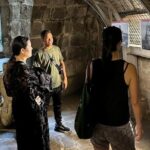
This tour lives or dies on the guide’s delivery, and the strongest experiences center on the guide’s clarity and enthusiasm. People highlighted guides like Jonas and Jezzy for English that was described as very strong, plus a steady flow of facts and context. Others, like Amy and Richard, were praised for answering questions and bringing humor into the historical explanations.
Punctual pickup also matters here. When the guide is organized and attentive—like several accounts that named guides such as Vangie and Joan—you waste less time and get a cleaner tour flow.
One practical note: in at least one experience, the guide’s level of involvement at each site wasn’t what everyone wanted. If you prefer someone right next to you at every stop (not just at the start), ask early how they handle explanations during time inside each location. It’s a fair question, and it can change how satisfying the day feels.
Timing, walking pace, and who should book
This is about 4 hours, and the plan includes multiple major stops with roughly 30 minutes allotted at each location. You’ll be doing walking between sites inside the central area, plus some outdoor time.
The tour indicates a moderate physical fitness level, so it’s not a “sit and watch” day. You don’t need to be an athlete, but you should be comfortable with city walking and standing in active areas.
A small-group tour also tends to suit people who like asking questions. If you’re visiting for the first time and want a structured orientation without the stress of figuring out routes, this is a great way to spend half a day.
What to bring for a smooth half-day
Since food and drinks aren’t included, plan to eat or snack before or after the tour. If you’ll be outdoors part of the time (and you will), it helps to carry what you need for comfort.
Also consider footwear. You’ll be walking through historic areas and moving between sites, so go with shoes you can wear for a few hours without regrets.
If you rely on your phone for planning, you’ll be using a mobile ticket. That’s useful because it cuts down on paper handling and speeds check-in.
Should you book the Half-Day Manila City Tour?
Book it if you want a focused “first Manila” day that connects the dots: Intramuros walls, the major landmark park, a major church, Fort Santiago, Manila Bay, and the WWII cemetery—done in about four hours. The combination of entrance fees included, hotel pickup from nearby areas, and an English-speaking guide makes it a tidy value.
Skip or adjust expectations if you want long lingering time at every site or you prefer a totally self-paced route. This tour is designed for getting your bearings fast, not for marathon museum time at a dozen stops.
If your schedule is flexible, this is also a good pick because the experience depends on good weather. When weather is poor, you may be offered a different date or a full refund.
FAQ
FAQ
How long is the Half-Day Manila City Tour?
It runs for about 4 hours.
What’s included in the tour price?
The tour includes a professional English-speaking guide, hotel pickup (for hotels in the Manila Bay or Makati area), and entrance fees to all included sites.
Does the tour include food or drinks?
No. Food and drinks are not included.
Are entrance fees covered for each stop?
Yes. Entrance fees to all sites are included.
Do I need a printed ticket?
No. The tour uses a mobile ticket.
Is hotel pickup available from anywhere in Manila?
Pickup is provided from hotels located in the Manila Bay or Makati area only.
How big is the group?
This tour has a maximum of 6 travelers.
What if the weather is bad?
This experience requires good weather. If it’s canceled due to poor weather, you’ll be offered a different date or a full refund.
Is the tour refundable if I cancel?
No. The experience is non-refundable and cannot be changed for any reason.