REVIEW · LUZON
Intramuros Walking Tour: Explore the Manila’s Walled City|Private
Book on Viator →Operated by Don't Skip Manila · Bookable on Viator
400 years fit into one walk. Intramuros, Manila’s walled city, is where the big chapters of Philippine history overlap in a tight space. This tour takes you from Spanish-era power to later upheavals and post-war memory, with a clear route and time limits that make it realistic if you’re short on time.
Two things I really like: you get admission included for the major stops (Fort Santiago, Rizal Shrine, and Casa Manila), and you also get a guide who can turn names and dates into real places you can stand in. The other big win is the ride portion—either a horse-drawn kalesa or a tranvia—which helps break up the walking and gives you a different angle on the walls.
One consideration: this is weather-dependent and you’re outside much of the time, so plan for heat and humidity, and bring comfortable walking shoes.
In This Review
- Key things to know before you go
- Intramuros in 3.5 hours: what this tour does well
- Fort Santiago: from the city’s beginnings to the emotional weight of dungeons
- Rizal Shrine: José Rizal’s imprisonment and the museum context
- Manila Cathedral and San Agustin Church: two different flavors of Spanish-era faith
- Casa Manila Museum: colonial lifestyle you can picture
- The kalesa or tranvia ride: why the ride matters
- Memorare Manila Monument: remembering the battle for liberation
- How the timing feels on the ground (and how to enjoy it)
- Price and value: what $37.58 buys you in real terms
- Who should book this private Intramuros walking tour?
- The guides make the story land
- Should you book this Intramuros Walking Tour?
- FAQ
- How long is the Intramuros Walking Tour?
- How much does the tour cost?
- Where does the tour start and where does it end?
- Is the tour private?
- What’s included in the price?
- What tickets or admissions are included?
- Do I need to bring anything?
- What if the weather is bad?
- Is free cancellation available?
Key things to know before you go
- You get the timeline in one route: pre-colonial → Spanish colonization → American annexation → Japanese occupation → post-war Manila.
- Tickets are built into the price for Fort Santiago, Rizal Shrine, and Casa Manila, plus entrance fees and donations.
- A short ride around Intramuros (kalesa or tranvia) gives you a break and a better sense of layout.
- The pacing is tight: about 3 hours 30 minutes with 7 stops, so you’ll be moving between sights.
- You’ll stop at heavy-memory sites like Fort Santiago’s darker spaces and the Memorare Manila 1945 Monument.
- Snacks, water, and ice cream are included, so you can keep energy up mid-walk.
Intramuros in 3.5 hours: what this tour does well
Intramuros is small enough to feel walkable, but big enough that self-guided can turn into random photo stops. What I like about this tour is that it’s built for meaning, not just movement. You get a route that matches a historical story arc across centuries, so you leave with a mental map of what happened where.
The total time is about 3 hours 30 minutes, and the stops are timed tightly: Fort Santiago first, then Rizal Shrine, then quick “see-and-learn” stops at major landmarks. If you’re trying to pack Manila into a short stay, this is the kind of tour that gives you structure fast.
And because it’s private, your group stays together, instead of getting split up in a crowd. That matters in Intramuros, where walking lanes and entrances can get choked on busy days.
You can also read our reviews of more walking tours in Luzon


Fort Santiago: from the city’s beginnings to the emotional weight of dungeons
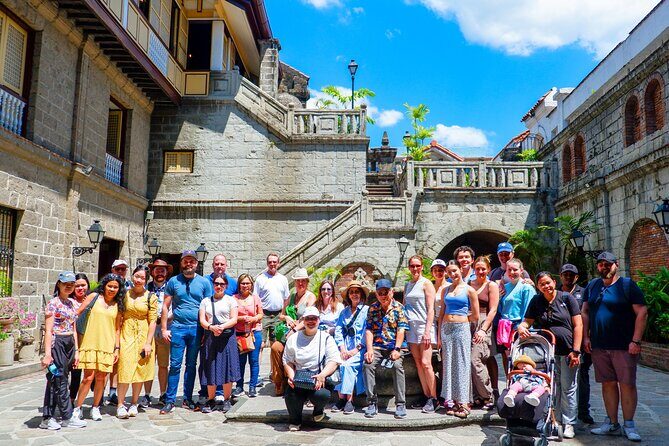
You start at Fort Santiago, and it’s a strong opening choice. The fort began as a citadel built for the newly established city of Manila by Spanish navigator and governor Miguel López de Legazpi. Standing in a place tied to the founding era helps the rest of the tour click into place.
This stop includes admission, and it’s not just about walls. The experience includes the fortress areas tied to Jose Rizal’s imprisonment history later in the story, and the mood can shift quickly when you reach the dungeon spaces. In the feedback I’m using to understand the experience, people consistently say the dungeon portion hits hard because the sadness is hard to ignore.
If you don’t like heavy historical settings, it’s worth mentally preparing for that tone. If you do want history that doesn’t sugarcoat, this is one of the most impactful stops on the route.
Rizal Shrine: José Rizal’s imprisonment and the museum context
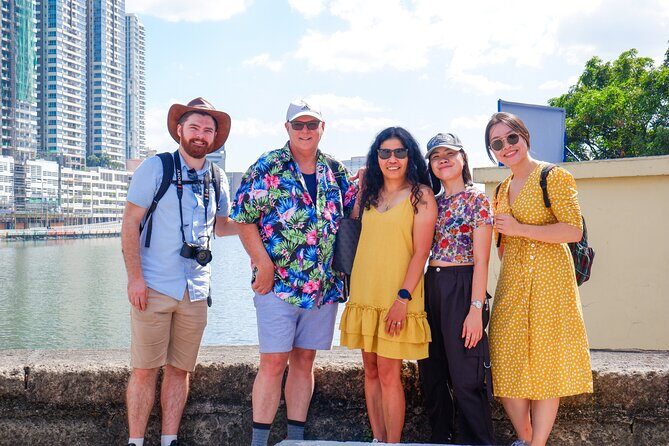
Next up is the Rizal Shrine, where José Rizal was imprisoned before his execution in 1896. That date anchors the story in a way that’s easy to remember, and it helps you connect the physical fort spaces to the national hero’s life and legacy.
This stop also includes admission, and the museum displays memorabilia tied to Rizal. Even if you already know the basics, the shrine tends to make the timeline feel more personal because you’re moving from the “place of events” to the “objects that preserved them.”
Rizal Shrine is also a nice contrast after Fort Santiago. You go from the broad military and colonial setting into a focused human story—what happened to one person, and how the site preserves the memory.
Manila Cathedral and San Agustin Church: two different flavors of Spanish-era faith
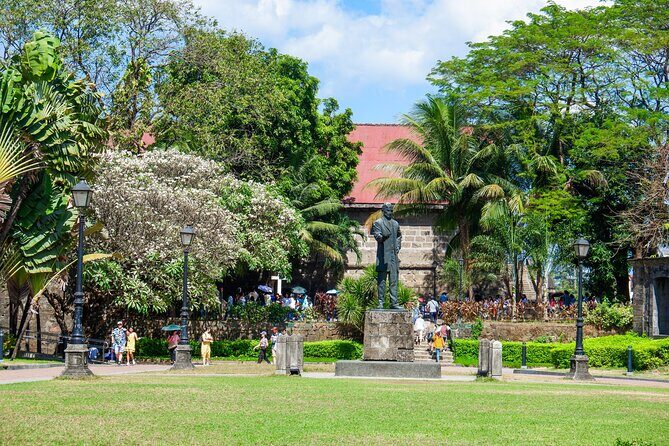
You’ll get a short stop at Manila Cathedral, officially the Minor Basilica and Metropolitan Cathedral of the Immaculate Conception, also known as Catedral de Manila. This one is free to enter and is scheduled for about 15 minutes, so think of it as a quick “right place, right context” moment rather than a long church visit.
Then you’ll slow down at San Agustin Church – Immaculate Conception Parish. This church was completed in 1607 and is one of the great Spanish colonial churches designated as a UNESCO World Heritage Site under the collective title Baroque Churches of the Philippines. That UNESCO connection gives this stop extra weight beyond architecture—it’s part of how global heritage is preserved through local places.
If you care about design and craft, both churches are worth your attention, even with the time limits. If you’re in a hurry, prioritize getting the story your guide is giving you, because that’s what helps the church facades mean something beyond their look.
Casa Manila Museum: colonial lifestyle you can picture
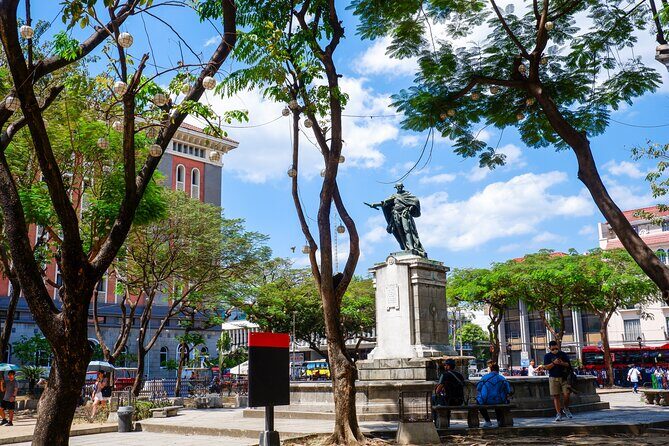
The tour ends up at Casa Manila, a museum in Intramuros that depicts colonial lifestyle during Spanish colonization of the Philippines. This stop includes admission and lasts about 30 minutes, which is enough time to actually absorb the environment.
Casa Manila is where the tour shifts from “public history” to “daily life.” Instead of only focusing on power and conflict, you get a sense of how people lived during the Spanish era—how spaces were designed and what colonial domestic life may have looked like in that period.
If you’ve ever thought, I understand the dates, but I want the feeling of everyday life, this museum stop tends to hit that need. It also gives your brain a breather before the tour finishes.
You can also read our reviews of more city tours in Luzon





The kalesa or tranvia ride: why the ride matters

One of the smartest pieces of this itinerary is the kalesa (horse-drawn carriage) or tranvia (tram) ride around the walled city. It’s about 20 minutes and the admission is free as part of the tour.
Even if you’ve walked a lot in cities, the ride changes your perspective. You can see how Intramuros sits as a walled complex rather than just a series of entrances and alleys. It’s also a practical break when the sun is strong.
A couple of guide-style notes from feedback stand out here. People mention the ride as a highlight, and they often pair it with the included frozen treats. That snack part isn’t just for fun—it helps you keep your energy steady so you can stay focused on the next historical stop.
Memorare Manila Monument: remembering the battle for liberation
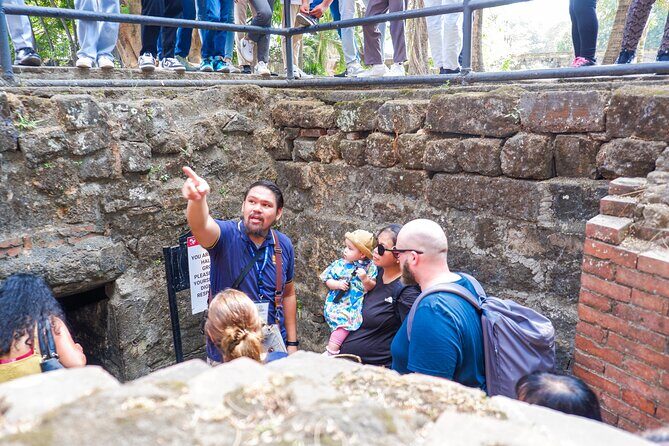
You’ll also stop at the Memorare – Manila 1945 Monument, a memorial for lives lost during the battle for the liberation of Manila. The site commemorates Filipino and American forces against Imperial Japanese troops, from February 3 in 19—(the exact end year is cut off in the tour summary you provided), to the end of that liberation phase.
This is another short stop (about 15 minutes) but it matters because it grounds the tour in modern tragedy and recovery. Intramuros often gets framed through colonial and earlier periods, so including the post-war memorial helps complete the arc the tour promises.
If your goal is to understand how the city changed across time, this moment keeps the story from stopping at “colonial nostalgia.”
How the timing feels on the ground (and how to enjoy it)

With 7 stops and about 3 hours 30 minutes total, you’ll feel a steady rhythm: walk, enter, listen, move on. The stops that include admission give you a deeper experience, while the free-entry landmarks function like anchor points—quick, memorable, and story-led.
In practice, the way you’ll enjoy this tour is by treating it like a guided walk through a timeline. Don’t just rush from gate to gate. Let your guide connect one site to the next, especially when moving from Fort Santiago to the Rizal Shrine and then into the churches.
Comfort tips that make a real difference: wear shoes you can walk in for several hours and plan for warm weather. The tour also requires good weather, so if rain is likely, you’ll want an extra light day plan in your schedule.
Price and value: what $37.58 buys you in real terms
At $37.58 per person, the value comes from how much is bundled. Entrance fees and donations are included, plus water and ice cream. Tickets are specifically included for Fort Santiago, Rizal Shrine, and Casa Manila, which are exactly the stops where you might otherwise pay on your own.
On top of that, you get an English-speaking tour guide and the carriage/tram ride is included too. For a history-heavy route where you’d need to buy multiple tickets and spend time figuring out the order, bundling like this can feel like a bargain.
There’s also a note about group discounts. If you’re traveling with friends or family, it’s worth checking how that affects your final total when you book.
One more practical point: you’ll likely get a mobile ticket, which is convenient in cities where paper vouchers can get lost at the bottom of a bag.
Who should book this private Intramuros walking tour?
This is a great fit if you want a guided history walk that doesn’t eat an entire day. The tour is also a good match if you have less than 4 hours but still want to understand the big story spanning multiple eras.
It’s especially useful as a first-time Intramuros visit. You’ll leave with a route you can repeat later for photos, because you’ll know what to look at and why each building matters.
If you’re the type who prefers long museum time, you might want to pair this with an optional follow-up visit to whichever site grabbed you most—either the fort or Casa Manila. But as a compact overview, it hits the target.
The guides make the story land
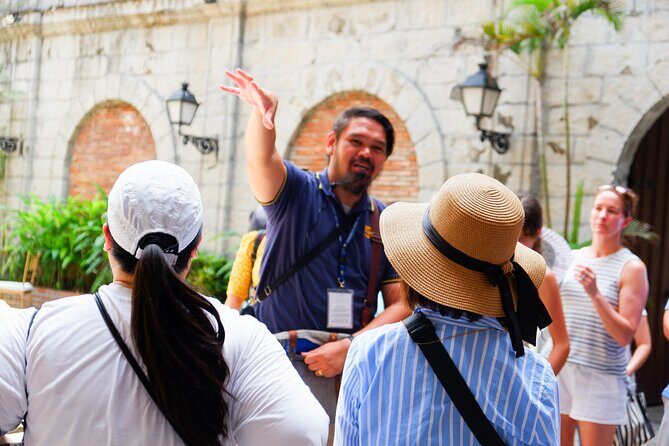
A recurring theme in the guide feedback is storytelling style. Names that came up include Denji, Anne, Orlando, and Andre, and each was praised for making the history feel engaging and understandable. One person specifically noted that a set of images helped with context, which is a smart way to translate fort walls and church facades into something your brain can organize.
This is also one reason the tour’s “private for your group” setup matters. It makes it easier for the guide to pace the story to the group you’re with, instead of sticking to a rigid flow that suits strangers.
Should you book this Intramuros Walking Tour?
I’d book it if you want a structured history tour in a short window, and you like the idea of combining forts, museums, churches, and a ride around the walls. The included tickets, plus snacks and the carriage/tram segment, make it feel less like paying for walking and more like paying for access and story.
I’d think twice if you’re hoping for a light, casual stroll with minimal emotional content. Fort Santiago’s dungeon areas can be heavy, and the Manila 1945 monument adds more weight to the route.
If you’re okay with that mix—and you’re in Manila with only a few hours—this tour is a strong way to get your bearings fast in Manila’s Walled City.
FAQ
How long is the Intramuros Walking Tour?
It’s about 3 hours 30 minutes (approx.).
How much does the tour cost?
The price is $37.58 per person.
Where does the tour start and where does it end?
It starts at 1 Sta. Clara St, Intramuros, Manila, 1002 Metro Manila, Philippines. It ends at Plaza San Luis Complex, General Luna St, Intramuros, Manila, and the end point is Casa Manila Museum.
Is the tour private?
Yes. It’s private, so only your group will participate.
What’s included in the price?
Entrance fees and donations are included, along with snacks, water, and ice cream. English tour guide services are included, plus a horse-drawn carriage (kalesa) or tranvia ride.
What tickets or admissions are included?
Admission tickets are included for Fort Santiago, Rizal Shrine, and Casa Manila. Manila Cathedral is free, and the other listed stops don’t require an admission fee as part of the tour.
Do I need to bring anything?
The tour includes tickets and food, but you should still bring personal items like a water bottle for comfort, and you may want to plan for souvenirs since souvenirs are not included.
What if the weather is bad?
The tour requires good weather. If it’s canceled due to poor weather, you’ll be offered a different date or a full refund.
Is free cancellation available?
Yes, free cancellation is available. You can cancel up to 24 hours in advance for a full refund.