REVIEW · LUZON
Manila Intramuros Walking tour with Local Tour Guide
Book on Viator →Operated by MstarToursPh · Bookable on Viator
Intramuros keeps receipts. This 2–3 hour walking tour connects the Spanish walls to the Battle of Manila and what came after, with a guide who makes the facts easy to follow. I like that the experience doesn’t just point at landmarks; it explains why these places matter, from Manila Cathedral to Fort Santiago.
My second favorite part is the mix of big sites and intimate history stops, especially Casa Manila and the colonial-era details inside. One heads-up: churches require modest, comfortable clothing, and San Agustin Church and Casa Manila are closed every Monday, so your itinerary changes that day.
In This Review
- Key highlights
- Meeting at Figaro Coffee: small-group Intramuros walking basics
- What the tour really focuses on: Spanish walls, dark chapters, and what Manila became
- Manila Cathedral and Plaza de Roma: start strong, get your bearings fast
- Fort Santiago: the WWII focus that changes how you look at stone
- Jose Rizal Shrine, White Cross, and the Dungeon: the emotional stops that add meaning
- San Agustin Church: old stone, big atmosphere, and a real dress reminder
- Casa Manila: seeing the colonial home instead of only reading about it
- The short Lamborghini bike ride: fun break, not the main event
- Timing and pacing: 2 to 3 hours that move at a real walking pace
- Price and value: what $55 covers and why it feels fair here
- What kind of traveler should book this?
- Should you book this Intramuros walking tour?
- FAQ
- How long is the Intramuros walking tour?
- What does the tour cost?
- Where does the tour start?
- How many people are in the group?
- Is the tour wheelchair-friendly or accessible?
- What’s included in the price?
- Which stops are free to enter?
- Are there any closures I should know about?
- What should I wear?
- What happens if the weather is bad?
Key highlights
- Small group (max 10) for a more personal pace in tight streets
- Local guide storytelling that ties Intramuros history to Manila today
- Fort Santiago with a WWII focus (Past and Present theme)
- Free admission stops plus a welcome bottle of water
- Monday closures to plan around for San Agustin Church and Casa Manila
- Short Lamborghini bike moment (a three-wheel paddle bike with staff doing the work)
Meeting at Figaro Coffee: small-group Intramuros walking basics
The tour meets at Figaro Coffee – Intramuros (FEMII Building, 1002 Soriano Ave). You end back at the same point, so there’s no guessing how to get home after a couple hours of walking.
This is a small group tour, capped at 10 travelers, which matters in Intramuros. Streets here are narrow, crowds can spike around the main churches, and having a guide who can keep everyone moving makes the whole route feel smoother.
You’ll also get a mobile ticket. The tour includes a bottle of water, so you’re not starting the walk dry.
You can also read our reviews of more walking tours in Luzon

What the tour really focuses on: Spanish walls, dark chapters, and what Manila became
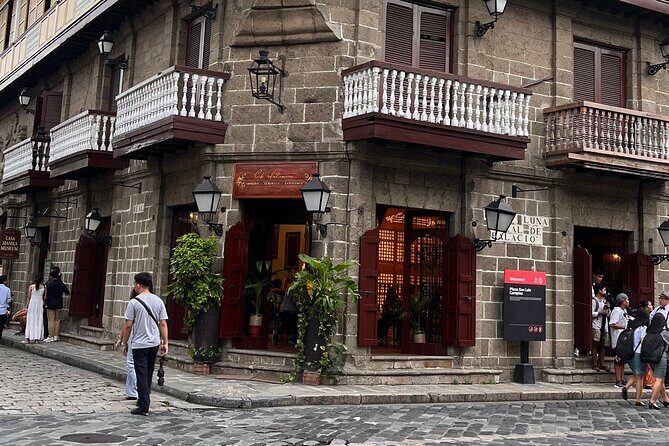
Intramuros is often sold as a postcard. This tour treats it as a living archive—Spanish-era strength, wartime damage, and the layers that shaped Manila into what you see now.
The theme is explicit: the tour zeroes in on the greatest and darkest moments in Intramuros history, including the Battle of Manila and what happened afterward. That framing gives you a reason to pay attention even when a site looks calm in the present.
Guides on this route lean on clear narration and good pacing. One guide named Mari is repeatedly praised for giving a fast, solid Philippines history setup before you start walking through the walls. Another guide, Victor, gets credit for being attentive and answering questions as you go—useful if you’re trying to connect the dots between centuries.
Manila Cathedral and Plaza de Roma: start strong, get your bearings fast
You begin at Manila Cathedral, with about 35 minutes on this stop. Admission is free, so what you’re paying for here is the guide’s explanation—how the building fits into Intramuros’ long Spanish-era story.
This opening portion is more than a photo break. It helps you understand the geography of the area: where the power centers were, how Intramuros functioned, and why later events played out inside the same walls.
Expect a mix of big architecture and orientation. If you’re visiting Manila for the first time, this is the kind of start that prevents the rest of the tour from feeling like a checklist.
Fort Santiago: the WWII focus that changes how you look at stone
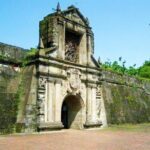
Next up is Fort Santiago, typically 45 minutes. Admission is free here too, and the tour leans hard into World War II—using a Past-and-Present lens.
This stop is the one that tends to reframe everything. Instead of seeing fortifications as just old stone, you start connecting them to real wartime strategy and the human cost that comes with it. Even if you already know a bit about the Philippines during WWII, the guide’s focus helps you notice details you would likely miss on your own.
Fort Santiago is also a good “reset” point in the tour. After the cathedral start, you get a different type of history: more defensive, more grounded in conflict, and more directly tied to the darker Intramuros theme.
Jose Rizal Shrine, White Cross, and the Dungeon: the emotional stops that add meaning
Your route includes additional Intramuros stops such as Dr. Jose Rizal Shrine, White Cross, and the Dungeon. These are not “sit and relax” breaks—they’re part of the story arc, moving from national identity and memory to the grim realities of control within the walls.
Because the tour centers on the darkest moments in Intramuros history, these stops matter for context. You’re not just seeing monuments; you’re learning why they were placed, what they represent, and how later generations chose to remember what happened.
If you like history that comes with atmosphere—not just facts—this is where the walk feels most purposeful.
You can also read our reviews of more guided tours in Luzon





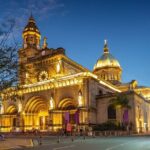
San Agustin Church: old stone, big atmosphere, and a real dress reminder
The tour includes San Agustin Church, again with a free admission and about 35 minutes. This church is described as historically significant and known for its architectural importance as one of the oldest stone churches in the Philippines.
There’s one practical rule you should take seriously: inside the church, wear something modest and comfortable. This isn’t just etiquette—it helps you avoid awkward adjustments mid-visit, especially if your day is warm or you’re walking in sun beforehand.
Also note the schedule reality: San Agustin Church is closed every Monday. If you’re booking a Monday, it’s worth checking that your exact stop order may shift since this church is listed as closed that day.
Casa Manila: seeing the colonial home instead of only reading about it
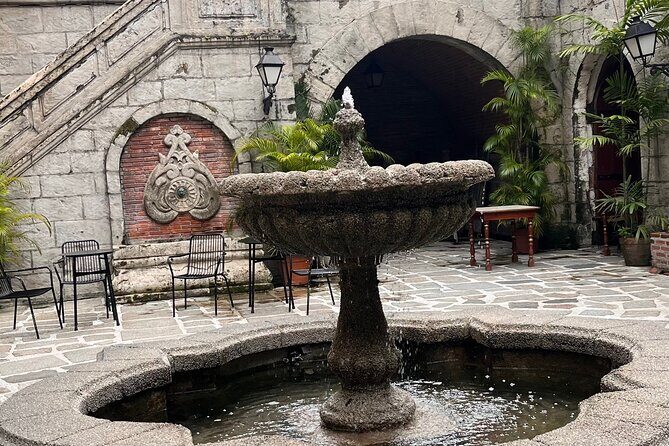
Casa Manila is one of the tour’s most talked-about stops for a reason. It’s a replica of a colonial-era Spanish mansion, designed to show visitors what daily life looked like for the Filipino elite during the Spanish colonial period. You’ll typically spend about 35 minutes here.
What I like about this stop is that it gives you a different angle on the same era. The earlier parts of the tour focus more on power and conflict; Casa Manila shifts toward lifestyle—how people lived, what spaces were like, and how social status shaped everyday choices.
Just be aware: Casa Manila is closed every Monday. If you want this portion, plan your tour for another day of the week.
The short Lamborghini bike ride: fun break, not the main event
There’s a brief mention of trying a Lamborghini bike, described as an English-named three-wheel paddle bike. The key practical detail: you won’t need to paddle because someone else can do it for you.
Think of it as a quick palate cleanser between heavier history stops. It’s not meant to replace the walk or “solve” tired feet, but it can be a nice little change of pace and a fun way to get a different angle on Intramuros.
Timing and pacing: 2 to 3 hours that move at a real walking pace
The tour runs about 2 to 3 hours, and the stop times listed are fairly specific, from around 35 minutes at Manila Cathedral and Casa Manila to 45 minutes at Fort Santiago.
This is ideal if you want a focused Intramuros experience without turning the day into a full-day commitment. It’s also short enough that you can add a meal or another nearby attraction afterward.
If you’re sensitive to walking, wear supportive shoes. Intramuros is historic, so even “easy” routes involve uneven surfaces and lots of short turns.
Price and value: what $55 covers and why it feels fair here
At $55 per person, this tour prices itself like a mid-range guided experience. The value is in what’s included:
- Local tour guide (the real engine of the trip)
- Welcome bottle of water
- Admission fees included for the stops listed as free
- Mobile ticket
- Group discounts (useful if you’re booking with friends)
The free admission stops matter because you’re not stacking paid entries on top of the guide fee. You’re paying mostly for the storytelling and guided navigation through the walls.
The only value “watch-out” is Monday. If San Agustin Church and Casa Manila are closed, your experience may still cover the walking and major landmarks, but you could miss two of the most memorable themed stops. If you care most about the church and the mansion, choose your day carefully.
What kind of traveler should book this?
Book this tour if you want a structured Intramuros walk that explains the meaning behind the sites. It’s also a strong fit for newcomers who don’t want to research every stop on their own first.
I’d especially recommend it if you’re curious about how Manila’s layers formed—how the Spanish era, wartime events, and later memory connect to the city you see now. The WWII focus at Fort Santiago and the tour’s overall emphasis on darker moments are the big draws.
You might skip this if you’re looking for a purely relaxed, light sightseeing day. The tone includes heavy themes, and church visits come with dress expectations.
Should you book this Intramuros walking tour?
If you like guided history that’s direct and practical—less random wandering, more “this is why it matters”—I think this is a good choice. The combination of small group size, free admissions, and guides like Mari and Victor (praised for humor, attention, and answering questions) makes it easier to come away with real understanding instead of just photos.
Just pick your weekday carefully. If you’re booking around Monday, you may miss San Agustin Church and Casa Manila, which are major anchors of the route.
FAQ
How long is the Intramuros walking tour?
It runs about 2 to 3 hours.
What does the tour cost?
The price is $55.00 per person.
Where does the tour start?
The meeting point is Figaro Coffee – Intramuros in the FEMII Building at 1002 Soriano Ave.
How many people are in the group?
The tour has a maximum of 10 travelers.
Is the tour wheelchair-friendly or accessible?
It says most travelers can participate, but no specific accessibility details are provided.
What’s included in the price?
Included are a local tour guide, a welcome bottle of water, and admission fees.
Which stops are free to enter?
The itinerary specifies free admission for Manila Cathedral, San Agustin Church, Fort Santiago, and Casa Manila.
Are there any closures I should know about?
Yes. Every Monday, Casa Manila Museum and San Agustin Church are closed.
What should I wear?
Wear comfortable attire, and inside the church use something modest and comfortable.
What happens if the weather is bad?
This experience requires good weather. If it’s canceled due to poor weather, you’ll be offered a different date or a full refund.