REVIEW · LUZON
Manila Old and New: Sightseeing Tour Including Intramuros and Fort Santiago
Book on Viator →Operated by Baron Travel Corporation · Bookable on Viator
Manila’s past and present collide fast. This 4-hour tour is built to get your bearings quickly—you’ll ride from the financial hub of Makati to walled Intramuros, with key history stops along the way. I like the Makati-to-Intramuros contrast, and I also love how UNESCO and WWII sites sit right inside the same route.
Two things make it especially practical for a first visit: a guided drive that helps you understand what you’re seeing, and short, well-timed breaks at the big landmarks. The one drawback to plan for is Manila traffic, which can stretch the day and make the ride feel longer than the headline 4 hours.
In This Review
- The Big Idea: New Makati Meets Old Intramuros
- Price and What You Get for $103 (and Why It’s Fair)
- Getting There: Hotel Pickup, Small Group Feel, and Traffic Reality
- Stop by Stop: Rizal Park, Roxas Boulevard, and Modern Manila Context
- UNESCO Time at San Agustin Church
- WWII Reflection at the Manila American Cemetery and Memorial
- Into Intramuros: Walls, Cobblestones, and a Short Walk That Adds Up
- Fort Santiago: Dr. Jose Rizal’s Prison Story and the Defensive Walls
- Guides Make the Difference: Nori, Richard, Frank, Stella, and Fernando
- What to Pack: Shoes, Heat Planning, and Rain Protection
- Food Timing: You’re Not Buying Meals in the Price
- Who This Tour Suits Best
- Should You Book This Tour?
- FAQ
- How long is the Manila Old and New sightseeing tour?
- Does the tour include hotel pickup and drop-off?
- Is transportation air-conditioned?
- What sites do we visit during the tour?
- Are tickets included for all stops?
- Is food included in the tour price?
- What language is the guide?
- How big is the group?
- What weather is required?
- What’s the minimum age for children?
The Big Idea: New Makati Meets Old Intramuros
This tour works because it doesn’t treat Manila as two separate cities. You start in Makati, the modern center of finance and offices, then slide toward Luneta and Rizal Park, and finally step into Intramuros, the Spanish-era walled district. That “from skyline to cobblestones” shift is the heart of the experience.
Along the drive you get context: who ruled here, how the city changed, and why certain places matter. In particular, the route is designed to connect themes—Spanish colonial power, Filipino heroism, and the WWII era—without turning it into a long lecture.
Price and What You Get for $103 (and Why It’s Fair)

At around $103 for about 4 hours, this isn’t a bargain-price tour—but it also doesn’t feel inflated for what you’re buying. You get round-trip hotel pickup and drop-off (on selected hotels), air-conditioned transport, a local English-speaking guide, plus guided visits at sites where entries/tickets are listed as included.
The value point is that your time is managed. You’re not trying to stitch together rides, timed entry, and multiple guides on your own in the humidity. Also, drinks and food are not included, so budget a snack if you’re the type who gets hungry mid-sightseeing.
If you want a tight intro that covers both the “new” city and the “old” one, this price starts to make sense.
You can also read our reviews of more tours and experiences in Luzon.



Getting There: Hotel Pickup, Small Group Feel, and Traffic Reality

You’ll choose either a morning or afternoon tour, and the day begins with pickup from your Manila hotel (selected hotels only). The group size tops out at 30, and in practice the tour can feel more personal—some groups report being quite small inside the vehicle.
Manila traffic is the wildcard. Even with an organized schedule, the drive between neighborhoods can take longer than expected, so give yourself cushion. If you have a tight dinner reservation or a night plan, keep it flexible.
Stop by Stop: Rizal Park, Roxas Boulevard, and Modern Manila Context

Your first quick stop is Rizal Park, also known as Luneta Park. The visit is short—about 10 minutes—and admission is free. It’s timed to help you understand why Dr. Jose Rizal remains central to Philippine identity, and you’ll see his statue in the park.
From there, the tour heads along Roxas Boulevard, a well-known waterfront promenade along Manila Bay. It’s not a museum stop, but it’s useful as a “see the city’s layout” moment. You get a feel for the way Manila opens toward the bay and how modern streets connect to the older core.
Then you move through the modern neighborhoods en route, including a stop at Nielson Tower, where the Filipinas Heritage Library collection is kept, plus a pass by Forbes Park—often nicknamed Millionaire’s Row. That mix of landmarks helps you understand Manila as layered, not random.
UNESCO Time at San Agustin Church
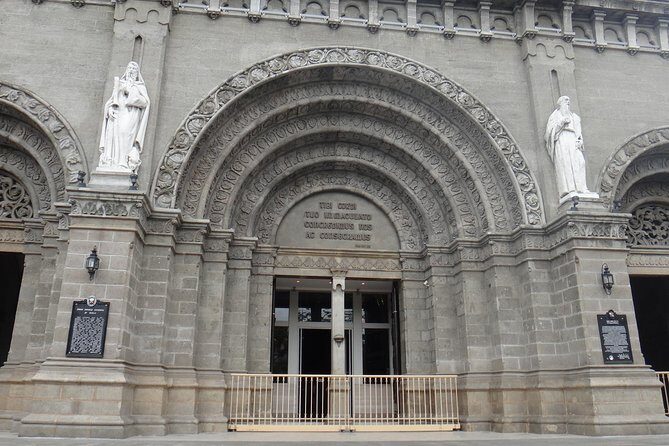
Intramuros is the tour’s main stage, and the UNESCO stop is San Agustin Church. You’ll get about 15 minutes here, with admission included.
What I like about this stop is that it’s not just “look at a church.” The guide’s framing matters: San Agustin is known for intricate Baroque design, and it’s one of the country’s oldest churches tied to Spanish-era influence. Even in a short visit, you get a sense of why this site became important enough to protect and list as UNESCO.
Practical note: indoor time can feel quick. If you want more photos, plan to prioritize angles early, especially because the broader Intramuros portion has limited time too.
WWII Reflection at the Manila American Cemetery and Memorial
Next comes a very different mood: the Manila American Cemetery and Memorial. The stop is around 15 minutes and entry is free.
This is one of those places where the calm layout forces you to slow down. The cemetery is tied to WWII, and it holds the largest number of US soldiers killed in WWII of any cemetery in the world, along with soldiers from the Philippines and other Allied nations. That mix of national and international connections is part of why the stop lands emotionally.
If you’re sensitive to somber settings, it helps to treat this as a reset point. Don’t stack it with hurried shopping in your head. Let it be what it is: a formal, quiet reminder of how global the war reached.





Into Intramuros: Walls, Cobblestones, and a Short Walk That Adds Up
Intramuros is a walled district dating to the late 1500s, when the Spanish Empire took power here. Your Intramuros stop is about 30 minutes, with admission included.
This is where the “old Manila” part becomes real. Expect cobblestone paths, thick walls, and the feeling of walking inside a preserved story. It’s also a good time to learn how the Spanish colonial city was laid out—because once you see the walls, you start to understand what people meant by defense, control, and daily life.
You’ll also get the sense that history isn’t only buildings. There are ruins and remnants from the Spanish colonial era, and they help you picture what changed over time rather than pretending the past was tidy.
A common comfort plus: the walking is limited. If you’re coming from a very humid day, you won’t feel like you’re doing a long trek.
Fort Santiago: Dr. Jose Rizal’s Prison Story and the Defensive Walls
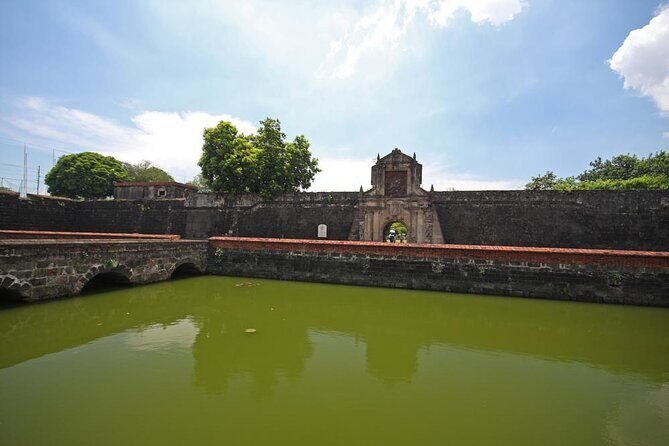
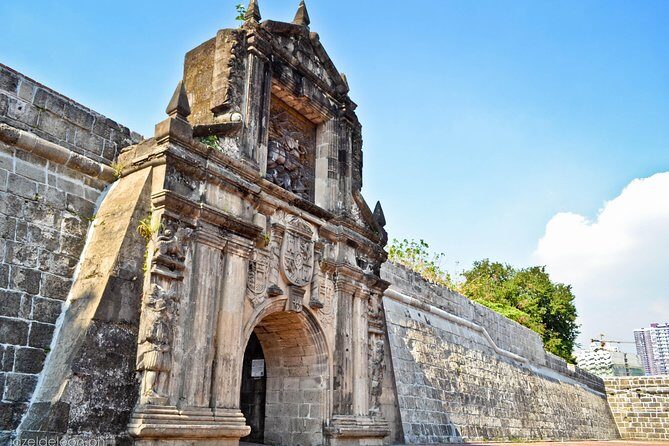
Your final anchor stop is Fort Santiago, built in 1593. It’s about 20 minutes, with admission included.
Fort Santiago is important for two reasons. First, it’s a Spanish-built defense fortress inside Intramuros that later passed through successive colonial rules. Second, it’s the site of a notorious prison where Dr. Jose Rizal wrote his poem My Last Farewell and was executed by the Spanish in 1896.
This is the kind of place where the structure does half the storytelling. The stone walls, the layout, and the historical markers help you connect the guide’s timeline to something physical. Even with a short stop, it tends to stick because the symbolism is clear.
Weather note matters here: if it rains heavily, Fort Santiago may be closed due to flooding. If you’re visiting during rainy season, plan to keep expectations flexible and bring an umbrella.
Guides Make the Difference: Nori, Richard, Frank, Stella, and Fernando
A tour like this lives or dies by the guide’s pacing and how well they connect dots. Many groups highlight guides such as Nori, Richard, Frank, Stella, and Fernando for connecting what you see to why it happened.
In practical terms, good guiding shows up on the drive. You’ll be staring at streets and neighborhoods you might never find on your own, so you want someone who can explain what you’re passing—like why a particular area matters or how Spanish-era Manila set up later events.
If your group includes one of these guides, you’re likely to get answers as you go, not just facts at the stops.
What to Pack: Shoes, Heat Planning, and Rain Protection
Comfort matters in Manila. Comfortable walking shoes are recommended, and I’d agree—cobblestones and uneven surfaces don’t forgive worn-out soles. Bring a light layer for air-conditioned transport, then plan to peel it off once you’re outside.
For the weather: the experience is described as requiring good weather. If it’s canceled due to poor weather, you should be offered a different date or a full refund, so don’t treat it like a guaranteed “see everything no matter what” day.
Also: Fort Santiago can be limited during rain, and Sunday plans can be complicated by mass timing inside churches. If you’re traveling on a Sunday, you might find photo moments and indoor access tighter than on a weekday.
Food Timing: You’re Not Buying Meals in the Price
Food and drinks are not included. That’s not a dealbreaker, but it changes how you should plan your day.
If you’re sensitive to long gaps, carry a small snack or plan a nearby meal before the pickup. After the quiet intensity of the WWII cemetery, it can feel odd to rush straight into a heavy meal—so having a light option ready can help you keep your energy without losing the mood.
Who This Tour Suits Best
This is ideal if you want a first-time overview that ties together major themes: Spanish colonial influence, Filipino hero Dr. Jose Rizal, and WWII remembrance. It’s also a strong choice if you prefer guided structure over self-guided navigation in a traffic-heavy city.
You’ll likely enjoy it most if you:
- want a short “intro circuit” rather than deep, all-day wandering
- like history that’s connected to physical places (walls, churches, forts)
- appreciate air-conditioned riding between stops
If you only care about one area—say, pure beach time or pure nightlife—this might feel too structured. And if you need hours of museum-style exploration, the stops are brief, by design.
Should You Book This Tour?
I’d book it if you want to get your bearings fast and see the core Manila landmarks in one organized loop. The best reason is simple: the pairing of Makati’s modern skyline energy with Intramuros’ centuries-old walls makes Manila feel understandable, not overwhelming.
Skip it or reconsider if you’re traveling on a rainy day and your schedule is rigid. Fort Santiago can be affected by flooding, and indoor access can be limited by Sunday church services. Also, if you’re very time-sensitive, assume the day can run long due to traffic.
If you’re flexible, this tour delivers exactly what its name promises: old and new Manila in one guided sweep.
FAQ
How long is the Manila Old and New sightseeing tour?
It runs about 4 hours.
Does the tour include hotel pickup and drop-off?
Yes, hotel pickup and drop-off are included on selected hotels.
Is transportation air-conditioned?
Yes. You travel by an air-conditioned vehicle.
What sites do we visit during the tour?
You’ll visit Rizal Park, San Agustin Church (Immaculate Conception Parish), the Manila American Cemetery and Memorial, Intramuros, and Fort Santiago.
Are tickets included for all stops?
Admission is included for San Agustin Church and for Intramuros and Fort Santiago. The Manila American Cemetery and Memorial and Rizal Park are listed as free.
Is food included in the tour price?
No. Food and drinks are not included.
What language is the guide?
The guide is a local English-speaking guide.
How big is the group?
The tour has a maximum of 30 travelers.
What weather is required?
The experience requires good weather. If it’s canceled due to poor weather, you’ll be offered a different date or a full refund.
What’s the minimum age for children?
Children must be accompanied by an adult, and the minimum age is 2 years.
If you tell me your travel month and whether you prefer morning or afternoon, I can help you pick the best timing for weather and crowd comfort.