REVIEW · LUZON
Manila Night Market Experience with Local Guide
Book on Viator →Operated by Manila Experience (V.S Tour Services) · Bookable on Viator
Street food and shopping after dark. That is the whole point here. You’ll spend about two hours with Venus as your local guide, starting around Divisoria Market and ending at the Pasig River Esplanade, with stops built around food, photos, and real local routines in Manila.
What I like most is the mix of Divisoria Market shopping and guided street-food ordering, so you’re not just wandering with a map. I also like the second stop in Binondo, Manila’s longtime Chinatown area, where you get history context and food culture in the same walk.
The main drawback to plan around is logistics and comfort: this runs at night, requires a strong physical fitness level, and it needs good weather to go as scheduled.
In This Review
- Key highlights worth showing up for
- How the 2-hour Manila night market tour is paced
- Divisoria Market at night: bargains and how the guide keeps it fun
- Street-food stops: fish balls, kwek-kwek, isaw, and ordering with confidence
- Binondo Chinatown: St. Lorenzo Ruiz, Ongpin Street, and where the food culture lives
- The tuk-tuk and photo moments that make the night feel special
- Jellyfish rooftop bar stop in Makati: a calmer landing after market time
- Price and value: what $68 per person really includes
- Who this tour suits best (and who should choose a different night)
- Should you book this Manila night market with a local guide?
- FAQ
- What is the price per person?
- How long is the tour?
- What time does the tour start?
- Where do we meet, and where does the tour end?
- What are the main places you visit?
- What street foods can I try?
- Is photography included?
- How many people are in a group?
- Is cancellation free, and what happens with bad weather?
Key highlights worth showing up for
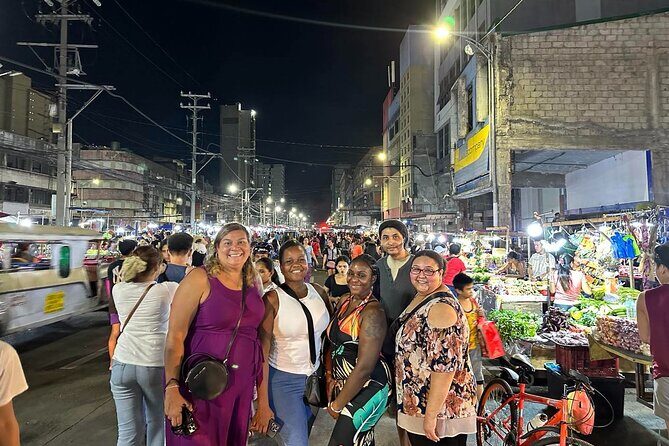
- Divisoria Market bargains for clothes, shoes, bags, and accessories, with many items starting around $1 to $3
- Guided street food ordering, including favorites like fish balls, kwek-kwek, and isaw
- Binondo Chinatown context, including the area’s long-running Chinese-Filipino food scene
- Photography included, so you can focus on eating and walking
- Small group size (max 10) for easier navigation and more time with the guide
How the 2-hour Manila night market tour is paced
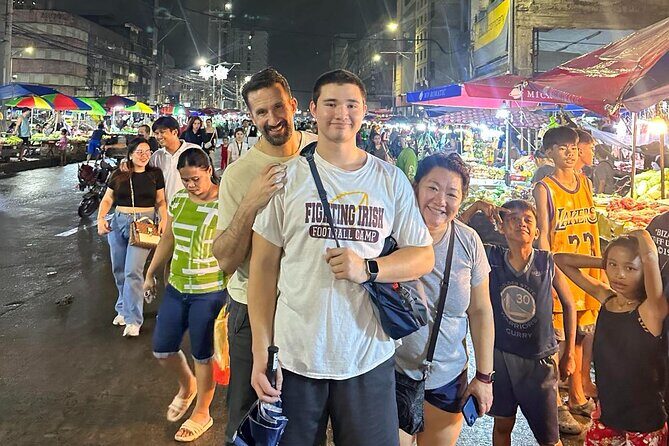
This is a night walk tour with a simple structure: meet in the Divisoria/Tondo area around 6:00 pm, then spend roughly two hours moving between food and shopping zones, finishing at the Pasig River Esplanade area. Tours can run in the evening window, listed as 6:00 pm to 9:00 pm, but your slot is the start time you book.
The small group cap of 10 travelers max matters more than it sounds. In a market setting, smaller groups mean you can keep moving without the constant regrouping that turns a night out into a waiting game. It also tends to make the guide’s pace more responsive if you want to slow down for photos or ask questions.
One practical thing: the tour description calls for a strong physical fitness level. That usually means you should be comfortable with lots of walking, standing in lines, and moving through tight market lanes after dark.
You can also read our reviews of more guided tours in Luzon


Divisoria Market at night: bargains and how the guide keeps it fun
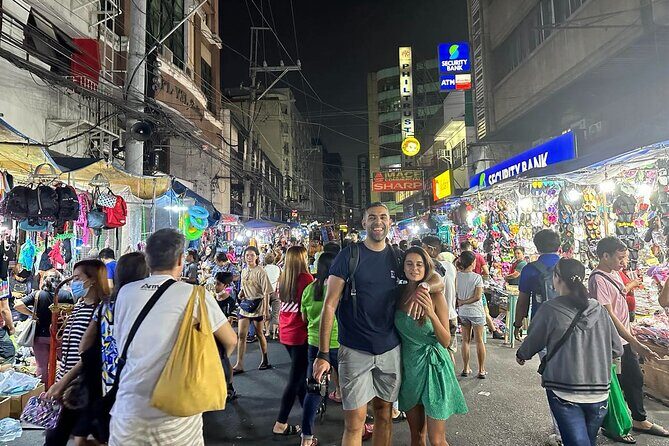
Divisoria Market is where Manila’s bargain culture feels most direct. You’ll be focused on inexpensive fashion and everyday items—clothes, shoes, bags, accessories, and souvenirs—often in the $1 to $3 range for clothing-type finds. Even if you don’t plan on buying much, it’s a strong place to understand how locals shop and negotiate in real time.
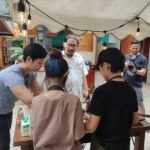
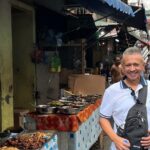
The tour isn’t just a shopping lap. You also get time for street snacks right in the market area, plus guidance on how to order food and drinks the Filipino way. That matters because night market food can be chaotic if you’re trying to translate what’s fresh, what’s popular, and what’s worth your money.
I also like that photography is included. Markets are visual by nature—signs, textures, hands-on vendors, and the mix of people—and having the guide help with photos saves you from spending the night behind your screen instead of in the moment.
A small consideration: night market energy can be intense. If you want a quiet evening, you might find the market environment overwhelming. If you like people-watching and food smells, you’ll probably find it perfect.
Street-food stops: fish balls, kwek-kwek, isaw, and ordering with confidence
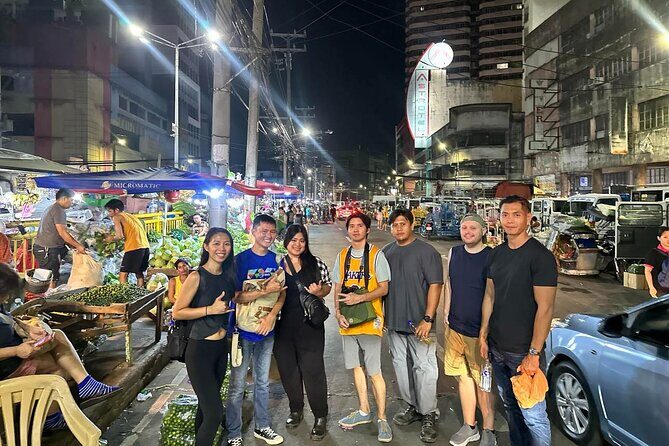
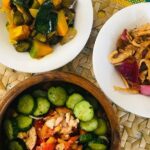
Street food is the heart of this experience. You’re specifically set up to sample Filipino street favorites like fish balls, kwek-kwek, isaw, and more. The guide approach is practical: you’re not left guessing what to buy or when to eat.
Fish balls and kwek-kwek are the kind of foods that make sense for a first night in Manila because they’re common, shareable, and easy to compare between stalls. Isaw brings a more local flavor profile—grilled and skewered—which is where you really get the sense of how Filipinos snack while they shop and chat.
What makes this more than food trivia is the social rhythm. The tour is designed so you’re ordering as the locals do, not just pointing and hoping. If you get a chance to try multiple items in a short time, you’ll leave with a clearer sense of what Manila street food tastes like across styles: fried, grilled, sauced, and handheld.
I’d also plan for a small snack strategy. You only have about two hours total, so it helps to think in bites, not full meals. That way you keep energy for the walking portion and still leave satisfied.
Binondo Chinatown: St. Lorenzo Ruiz, Ongpin Street, and where the food culture lives
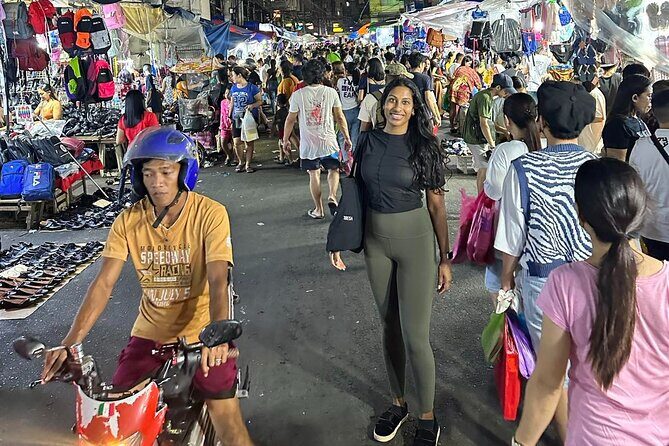
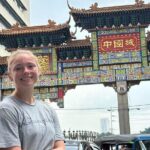
After Divisoria, you head to Binondo, often described as the oldest Chinatown in the world, with roots dating back to 1594. Even if you only catch part of it on foot, Binondo’s mix of Chinese-Filipino culture shows up fast in the streets, shops, and food.
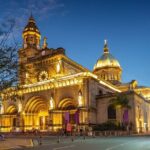
This stop includes big landmarks and the streets around them. You’ll be oriented to key points like Binondo Church (dedicated to St. Lorenzo Ruiz) and the famous Ongpin Street area, known for traditional medicine shops, jewelry, and food counters serving Chinese-Filipino staples.
If you like eating with context, this part is a win. The tour route is built around places food lovers focus on in Binondo—dumplings, noodles, and hopia from well-known spots such as Dong Bei and Eng Bee Tin. Even when you’re not doing a full sit-down meal, the guide’s direction helps you understand why these streets matter.
You’ll also be able to notice how nearby streets like Escolta fit into the mix of colonial-era buildings and modern creative spaces. That blend gives Binondo more than just one vibe; it gives you layers.
Potential drawback: Binondo is a dense neighborhood. If you’re not comfortable walking through busy streets or standing in close vendor areas, the atmosphere may feel too tight. If you’re okay with crowds and motion, you’ll likely enjoy how quickly you get oriented.
The tuk-tuk and photo moments that make the night feel special
One detail that shows up in actual experiences is transportation during the evening. On top of walking, some groups have taken a tuk-tuk ride, which can be a nice reset when the streets feel crowded or when you just want a quick change of pace without losing the vibe.
Photography being included also adds value. You get help capturing the night without turning your tour into a solo phone-scrolling project. Markets and street food are hard to document well on your own because your attention keeps splitting—food, faces, movement, and prices.
So what you’re really buying with those added moments is time and ease. Less time figuring out what’s worth photographing, more time actually enjoying the food and the streets.
You can also read our reviews of more shopping tours in Luzon
Jellyfish rooftop bar stop in Makati: a calmer landing after market time
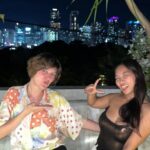
After the market shopping and eating, the tour description includes time to chill at the Jellyfish rooftop bar in Makati. That gives the night a rhythm change: you go from close-up street life to a higher viewpoint with more open space.
This part matters because markets can be sensory overload. The rooftop break is a chance to cool down, catch your breath, and reflect on what you just ate and bought. It also makes the tour feel like more than a two-stop checklist.
Just be aware that rooftop plans can be weather-dependent. Since the experience requires good weather to run, you should assume this style of stop may be adjusted if conditions aren’t ideal.
Price and value: what $68 per person really includes
At $68 per person for about two hours, the price isn’t trying to be a budget DIY walking tour. You’re paying for a local guide, guided food ordering, and friction-free movement through a market area where it’s easy to get lost or miss the best cues.
Here’s where you get practical value:
- Two major areas: Divisoria Market plus Binondo Chinatown, both with a clear guided focus
- Food sampling built around recognizable Filipino street foods
- Photography included, which reduces the hassle of trying to document everything yourself
- Small group size (max 10), which usually improves pacing in real-life market conditions
Shopping value is partly up to you. The tour gives you the chance to find very low-cost fashion and souvenirs, starting around $1 to $3 for clothing-type items. That means your total experience cost can stay near $68 if you only snack, or rise if you buy. Either way, you get the guidance to shop without wasting time.
Who this tour suits best (and who should choose a different night)
This is a great fit if you want:
- A guided Manila night market experience with street food and local shopping
- A short, focused plan for your first night (about two hours)
- A tour that ends near a scenic, central area like the Pasig River Esplanade
It may not be ideal if you:
- Dislike walking at night or being in dense market streets
- Are sensitive to strong night-market energy
- Expect a quiet, sit-down dining experience instead of street-side eating and browsing
The tour also notes a strong physical fitness level, so bring the right shoes and accept that you’ll be on your feet.
Should you book this Manila night market with a local guide?
If you want an easy win for your first Manila evening, I’d seriously consider booking. The combination of Divisoria Market shopping, Binondo Chinatown context, and street food ordering help makes the tour feel efficient without feeling rushed. The included photos and the chance to try multiple Filipino snacks help you leave with more than just photos—you leave with a clearer sense of how people eat and shop after dark.
Book it if you’re comfortable with crowds and walking, and you can handle a night out that includes buying low-cost items if you want. Skip it if you’re hoping for a calm, luxury-style evening or you’re not ready for a physically active night plan.
FAQ
What is the price per person?
It’s $68.00 per person.
How long is the tour?
The duration is about 2 hours.
What time does the tour start?
The listed start time is 6:00 pm.
Where do we meet, and where does the tour end?
You start in Tondo, Manila, and the tour ends at the Pasig River Esplanade area (Riverside Drive, Ermita, Manila).
What are the main places you visit?
You visit Divisoria Market and then Binondo (Manila Chinatown). The tour also includes time to chill at the Jellyfish rooftop bar in Makati.
What street foods can I try?
The street food focus includes fish balls, kwek-kwek, isaw, and other similar Filipino street snacks.
Is photography included?
Yes. Photography is included as part of the experience.
How many people are in a group?
The tour has a maximum of 10 travelers.
Is cancellation free, and what happens with bad weather?
You can cancel for a full refund if you cancel at least 24 hours before the experience starts. The experience requires good weather, and if it’s canceled due to poor weather, you’ll be offered a different date or a full refund.