REVIEW · LUZON
Manila Filipino Cooking Class: Meryenda Favorites
Book on Viator →Operated by Explore Manila Tours · Bookable on Viator
Filipino snacks are more fun when you cook them. This 2-hour Makati class focuses on meryenda favorites—so you leave with practical skills for noodles, spring rolls, and sweet treats, plus plenty of time at an individual station. The host, Chyl, keeps things friendly and step-by-step, with a setup designed to help you recreate the dishes later.
I especially like that this isn’t theory-heavy. You get use of the cooking gear and the ingredients, then a non-alcoholic drink to keep you going while you learn Filipino cooking basics. That focus on food you can actually repeat at home is the big win.
One possible drawback: because it’s only about 2 hours, you’ll cook enough for a full snack set, but you may still want more time if you like to go deep on techniques.
In This Review
- Quick Hit Key Points
- From Makati to Your Kitchen: Why This Class Hits the Right Note
- Getting Started at Somerset Olympia Makati (and What to Expect in the Space)
- Meet Your Host: Chyl’s Patient, Hands-On Style
- What You’ll Cook: The Meryenda Set (Noodles, Spring Rolls, and Sweet Finish)
- The noodle favorite: comfort food you can repeat
- Spring rolls: the crunch challenge (and the learning point)
- Sweet treats: a satisfying close to the snack lesson
- How This Helps You Cook Filipino Food at Home (Not Just Eat It Once)
- What’s Included in the $60 Price (and What You’ll Still Need to Budget)
- Family-Friendly Afternoon: Kids, Comfort, and the Human Side
- Logistics That Actually Matter: Timing, Group Size, and Returning Back
- Who Should Book This Class (and Who Might Skip It)
- Should You Book the Manila Filipino Cooking Class: Meryenda Favorites?
Quick Hit Key Points
- Small group (max 4) means you get real attention, not just a quick wave-and-go lesson
- Chyl’s teaching style is patient and attentive, with check-ins while you cook
- You make a full meryenda snack set: a noodle dish, spring rolls, and sweet treats
- Basic, approachable ingredients so you can recreate the results at home
- Everything’s handled for you: equipment, ingredients, and a non-alcoholic drink are included
- Family-friendly vibe with staff help if little ones get fussy
From Makati to Your Kitchen: Why This Class Hits the Right Note
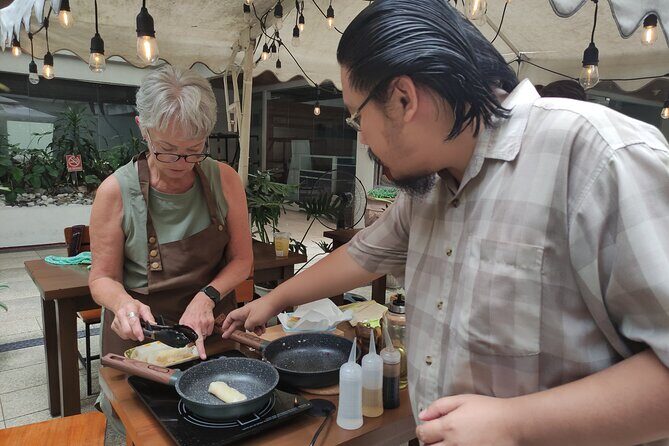
This cooking class is built around a very practical idea: don’t just taste Filipino food—learn how to make a snack you’ll actually crave again. The focus is meryenda, which is Filipino for snack time, and the class pairs that concept with three categories you can recognize fast: a filling noodle favorite, savory crunchy spring rolls, and sweet treats that wrap up the meal.
Why I like this format: it teaches variety without overwhelming you. You get savory, crunchy, and sweet in one sitting, so you leave with a mini “playbook” for different cravings. It also fits the way most home cooks work—you’re rarely trying to master one perfect dish. You’re building a few reliable hits.
The class happens in the heart of Makati at the Somerset Olympia Makati meeting point, so you’re not trekking out to some far-off workshop. If your day needs to stay flexible, the 2:00 pm start is easy to build around, whether you’re doing other sightseeing in Manila or just want a relaxed afternoon.
You can also read our reviews of more cooking classes in Luzon
Getting Started at Somerset Olympia Makati (and What to Expect in the Space)
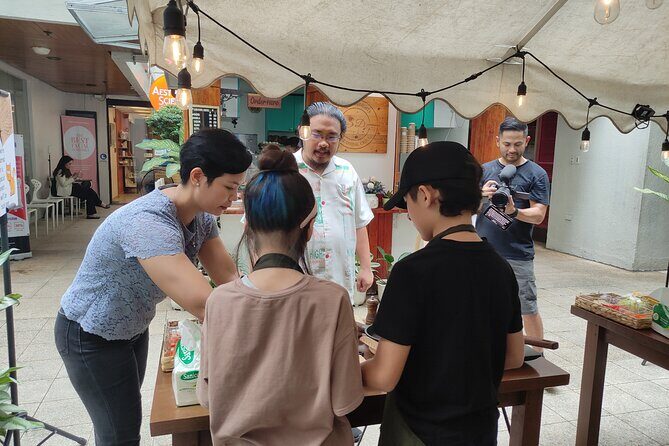
You meet at Somerset Olympia Makati, 7912 Makati Ave, Makati City. It’s noted as near public transportation, which matters in Manila because traffic and route planning can turn a simple errand into a time sink. Starting and ending back at the same place also keeps your evening plans clean—no long transfer at the end when you’re hungry and you want to get home.
The tour runs about 2 hours (approx.), and the activity ends where it starts. The flow is designed for a small group setup, with stations rather than a single cramped line where everyone watches. That’s a big deal for comfort and confidence. If you’re cooking for the first time, standing on the sidelines can feel stressful. Here, you’re typically placed at an individual cooking station, which helps you stay focused on the task in front of you.
One more small but helpful detail: you’ll receive confirmation at booking, and the experience uses a mobile ticket. That’s the kind of thing that saves time when you’re already juggling plans in a new city.
Meet Your Host: Chyl’s Patient, Hands-On Style
A lot of cooking classes fail at one thing: keeping beginners calm while things heat up. This one gets praised for the way Chyl teaches. In the reviews, her name comes up often, including the pronunciation note that Chyl is pronounced Chill. That’s funny, but the real value is how she operates—friendly, attentive, and patient.
What you should look for in her teaching style (based on how the class is described and what people highlight):
- She checks in to make sure each student is on track
- She’s slow enough to be understandable, but hands-on enough that you still feel you’re cooking
- She helps you correct mistakes before they turn into a soggy spring roll or a disappointing texture
And yes, the class is also social. Several people mention chatting about food, the Philippines, and life in general. That doesn’t turn it into a lecture. It makes the time pass quickly, especially on a travel day when you’re hungry for conversation as much as dinner ideas.
What You’ll Cook: The Meryenda Set (Noodles, Spring Rolls, and Sweet Finish)
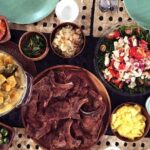
This class is built to get you making a full snack spread. Even without dish names listed in the details, the structure is clear: you’ll prepare a filling noodle dish, savory crunchy spring rolls, and sweet treats. Reviews also mention cooking three dishes, which fits the meryenda goal.
The noodle favorite: comfort food you can repeat
The noodle dish is described as a filling favorite. For you, that means two things:
- It’s likely to use ingredients and steps that translate well to home cooking.
- It can handle a range of spice tolerance better than foods that rely on one intense ingredient.
This is the “anchor” dish. People tend to remember the taste and the method because noodles are forgiving when you follow the steps.





Spring rolls: the crunch challenge (and the learning point)
Spring rolls sound simple until you’re the one responsible for texture. Here’s why this part of the class matters: spring rolls are where Filipino cooking shows off technique. You’re working with dough and filling and aiming for a crunchy result.
In a small-group class with attentive instruction, you can learn what makes spring rolls turn out right—things like how you handle the filling and how you manage the cooking stage. Even if you don’t nail it perfectly on your first try, you’ll leave knowing what to watch for next time.
Sweet treats: a satisfying close to the snack lesson
The class isn’t only savory. It ends with sweet treats that are described as unforgettable. This is useful for home cooks because it rounds out your meryenda menu. You’re not stuck with a snack that only satisfies one mood.
If you want a class that gives you a complete spread—something you can serve to friends without scrambling for dessert—this is the right structure.
How This Helps You Cook Filipino Food at Home (Not Just Eat It Once)
The best part of cooking classes is what you can carry home. Here, the whole concept is about recreating recipes with ingredients you can find and steps you can remember.
The class is described as an introduction to Philippine cooking with easy recipes. People also praise the use of basic ingredients so the results aren’t locked behind “only available in Manila” supplies. That’s huge for value. A $60 class is only worth it if it changes your next weekend meal plan.
And it’s not just about taste. There’s also an understanding piece: the class highlights why Filipino cuisine is shaped by history across more than 7,000 islands, from the mountains to the sea. You don’t need a cultural essay to benefit from that context—you just need to know what cooking choices make sense locally. Once you understand that food evolves through place and tradition, the recipes feel less like random directions and more like logical methods.
In practical terms, you’re learning patterns:
- how to build flavor in savory dishes
- how to control texture in spring rolls
- how to wrap up a snack set with something sweet
That’s the difference between eating a meal and gaining a skill.
What’s Included in the $60 Price (and What You’ll Still Need to Budget)
Price is $60 per person for about 2 hours in Makati. On paper, that’s not “cheap.” But value depends on what you’re getting.
Here’s what’s included:
- Use of cooking equipment
- Food ingredients
- Non-alcoholic drink
Optional:
- Gratuity, which is optional
There’s also mention of group discounts, and the group size max is 4 travelers. Small-group classes cost more to run, because more instructor attention per person is built in. In this case, that attention is repeatedly highlighted as a key part of the experience, especially with patient guidance and check-ins at each station.
If you’re the type of traveler who likes learning through doing, $60 is easier to justify because you’re not paying only for the dish. You’re paying for the equipment setup, ingredient handling, guidance, and the chance to actually produce your own snack spread.
Family-Friendly Afternoon: Kids, Comfort, and the Human Side
If you’re traveling with kids, you’ll appreciate that this class is described as family friendly. And the details aren’t vague. One review specifically mentions attending with a 3-year-old and a 0-year-old, noting that when the baby got fussy, staff helped by holding the child so the parent could keep cooking.
That’s the kind of real-world support that matters. Cooking classes can be chaotic with young kids if the staff expects you to manage everything alone. Here, the class seems set up to handle normal family friction without turning the day into stress.
So if your group includes kids and you want an activity that’s more interactive than a museum, this is one of the safer bets in Makati.
Logistics That Actually Matter: Timing, Group Size, and Returning Back
The class starts at 2:00 pm and runs about 2 hours. For scheduling, that’s a good middle slot: early enough to still enjoy your evening plans, late enough that you’re not rushing from breakfast.
The max group size is 4 travelers, which keeps the experience calm. In practical terms, it also affects quality. More room for hands-on time. Fewer waiting moments. More chances to ask questions and get corrections.
You’ll also start and end back at the meeting point at Somerset Olympia Makati. That’s a small detail, but it helps you avoid “what do we do after?” moments when you’re done cooking and ready to go.
The class requires good weather, with an option for a different date or a full refund if canceled due to poor weather. The good news is that the weather issue is handled clearly—so you won’t be left guessing.
Who Should Book This Class (and Who Might Skip It)
You should book this cooking class if you want:
- a practical Filipino food skill set you can use at home
- small-group attention rather than a large crowd experience
- a full meryenda snack spread, not just a single dish
- an afternoon activity that’s both educational and social
You might skip it if:
- you want long, deep technique sessions on one dish (this is about 2 hours, so the pace is designed to cover multiple items)
- you prefer a purely cultural tour with lots of wandering and sights (this is cooking-first, not sightseeing-first)
If you’re visiting Manila and you like spending money in a way that changes how you cook later, this is the kind of activity that tends to feel worth it.
Should You Book the Manila Filipino Cooking Class: Meryenda Favorites?
I’d recommend booking if your goal is a hands-on, confidence-building cooking session that teaches more than one item. The strongest signals are Chyl’s patience, the small group setup, and the fact that the class is structured around ingredients and steps you can recreate at home.
It’s also a solid choice for families. When staff support shows up in real situations like helping with a cranky baby, that’s not a small thing—it’s the difference between a nice experience and a stressful one.
If you’re on the fence, decide based on your cooking style. If you want snack-sized learning you can reuse, book it. If you want a long, slow culinary immersion or a single dish masterclass, you’ll probably want to look for a different format.