REVIEW · MANILA
Intramuros Walking Tour with Transportation by Don’t Skip Manila
Book on Viator →Operated by Don't Skip Manila · Bookable on Viator
Manila’s old walls tell stories fast. This small-group Intramuros tour strings together major sights with an expert-led, 400-years-of-change style talk, and I like that you’re not just looking—you’re hearing why places matter. You also get air-conditioned transport plus museum entry fees included, so you spend less time figuring things out and more time walking the walls.
The one thing to plan around is time. With short stops—15 to 60 minutes each—you’ll get an excellent overview, but it’s not built for slow, linger-all-day wandering, especially when the midday humidity ramps up.
In This Review
- Key Things I’d Lock In Before You Go
- A 4-to-5-Hour Intramuros Primer from Manila Bay
- Small-Group Transport: Pickup, A/C Comfort, and Mobile Tickets
- Fort Santiago: A Spanish Citadel Built for Manila’s Defense
- Rizal Shrine: The Last Night Story and That Quiet Emotional Turn
- Manila Cathedral: First Cathedral of the Philippines, Quick but Meaningful
- Casa Manila: Colonial Lifestyle as a Museum Step-Through
- The Horse-Drawn Carriage Ride: Fun Option, Hearing Can Be Tricky
- What This Tour Feels Like: Storytelling, Humor, and 400 Years in Order
- Price and Value: What $83.34 Buys You in Real Terms
- Best Fit: Who Should Book This Intramuros Tour
- What to Pack for a Hot, Humid Morning Walk
- Should You Book This Intramuros Tour?
- FAQ
- How long is the Intramuros Walking Tour?
- What does the tour cost?
- What’s included in the price?
- Is pickup from your hotel included?
- Which main sites do you visit?
- Do I need museum tickets in advance?
- Is the horse-drawn carriage ride guaranteed?
- What time does the tour run?
- What’s the cancellation and weather approach?
- Is it suitable for most people?
Key Things I’d Lock In Before You Go
- Small group size (12 or fewer) means questions and photo stops feel natural, not rushed.
- All museum entrance fees included so your budget stays simple.
- A/C vehicle + bottled water helps a lot in Manila’s heat.
- Fort Santiago is your big 1-hour anchor stop; don’t skip it.
- Horse-drawn carriage ride depends on group size (included if there are more than 4 tourists).
- Morning weekend schedule (7:30–8:30 AM) helps you beat the toughest sun.
A 4-to-5-Hour Intramuros Primer from Manila Bay

This is a practical “get your bearings” tour. You start with a quick look at a Manila Bay waterfront promenade known for sunsets and coconut-lined views. Even if you’re not doing sunset timing (the departures are in the morning), the stop helps you understand where Intramuros sits in relation to the rest of Manila. It’s the mental map step.
Then the day pivots into Intramuros—the Walled City—where power and government in the Spanish colonial period concentrated. You’ll move through key sites in sequence, with short windows that keep the flow moving. That’s a plus if you want a tight historical overview without turning your day into a full-day grind.
You can also read our reviews of more walking tours in Manila



Small-Group Transport: Pickup, A/C Comfort, and Mobile Tickets
The big value here isn’t just the sites—it’s the way the tour runs. You get pickup offered, an air-conditioned vehicle, and bottled water. When you’re walking in the heat (and you will be), that transport support makes the difference between a fun morning and a sweaty slog.
Group size is another reason to consider this. The tour is described as small—just 12 people or fewer, with an overall max of 24 travelers. For Manila, that scale matters. It’s easier to hear instructions, easier to ask questions, and less likely that the group stretches out so far you feel stranded.
You also get a mobile ticket. That’s useful when you’re bouncing between urban stops and don’t want to hunt for paperwork. And because near public transportation is mentioned, you’re not totally stuck if you need an alternative meeting plan.
Fort Santiago: A Spanish Citadel Built for Manila’s Defense
Fort Santiago is the tour’s heaviest hitter, with an included admission ticket and about one hour on site. The fortress was first built by Spanish conquistador Miguel López de Legazpi for the new city of Manila, and the point of the fort is defense—you can feel the purpose of the place even when you’re just walking through.
What I like about putting Fort Santiago early is that it gives you context. Many Intramuros stories start with power: who controlled access, who defended the harbor-facing city, and why the Spanish established this walled system. If your brain needs a timeline anchor, this is it.
Practical tip: expect more outdoor walking than you think. Even if the museum-like areas grab attention, you’ll still be moving around in open air. If you’re sensitive to heat, this is where you’ll appreciate the earlier A/C transport and the bottled water.
Rizal Shrine: The Last Night Story and That Quiet Emotional Turn
Next is the Rizal Shrine, focused on José Rizal and dedicated to his life and work. You’ll spend about 30 minutes, and admission is included. The standout detail is that the museum is located in the building where Rizal spent his final night, and where he hid his famous poem Mi último adiós (My Last Farewell) in an oil lamp.
This stop works well in a tour like this because it shifts the tone. Fort Santiago is about conquest and control; Rizal Shrine is about identity, sacrifice, and the human cost of history. Even with a short time window, the theme lands.
Timing note: 30 minutes is enough to read key displays and take photos, but it’s not enough to go deep into every exhibit. If you’re a hardcore museum reader, plan to skim during the tour and then come back later on your own with more time.
Manila Cathedral: First Cathedral of the Philippines, Quick but Meaningful
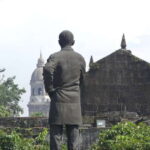
Then you’re at the Manila Cathedral, with about 15 minutes and admission included. It’s described as the first cathedral of the Philippines and a basilica located in Intramuros, dedicated to the Immaculate Conception—one of the principal titles for the Blessed Virgin Mary, the country’s patroness.
Fifteen minutes sounds brief, and it is. But it’s often the right amount for a cathedral stop on a time-limited tour. You get to see the space, get your bearings in Intramuros, and attach the broader story of colonial Manila to a physical landmark.
Practical tip: keep your expectations realistic. This is a short photo and orientation stop, not a long sit-and-read visit. If you want extra quiet time inside, save that for later.




Casa Manila: Colonial Lifestyle as a Museum Step-Through
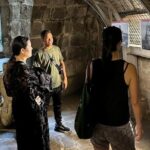
Casa Manila takes you to a museum that depicts Spanish-colonial lifestyle during the era. You’ll have about 30 minutes here, and admission is included. The museum is described as a copy of an 1850s San Nicolas House once located in Calle Jaboneros.
I like this stop because it changes your perspective from “history as events” to “history as everyday life.” Fort Santiago is about defense. Rizal Shrine is about memory and meaning. Casa Manila is about what people ate, how homes functioned, and how daily routines looked inside Spanish-era domestic spaces.
What to watch for: you’ll likely see room-after-room portrayals quickly. In a tour setting, your best strategy is to pick one or two areas that interest you most (furniture layout, household function, or design). Don’t try to absorb everything at once in half an hour—pick what you’ll remember.
The Horse-Drawn Carriage Ride: Fun Option, Hearing Can Be Tricky
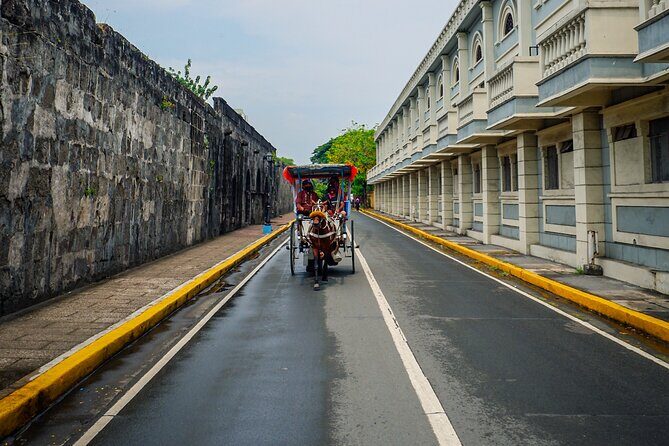
A horse-drawn carriage ride is included if more than 4 tourists are in the group. That means you might get it, or you might not, depending on how many people show up.
When you do get it, it can be a nice change of pace—especially in Intramuros, where walking is constant. It’s also a visual experience. You’re literally seeing the area through a slower-moving lens.
But there’s a real consideration to go in with: you may have trouble hearing the driver’s commentary and you might struggle to see what they point out. Even if you’re on this for fun, don’t expect a seamless narration. Use it as movement and atmosphere, not as your main source of information.
What This Tour Feels Like: Storytelling, Humor, and 400 Years in Order
The tour style is part of the value. The historical commentary is structured to trace Manila’s changes over roughly 400 years, moving across influences like Malay, Spanish, Japanese, and Filipino eras. It’s the kind of framework that helps your brain connect individual landmarks to bigger shifts.
The guiding approach also gets described as animated and entertaining. You may encounter guides such as Andre/Andrey/Andrei or Anne—each referenced as bringing energy and using tools like pictures and even music to set the mood. That matters because history tours often fail on one thing: people stop paying attention. Here, the presentation is designed to keep your interest active.
One more practical point: because it’s short and structured, it works as a foundation. After this, you’ll have enough context to recognize what you see if you come back later, even on your own.
Price and Value: What $83.34 Buys You in Real Terms
At $83.34 per person, this isn’t the cheapest way to see Intramuros. But it’s not overpriced when you break down what’s included.
You get:
- Air-conditioned vehicle
- Pickup offered
- Bottled water
- Museum entrance fees
- All fees and taxes
- Tour guide services
- Horse-drawn carriage ride when conditions are met
In other words, you’re paying for convenience (A/C transport and pickup), plus the official entry costs for multiple stops. If you tried to DIY this day—arriving, paying individual admissions, and coordinating a logical route—you’d spend time and energy that this tour compresses.
So the value question becomes: do you want history organized for you, with transport handled, and admission fees covered? If yes, the price makes sense. If you’re the type who likes long, unstructured exploring and you already have strong self-guided plans, you could spend less by going on your own. But you’d lose the guided timeline that makes the walls feel alive.
Best Fit: Who Should Book This Intramuros Tour
This is a great match if:
- You want a first visit to Intramuros with context.
- You like short stops that still cover the major landmarks.
- You prefer a group size that stays manageable.
- You’d rather stay comfortable with A/C transport in Manila’s heat.
It’s less ideal if:
- You want hours in one museum with lots of quiet time.
- You’re hoping the horse carriage ride will function like an audio tour.
- You need total freedom to roam slowly at your own pace.
What to Pack for a Hot, Humid Morning Walk
The itinerary spends time outdoors between stops, and Manila can feel intense even on a morning start. Bring:
- Sun protection (cap/hat, sunglasses)
- Light breathable layers
- Comfortable shoes for walking
- A reusable water bottle if you like (bottled water is provided, but it’s easy to top up)
And plan your energy. This is not a nap-friendly itinerary. It’s a “walk, learn, move on” style day with short windows that keep momentum.
Should You Book This Intramuros Tour?
If you’re trying to see Intramuros efficiently and understand what you’re looking at, I’d book it. The mix of Fort Santiago, Rizal Shrine, Manila Cathedral, and Casa Manila gives you both political context and everyday-life perspective, and the included museum tickets take friction out of your day.
I would only hesitate if you hate time limits. The stops are short by design, and if you want to read every exhibit slowly or revisit details without a crowd, you may feel a bit rushed.
Overall, this is a smart choice for your first Manila heritage day—especially if you want the comfort of pickup and A/C, and you like your history told with energy rather than dry lectures.
FAQ
How long is the Intramuros Walking Tour?
It runs about 4 to 5 hours (approx.).
What does the tour cost?
The price is $83.34 per person.
What’s included in the price?
Included are air-conditioned vehicle, museum entrance fees, tour guide services, all fees and taxes, bottled water, and a horse-drawn carriage ride if more than 4 tourists.
Is pickup from your hotel included?
Pickup is offered, and the tour includes the air-conditioned vehicle to move you between stops.
Which main sites do you visit?
You’ll visit Fort Santiago, Rizal Shrine, Manila Cathedral, and Casa Manila, plus time at the Manila Bay waterfront promenade and orientation around Intramuros.
Do I need museum tickets in advance?
No—museum entrance fees are included, so you won’t need to buy them separately for the included stops.
Is the horse-drawn carriage ride guaranteed?
It’s included only if there are more than 4 tourists in the group.
What time does the tour run?
The schedule shown is Saturday–Sunday, 7:30 AM to 8:30 AM.
What’s the cancellation and weather approach?
You can cancel for a full refund up to 24 hours in advance. The tour requires good weather; if it’s canceled due to poor weather, you’ll be offered a different date or a full refund.
Is it suitable for most people?
It says most travelers can participate, and the meeting point is near public transportation.