REVIEW · MANILA
Manila: Intramuros Walking Tour.
Book on GetYourGuide →Operated by Mstartours · Bookable on GetYourGuide
Intramuros turns Manila’s past into street-level stories. This walking tour zeroes in on the dark history around the Spanish walls, including the Battle of Manila and what happened inside afterward. You’ll visit major landmarks like Fort Santiago, Manila Cathedral, Casa Manila, and San Agustin Church, with an English guide who’s known for bringing the place to life.
I especially love two things here. First, the route is tightly organized around real sites, not random photo stops, so you can connect the architecture to the story. Second, you get a small-group experience (up to 10), which makes it easier to ask questions and get help with photos. The one watch-out: the walking time can run shorter or longer than you expect, so if you’re on a tight schedule, give yourself extra buffer.
In This Review
- Key Takeaways Before You Go
- Intramuros: Where Manila’s “Big Story” Lives in Stone
- Meeting at Figaro Cafe and Getting Oriented Fast
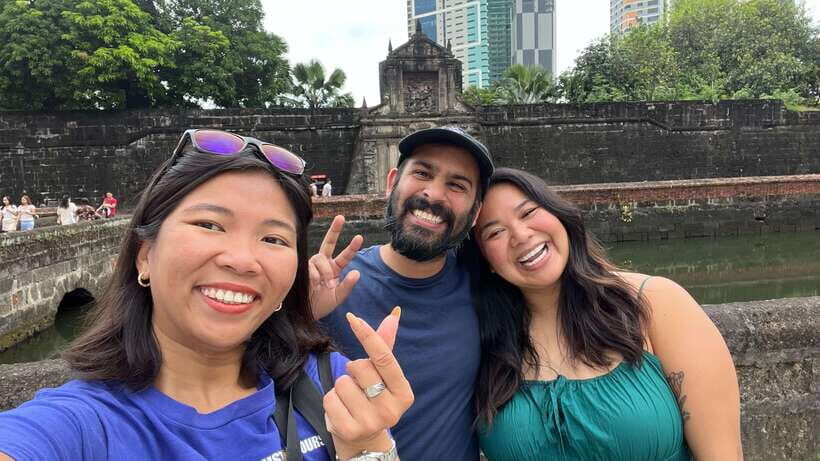
- Fort Santiago: Spanish Fortifications and the Hard History
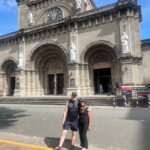
- Manila Cathedral: Architecture With a Story Attached
- Casa Manila: A Replica That Helps You Visualize Daily Life
- San Agustin Church: The Survivor Among Intramuros Churches
- The Lamborghini-Style Bike Ride: Short, Fun, and Zero Effort
- Timing, Walking Comfort, and Church Clothing Rules
- Price and Value: Is $56 a Fair Deal?
- Who This Tour Fits Best in Your Manila Plan
- Should You Book the Intramuros Walking Tour?
- FAQ
- Where do I meet for the Intramuros walking tour?
- How long is the Intramuros walking tour?
- What stops are included on the tour?
- What’s included in the price?
- Is pickup and drop-off included?
- Do I have to pedal the Lamborghini-style bike?
- What should I wear for San Agustin Church and other church interiors?
- Are Casa Manila and San Agustin Church open on Mondays?
- Is the tour wheelchair-friendly?
- Can I cancel and get a full refund?
Key Takeaways Before You Go
- The tour’s focus is the hard parts of Intramuros history, not just postcard Spanish streets.
- Fort Santiago + the churches gives you a strong mix of military and religious heritage in one loop.
- Casa Manila is a Spanish-colonial mansion replica, useful for understanding what daily life looked like for colonizers.
- A short three-wheel “Lamborghini” paddle-bike ride adds variety, and you don’t have to pedal.
- Halo-halo is part of the finish, a nice Filipino sweet reward after walking.
Intramuros: Where Manila’s “Big Story” Lives in Stone
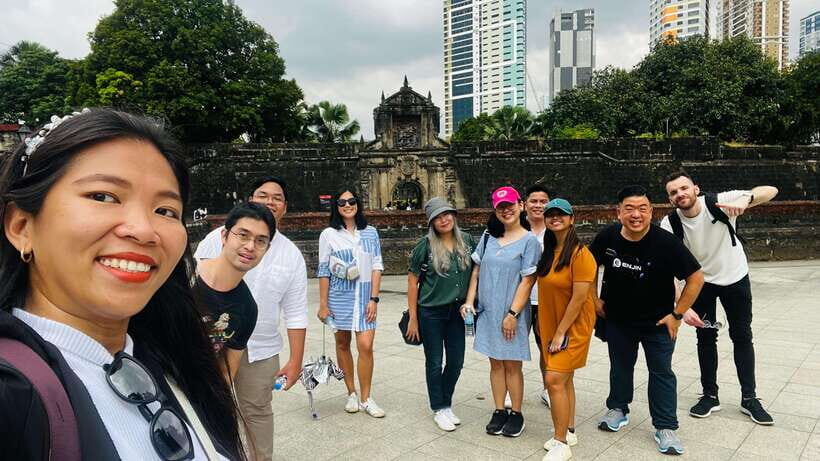
Intramuros isn’t just a historic district. It’s a compact place where you can see how power, faith, and conflict shaped Manila over centuries. On this tour, you’re not only sightseeing—you’re getting the context behind why these buildings matter, including the dark moments tied to battles that played out within and around the walls.
That matters because Intramuros can otherwise feel like scenery. With the right guide, it becomes a map of cause and effect: Spanish influence in the architecture, colonial control in the layout, and later turning points that helped shape what Manila is today. The tour is built for that kind of understanding. You’ll hear about what transpired within the walls of Intramuros during the Battle of Manila and beyond, then connect it to what you’re seeing in front of you.
If your guide happens to be someone like Mari or Tessie—names that show up often in feedback—you can expect energetic storytelling and an English delivery meant for real comprehension, not a rushed lecture. It’s one of those experiences where the buildings stop being background and start being evidence.
You can also read our reviews of more walking tours in Manila



Meeting at Figaro Cafe and Getting Oriented Fast

Your tour starts at Figaro Cafe at Intramuros, and it ends back there. That round-trip format is practical: you don’t have to worry about navigating back to a different drop-off point.
The biggest early advantage is that you get a briefing before you move deep into the walking route. Even if you’ve never been to Intramuros, you’ll leave with a clearer mental picture of what you’re looking at—especially how Fort Santiago and the religious sites relate to the wider story. This is the difference between ticking off stops and actually understanding the place.
Small group also helps here. Limited to 10 participants, it’s easier for the guide to adjust pacing, answer questions, and keep the group moving. If you want good photos, it’s also the kind of tour where the guide can help you frame shots without making you feel rushed.
Fort Santiago: Spanish Fortifications and the Hard History
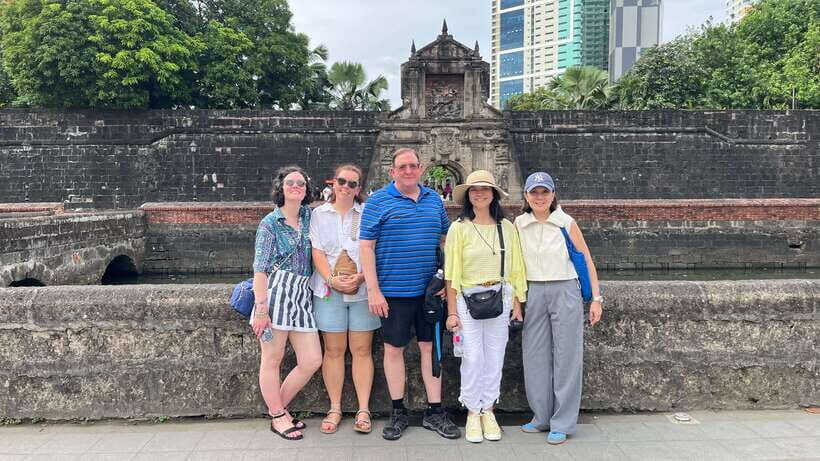
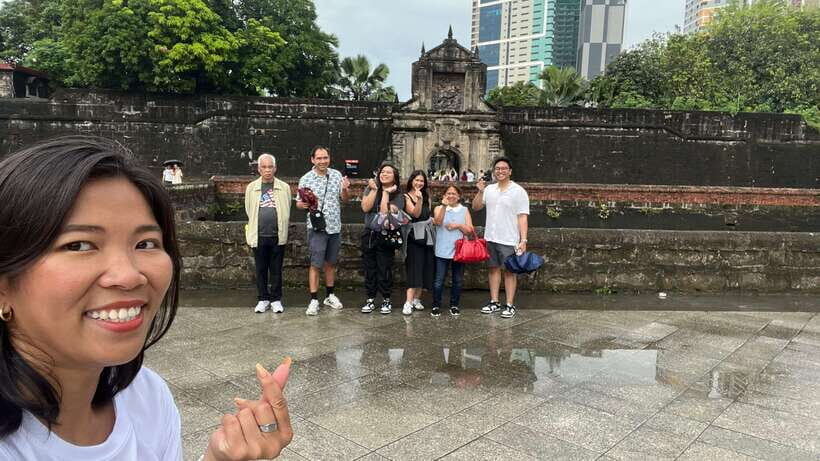
Fort Santiago is the anchor stop, and it’s easy to see why. This is where Spanish military planning becomes tangible. Expect a guided walk that connects the fort’s role to the conflicts that shaped Intramuros and Manila.
What I like about starting with Fort Santiago is that it sets the tone. Intramuros history isn’t gentle. The tour explicitly focuses on the greatest and darkest moments, including details around what happened during the Battle of Manila. That gives the rest of your landmarks more meaning. When you later stand near the churches and civic structures, you’re not just admiring design—you’re understanding why certain locations mattered.
A practical note: Fort Santiago involves walking inside the historic area, so wear comfortable shoes. You’ll also want your sunglasses and sun hat, since the midday light in Intramuros can feel intense. The tour includes a water bottle, but bringing your own comfort gear makes a big difference.
Manila Cathedral: Architecture With a Story Attached
From Fort Santiago, the route continues to Manila Cathedral. This stop works well because it shifts you from military history to the religious and cultural role of Intramuros.
Cathedrals like this are not just impressive buildings. In colonial cities, they’re also signals—who had influence, how communities gathered, and how power was expressed. With an English guide steering the conversation, you’ll get a better sense of how Manila’s colonial era shaped religious life and public space.
One consideration: church interiors have rules. Inside the church, you’ll need modest, comfortable clothing that covers your shoulders. It’s easy to underestimate how much that matters until you’re standing at the entrance and realizing your outfit is too revealing. Plan ahead and you’ll glide through.
Casa Manila: A Replica That Helps You Visualize Daily Life
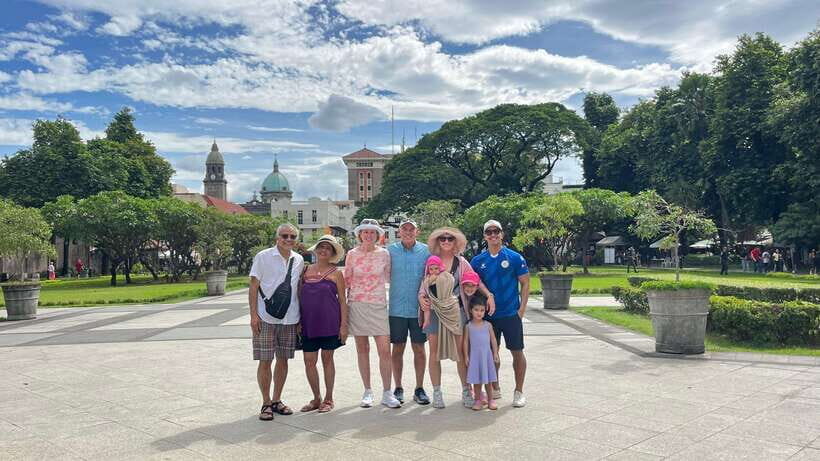
Next up is Casa Manila, described as a replica of a Spanish colonial mansion. That detail matters: you’re not just looking at something labeled historical—you’re being given a model of what certain domestic spaces and lifestyles were imagined to be during the colonial period.
I like this stop because a replica has a role. It helps you visualize the everyday side of colonial influence. When you combine it with the tour’s “dark moments” focus, the contrast becomes clear: war and control on one side, domestic spaces and cultural modeling on the other. That tension is part of how history actually worked.
The only catch shows up on scheduling. Every Monday, Casa Museum is closed. If your tour date lands on Monday, you might not see Casa Manila as planned, so check before you commit to your itinerary.




San Agustin Church: The Survivor Among Intramuros Churches
San Agustin Church is one of the most important stops on the route. It’s noted as the only church left among seven churches of Intramuros built beyond 1571. That alone is reason to pay attention—survival adds weight to meaning.
Even if you’ve seen churches elsewhere in the Philippines, this one has a distinct Intramuros identity. In a district shaped by conflict, the fact that San Agustin Church remains gives you a direct thread from the colonial era to today.
The tour guides you through the “why,” not only the “what.” You’ll connect the church’s presence to the broader history you heard earlier around the fort and the battles affecting Manila. For me, that’s the real value: you’re building a timeline in your head as you walk.
Again, keep the outfit rule in mind. Inside the church, cover your shoulders. And yes, it’s warm. Comfortable clothes aren’t a luxury—they’re part of enjoying the tour without distraction.
The Lamborghini-Style Bike Ride: Short, Fun, and Zero Effort
Let’s talk about the “Lamborghini” bike. This is a short add-on, and it’s easy to overthink it. It’s basically a three-wheel paddle bike ride. The good news: you won’t need to pedal, because someone can do the paddling for you.
So why include it at all? Two reasons. First, it breaks up the walking, which helps when you’re dealing with heat and sun. Second, it’s a memorable change of pace in a tour that otherwise stays very history-focused.
The ride is also included along with other costs (live guide, entry fees, and a water bottle). That matters when you’re trying to decide whether the price is fair. You’re not paying extra for every tiny component.
Timing, Walking Comfort, and Church Clothing Rules
This tour runs about 2.5 to 3 hours, and you’ll need to check availability for the starting times. That duration is ideal for a half-day block—especially if you’re squeezing Intramuros into a busy Manila itinerary.
Still, plan like a local day is never perfectly predictable. Some feedback indicates the experience can feel a bit shorter than advertised. If you’re catching a flight or have a hard cutoff time, build in buffer time so you’re not stressing at every turn.
What to bring is clearly laid out, and I agree with all of it:
- Comfortable shoes (non-negotiable for historic cobblestones and walking)
- Sunglasses, sun hat, sunscreen (sun hits fast)
- Water (you get a bottle, but keep your own comfort habits)
- Comfortable clothes that also let you meet the church requirement
For the churches: cover your shoulders. If you show up with a tank top or off-shoulder outfit, you may end up scrambling for a fix. A light scarf can save the day, if you’re worried.
Also note: the tour isn’t suitable for wheelchair users, since it’s a walking tour with sites that likely involve uneven surfaces.
Price and Value: Is $56 a Fair Deal?
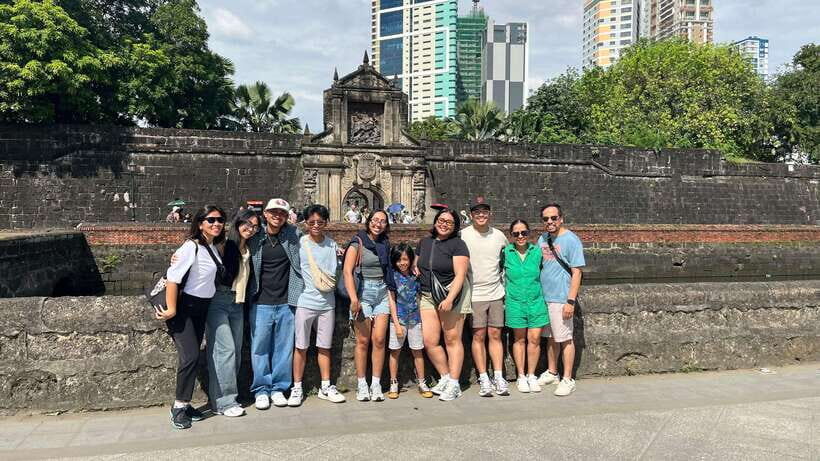
At $56 per person, you’re paying for more than a casual walk with a map. The tour includes:
- a live English guide
- entry fees
- the Lamborghini-style bike
- a water bottle
That bundle changes how you should judge the price. If you try to do Intramuros solo, you’ll still spend time and money on entry costs—and you’ll miss the guided connections that make the “dark history” part hit harder. This tour is designed to connect the Spanish-era structures and later conflicts to what you’re seeing today.
The small group size (up to 10) also pushes value in a quiet way. It’s not a giant crowd where questions get lost. And if you care about photo moments, a guide who helps with pictures and timing can make the experience feel smoother.
Here’s my bottom-line thought: this is a solid buy if you want explanation. If you only want a casual stroll, you can find cheaper self-guided options. But for history that actually connects to place—especially with sites like Fort Santiago, Casa Manila, and San Agustin Church—this pricing makes sense.
Who This Tour Fits Best in Your Manila Plan
This tour is a great match if you:
- want a guided, English-speaking history route with real landmarks
- enjoy stories that include the hard parts, not only the pretty architecture
- are short on time and want a focused Intramuros circuit
- appreciate small groups and a guide who answers questions
It’s also smart for layovers. With a 2.5–3 hour window and a tight start/end point at Figaro Cafe, it can work when you need to see a lot without committing to a full day.
If you’re traveling with mobility limits, though, keep the walking-heavy nature in mind. And if you’re visiting on a Monday, remember Casa Museum and San Agustin Church are closed, which can change what you get to see.
Should You Book the Intramuros Walking Tour?
I’d book it if you want Intramuros to make sense in your head, not just look impressive on your phone. The combination of Fort Santiago, Manila Cathedral, Casa Manila, and San Agustin Church gives you a full picture of colonial-era design plus the conflict that followed. Add in the short three-wheel bike ride and the halo-halo finish, and it feels like a complete package, not a half-finished sightseeing loop.
Skip it only if your schedule is ultra-tight with no buffer at all, or if the day you’re going is a Monday and you’re hoping for Casa Manila and San Agustin Church specifically. Otherwise, this is a strong choice for first-timers and repeat visitors who want deeper context.
FAQ
Where do I meet for the Intramuros walking tour?
You meet your guide at Figaro Cafe at Intramuros. The tour ends back at the same meeting point.
How long is the Intramuros walking tour?
The tour duration is 2.5 to 3 hours. Starting times vary by availability.
What stops are included on the tour?
You’ll visit Fort Santiago, Manila Cathedral, Casa Manila, and San Agustin Church.
What’s included in the price?
The tour includes a live guide, Lamborghini bike ride, entry fee, and a water bottle.
Is pickup and drop-off included?
No. Pickup and drop-off are not included.
Do I have to pedal the Lamborghini-style bike?
No. It’s described as a three-wheel paddle bike, and someone else can do the paddling for you, so you don’t have to pedal.
What should I wear for San Agustin Church and other church interiors?
Wear something modest and comfortable that will cover your shoulders inside the churches.
Are Casa Manila and San Agustin Church open on Mondays?
No. Every Monday Casa Museum and San Agustine Church are closed, so this can affect those stops.
Is the tour wheelchair-friendly?
No. The tour is not suitable for wheelchair users.
Can I cancel and get a full refund?
Yes. There is free cancellation up to 24 hours in advance for a full refund.