REVIEW · MANILA
Manila: Street Food and Drinks Walking Tour with Tastings
Book on GetYourGuide →Operated by Mstartours · Bookable on GetYourGuide
Manila street food has a way of sticking with you. This 2-hour Binondo walking tour turns the usual Chinatown stroll into a guided food mission, with 6 to 10 tastings and rides on local transport.
What I like most is the focus on real street snacks and drinks instead of trying to cram in big restaurant meals. I also like the small group size (up to 10), which helps you ask questions, move as a unit, and actually feel like you understand what you’re eating.
The one thing to think about up front: this tour is not vegetarian- or vegan-friendly, and it can include meat and egg-based dishes.
In This Review
- Key reasons this tour is worth your time
- Getting to Grand Cafe 1919 in Binondo (and why the meeting spot helps)
- The 2-hour structure: 6–10 tastings, not a food marathon
- What you might eat: the classic Binondo mix of fried, noodle, and sweet
- Fried and skewered snacks that set the tone
- Noodles and soup-style comfort (where Manila shows off)
- Seafood and the salty-sweet Filipino balance
- The sweet cooldown: halo-halo at the end
- Balut, bravery points, and how to handle surprises without panicking
- Jeepney or Lamborghini tricycle: local transport makes the tour feel real
- Walking through old Manila side streets without getting lost
- Pacing and heat: what to do so the experience stays fun
- Price and value: what $68 buys you in Manila reality
- Who this tour is best for (and who should skip it)
- Should you book this Manila street food walk?
- FAQ
- How many tastings do I get?
- What does the tour include?
- Where is the meeting point?
- Is the tour vegetarian or vegan friendly?
- Is the tour rain or shine?
- What should I bring?
Key reasons this tour is worth your time
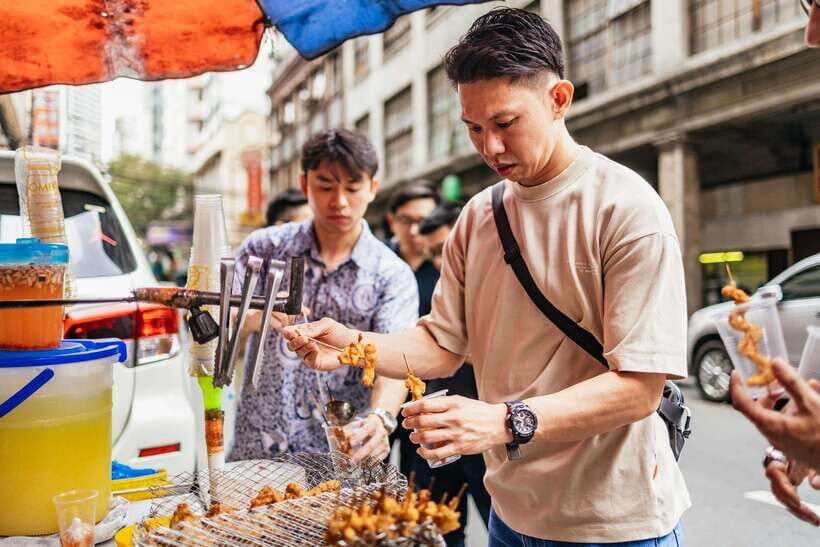
- 6 to 10 tastings in a tight 2-hour window, so you leave with lots of variety, not just one good stop
- Small group pacing that keeps you together on tight, crowded streets
- Jeepney or Lamborghini tricycle ride gives you a local-transport taste, not just a food crawl
- Binondo Chinatown routing through side streets you’d likely skip on your own
- Halo-halo dessert finish plus water or juice to cool down after the walking
Getting to Grand Cafe 1919 in Binondo (and why the meeting spot helps)
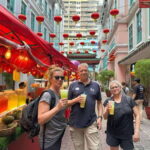
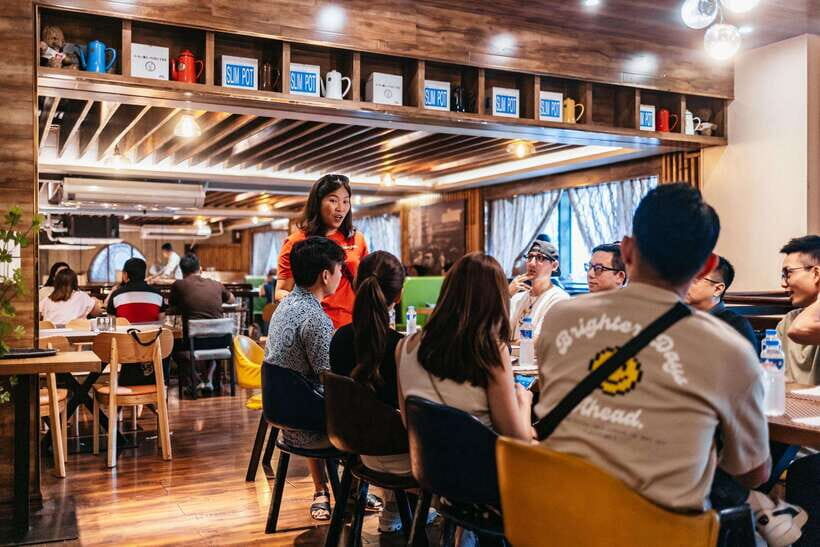
This tour meets at Grand Cafe 1919 in Binondo, near Juan Luna Street. That matters because Binondo is exactly the kind of place where a busy street-food day can start chaotic. Having a proper cafe meeting point means you gather first, get sorted, and then move out together.
The other practical win: the cafe setting makes it easier to be ready. You can grab a drink, use facilities if you need them, and settle your stomach before you start walking and tasting. And yes, the tour is very much built for people who show up hungry.
You can also read our reviews of more walking tours in Manila

The 2-hour structure: 6–10 tastings, not a food marathon
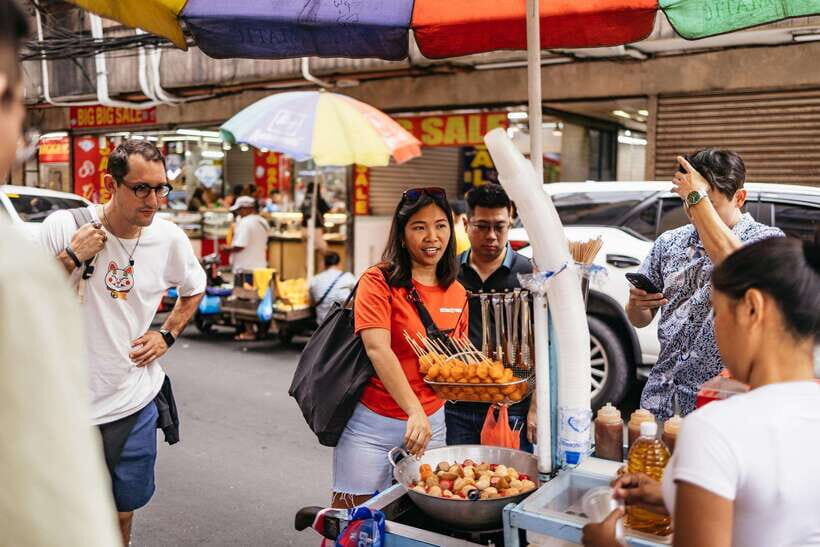
You’re signing up for a short, high-impact experience: about 2 hours, with 6 to 10 food selections plus drinks like water and refreshing juice. The tastings list is specific (so you know the general plan), but the exact order and what’s available can change day to day.
Here’s how the time usually feels. You start with savory snacks and fried favorites, move through noodle or soup-style dishes, then end on something sweet and cooling. That sequencing is smart in Manila heat: it keeps you from getting stuck on dessert too early and it helps balance heavier items with lighter drinks.
A note on expectations: you’ll be eating enough that skipping breakfast is a good idea. Even people who don’t want to be overly adventurous still end up taking a few bites of several dishes, and the portions at street stalls add up fast.
What you might eat: the classic Binondo mix of fried, noodle, and sweet
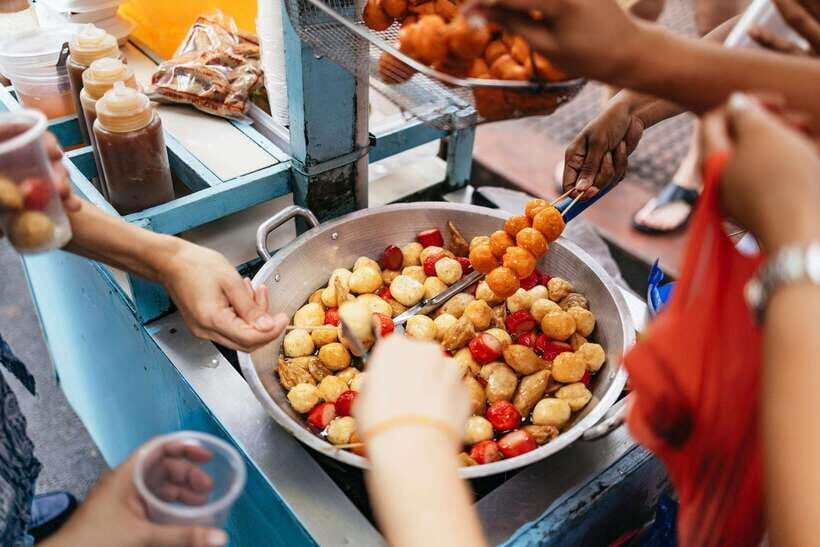
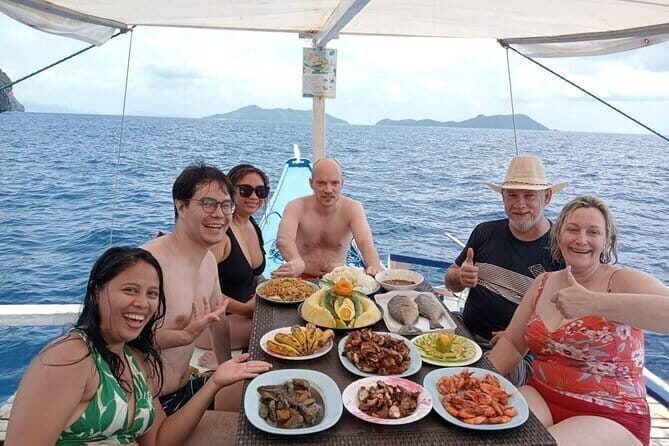
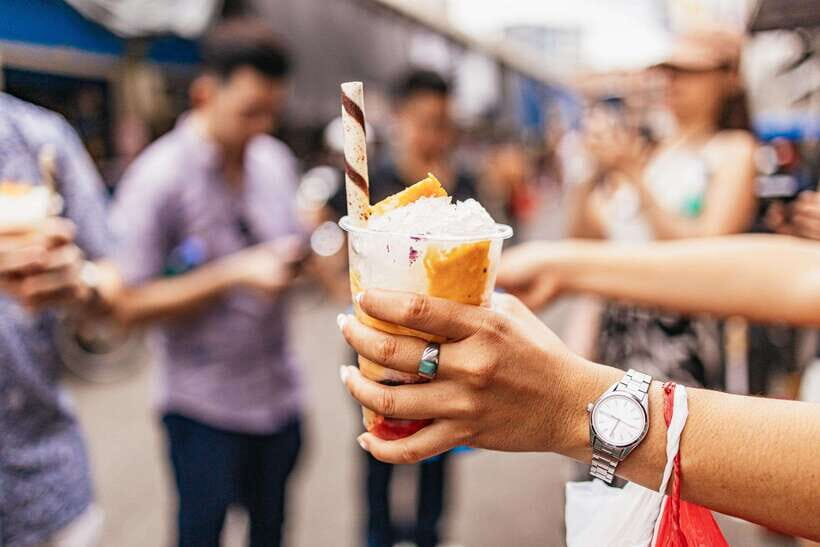
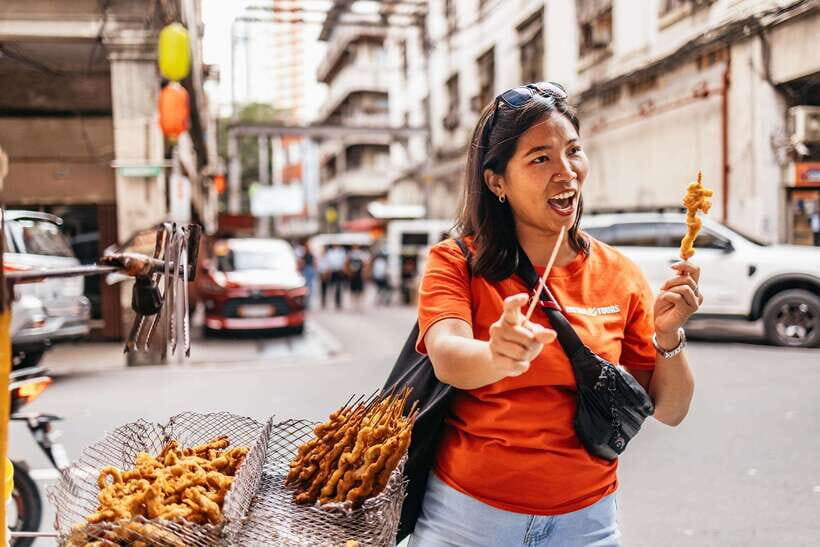
The tour’s tasting menu is a best-of mix of Filipino street foods and crowd-pleasing desserts. Depending on availability, you can run into items such as banana cue, kamote fries, turon, kwek-kwek, siomai, sotanghon soup, palabok, Filipino pansit, grilled squid, mango with shrimp paste, and halo-halo (plus a drink like water or juice).
Let’s translate that into what the experience feels like:
Fried and skewered snacks that set the tone
Early stops often include Filipino standbys like banana cue and turon. These are snack-size, sweet, and easy to share in a group. You also get items like kamote fries (sweet potato fries), which are comforting and a little caramelized at the edges—ideal if you’re walking in humidity.
Then you move into egg-and-batter street food such as kwek-kwek. It’s a crunchy-fried bite that explains why Filipino street food is built for texture: crisp outside, soft inside. It’s not fussy, and it doesn’t require a fork or an explanation to enjoy—perfect for a walking tour.
Noodles and soup-style comfort (where Manila shows off)
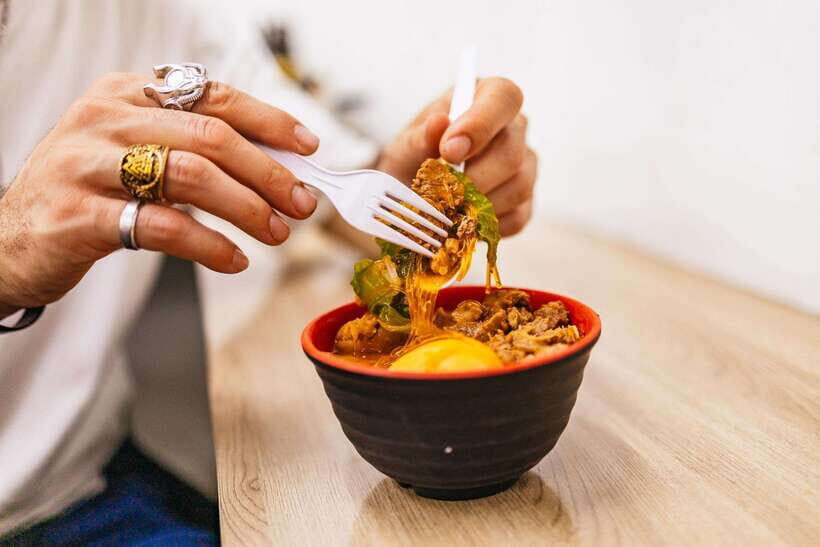
Mid-tour, you’re likely to get something noodle or soup-based like sotanghon soup and pansit. Pansit is one of the best ways to understand Filipino cooking because it comes in many forms, usually flavored to match the dish’s sauce and toppings.
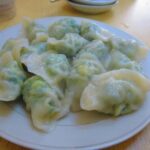
You may also taste palabok, which is typically a savory noodle dish with a distinct sauce. And if you get siomai, it’s a classic steamed dumpling-style bite that helps break up the deep-fried items.
You can also read our reviews of more food & drink experiences in Manila

Seafood and the salty-sweet Filipino balance
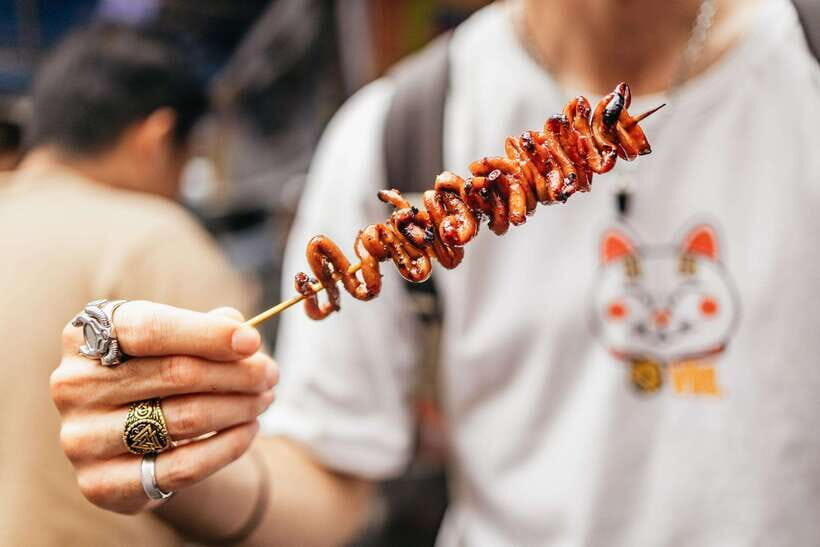
You can also see grilled squid, and possibly mango with shrimp paste. That mango dish is a good example of Filipino flavor logic: it’s sweet, salty, and funky in a way that makes sense once you taste it. If you like bold flavors, this is the kind of stop that turns into a highlight.
The sweet cooldown: halo-halo at the end
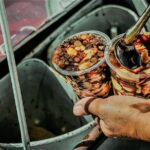
Finishing with halo-halo is a big part of why this tour works. It’s cooling, it’s dessert-forward, and it resets your palate after savory and fried food. Many tours finish with something sweet; this one tends to end with something that feels like part of everyday Filipino life.
Balut, bravery points, and how to handle surprises without panicking
Balut is often part of Filipino street-food conversations, and some tour days include a chance to try it. If it comes up, it’s duck embryo and it’s definitely not for everyone.
The helpful part here is that you’re with a guide who can explain what it is and how people eat it. You can skip it without making a scene, and you won’t feel like you’re forced into a single “test bite.” My best advice: if you’re curious but nervous, choose one adventurous option and let the rest of the menu do the work.
Also, if you’re sensitive to strong tastes or textures, mango with shrimp paste and eggy fried snacks can be a bigger leap than banana cue. That’s not a warning sign; it’s just useful planning. Go in ready to taste broadly, not just for the foods you already know.
Jeepney or Lamborghini tricycle: local transport makes the tour feel real
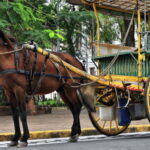
Food tours can sometimes feel like a checklist of bites. This one adds motion. You’ll experience jeepney ride or Lamborghini tricycle as part of the plan.
Why it matters: in Manila, transport isn’t just transportation. It’s culture, design, and everyday rhythm. Riding in a jeepney or tricycle helps you connect the food stops to the city’s actual flow—streets, commutes, and the way locals move between neighborhoods.
Also, if you’re trying to understand Manila beyond photos, this is the easiest low-stress way to do it. You’re not hiring a car, you’re not trying to navigate traffic alone, and you’re not paying for a full day of movement. You’re just getting enough local-transport time to feel the city properly.
Walking through old Manila side streets without getting lost
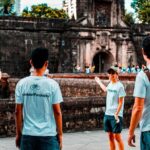
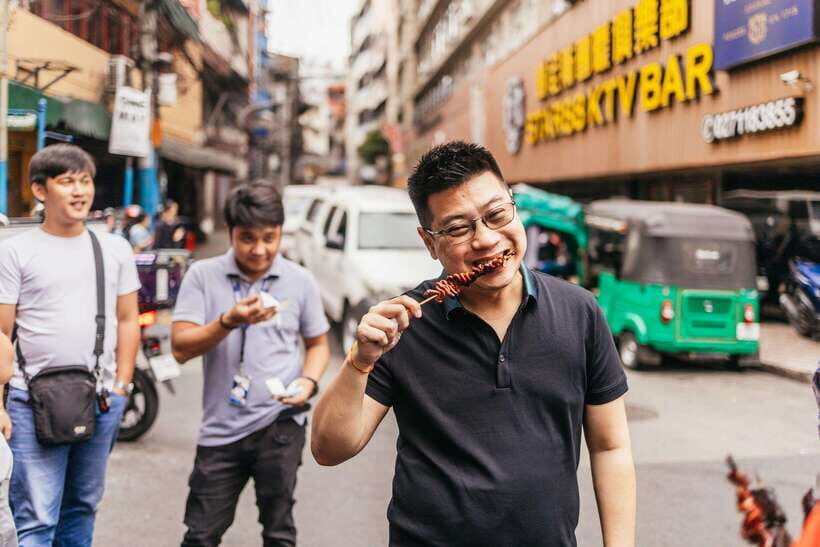
This tour is built around small side streets and moving through different parts of Chinatown. That’s where a guide earns their fee. In Binondo and nearby areas, it’s not just crowds—it’s also the pattern of narrow lanes, storefronts, and food stalls packed together.
With the group kept together (and the pacing kept practical), you get to see places you’d normally pass. Several guides on this circuit, including Mari (and other guides like Tess or Jessie who appear in past tour experiences), are known for high energy and for keeping the group together so nobody gets left behind in the chaos.
If you’re shy about street food, the guide’s job is basically confidence building. You get pointed to stalls that feel safe and tourist-tolerant while still being authentically local. That’s a big deal because the hardest part of street food for many people is not the taste—it’s deciding where to go and what’s normal to eat.
Pacing and heat: what to do so the experience stays fun
Rain or shine, this is still a walking tour. So bring comfortable shoes and plan for getting your steps in. Manila weather can shift fast, and you’ll be walking between stops long enough to feel it.
Here’s how to make it pleasant:
- Come with an appetite (seriously).
- Drink water when offered, even if you don’t feel thirsty yet.
- Take the dessert stop seriously. Halo-halo at the end is there for a reason.
One more small tip: ask questions while you’re eating. The best part of a guided food walk is that the guide can explain what you’re seeing and tasting in plain terms—like why something is sweet, why something is salty, or why a stall’s sauce tastes the way it does.
Price and value: what $68 buys you in Manila reality
At $68 per person for about 2 hours, the price can feel high if you’re thinking of street food as cheap on its own. But look at what’s bundled:
- 6 to 10 tastings (not one meal)
- Water or juice
- A live guide speaking English and Tagalog
- Walking tour plus local transport (jeepney or tricycle)
Street food in theory is inexpensive. The guided part is what you’re paying for: access, translation, and a routing plan that saves you time and helps you eat safely. If you tried to DIY this yourself, you’d spend a bunch of time figuring out which stalls are legit, what to order, and how to move between neighborhoods without losing your group (or losing your way).
So the best way to judge the value is simple: if you want the food variety plus the city experience, this is priced like a real guided tour. If your goal is just to eat cheaply on your own, you can always do that—but you’ll trade away structure and explanations.
Who this tour is best for (and who should skip it)
This works best for:
- Food lovers who want multiple types of street snacks in one short outing
- Visitors who want to explore Binondo and Chinatown streets with a guide
- People who like learning how dishes fit into daily life, not just tasting them
It’s not a good match for:
- Vegetarians and vegans (several dishes won’t work)
- Wheelchair users
- Pregnant women
- Anyone who dislikes walking in a rain-or-shine schedule
Kids ages 3 to 7 can join with guidance, so long as the family is comfortable with eating on the move.
Also, if you’re very sensitive to strong flavors or the idea of trying things like balut makes you freeze, you may prefer to ask your guide what’s available that day before committing. You don’t have to force yourself into every dish.
Should you book this Manila street food walk?
Book it if you want a concentrated, guided look at Manila street flavors in a place where you’d otherwise need extra effort to find the right stalls. I’d especially recommend it if you like savory snacks, fried bites, noodle comfort foods, and if the idea of ending with halo-halo sounds like a smart plan.
Skip it if you avoid meat and egg-based foods, because the tasting lineup is not set up for vegetarians or vegans. And if you have mobility limitations, the walking format and street conditions make it a poor fit.
If your goal is to eat like locals for a couple hours, learn what you’re eating, and ride local transport without planning headaches, this is a solid, high-value way to spend your time in Manila.
FAQ
How many tastings do I get?
You’ll have 6 to 10 food tastings as part of the tour.
What does the tour include?
It includes a local English-speaking guide, food tastings, water or refreshing juice, and an experience riding either a jeepney or a Lamborghini tricycle, plus a walking tour.
Where is the meeting point?
The tour meets at Grand Cafe 1919, Binondo, Juan Luna, Manila.
Is the tour vegetarian or vegan friendly?
No. This tour is not suitable for vegetarians or vegans.
Is the tour rain or shine?
Yes. The tour runs rain or shine.
What should I bring?
Bring comfortable shoes and come hungry. You may also want to bring lots of questions for your guide.