REVIEW · LUZON
Manila Food Tour Experience with Local Guide
Book on Viator →Operated by Manila Experience (V.S Tour Services) · Bookable on Viator
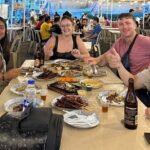
Manila street food hits different. This small-group tour strings together 6–10 bites in about two hours, mixing classic Filipino comfort food with Chinese-Filipino snacks in Tondo and Binondo. I love the pace (short stops, quick samples) and the focus on “what’s actually on the street” food, like kwek kwek and halo-halo. One thing to consider: what you eat can change depending on what’s available, so it’s not a fixed menu.
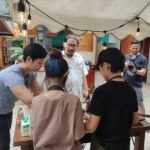
I also like the guide style. In particular, Venus (sometimes listed as V) is described as enthusiastic, easy to talk to, and great at navigating the city in a way that helps you feel comfortable—plus you’ll get plenty of chances for good photos as you move through local corners you’d likely miss on your own. The other consideration is simple logistics: you’ll be walking and eating at street-food speed, so bring a little patience for queues.
In This Review
- Key Highlights You’ll Care About
- How This 2-Hour Manila Food Tour Fits Your Day
- Tondo Stop: Adobo, Biko, and Market Energy You Can Taste
- Binondo Stop: Siopao and Dumplings in Manila’s Chinatown
- What 6–10 Tastings Actually Means (and How to Think About It)
- The Venus/V Guide Factor: Safety, Navigation, and Photo Stops
- Group Size and Why It Impacts Your Experience
- Price and Value: Is $70 a Good Deal?
- Getting Oriented: Starting Point, Timing, and What to Bring
- Who This Tour Is Best For
- Should You Book This Manila Food Tour?
- FAQ
- FAQ
- How long is the Manila Food Tour experience?
- How many tastings will I get?
- What neighborhoods does the tour cover?
- What foods might I try?
- Where does the tour start and end?
- How much does the tour cost?
- Is there a small group size?
- Is a mobile ticket provided?
- Is the tour admission included for both stops?
- What is the cancellation policy?
Key Highlights You’ll Care About
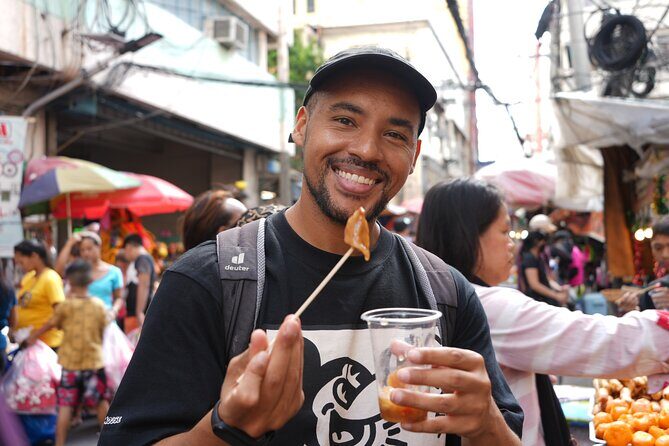
- 6–10 tastings in ~2 hours means you sample a lot without turning it into a long day
- Tondo + Binondo in one run gives you two very different flavors of Manila street food
- Small-group limit helps the guide manage crowds and substitutions when items sell out
- Venus/V style guidance focuses on safe navigation and showing lesser-seen spots
- Ticket-free Tondo stop, possible paid admission at Binondo helps you plan what might cost extra
How This 2-Hour Manila Food Tour Fits Your Day
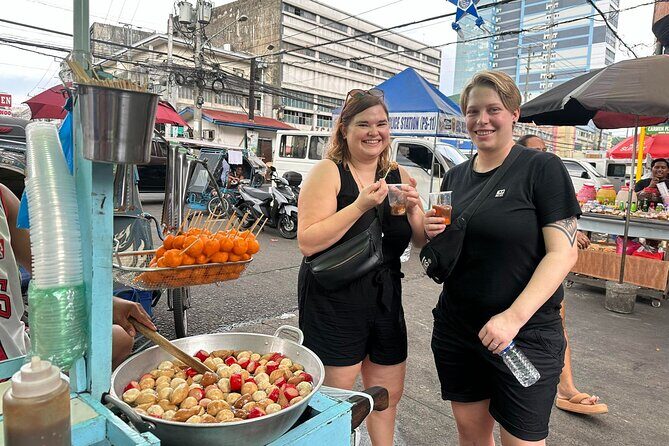
If you only have a small slice of time in Manila, this tour is built for that reality. It’s scheduled for about 2 hours, and the stops are set up as a quick “eat, learn, move” loop. Instead of trying to cover all of Manila, you get a tight route that connects two neighborhoods known for street food culture.
You’ll also get a useful structure: the tour is designed around 6 to 10 food tastings. That matters because Manila street food can be overwhelming if you try to wing it. A guide helps you choose confidently, keep your meal balanced (savory and sweet), and understand what you’re eating as you go.
One more practical point I like: this is offered with a mobile ticket, and it’s meant to be easy to show up and go. The tour returns you to the meeting point, so you’re not left figuring out how to get home after you’re done eating.
You can also read our reviews of more food & drink experiences in Luzon


Tondo Stop: Adobo, Biko, and Market Energy You Can Taste
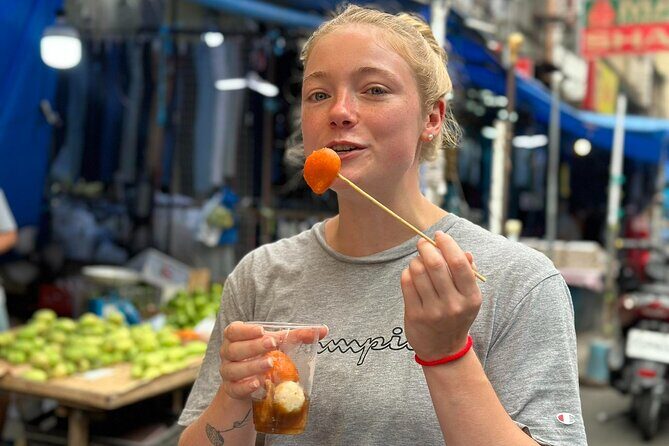
Tondo is where Filipino street food feels most grounded—loud, busy, and intensely local. This is the first stop, lasting about 1 hour, and it’s where the tour leans into classic flavors you’ll want to know before you wander further on your own.
In this area, you can expect traditional Filipino foods. The food list you’re given includes savory favorites like adobo and sweet, sticky treats like biko. That combination is smart. Adobo gives you the Filipino “signature” profile—savory, salty, with that familiar slow-cooked depth—while biko lets you experience the sweetness and texture that shows up in a lot of Filipino dessert culture.
You’ll also be moving through local market and street-food stall settings. The goal here isn’t museum-style history. It’s sensory learning. You see the rhythm of daily food life and watch how street food is actually assembled and sold.
A couple of things to keep in mind:
- You’ll likely face the real-world pace of street vendors. If you hate waiting in line, mentally prep for short stops that are first-come.
- Wear clothes and shoes that can handle walking and close quarters. This is a food tour, not a slow city stroll.
Binondo Stop: Siopao and Dumplings in Manila’s Chinatown
After Tondo, the tour heads to Binondo, about another 1 hour. Binondo is famous as the world’s oldest Chinatown, and the point of this stop is that you get a Chinese-Filipino food blend that feels very Manila, not just imported.
This is also where the tour’s “tasting mix” gets more varied. You’re likely to try siopao and dumplings, two foods that instantly signal the neighborhood’s culinary identity. Even if you’ve had dumplings before, this kind of context changes the experience. Street-level Chinese-Filipino food in Binondo tends to be simpler, faster, and built for eating right there—often with flavors that feel familiar, but slightly different from what you might find in restaurants.
There’s also a small money detail to understand. The Tondo stop is listed as admission free, while the Binondo stop says admission is not included. That doesn’t mean you’re paying for the whole meal, but it does mean there could be a fee tied to entry or specific venues in that area. The tour price still covers the experience, but it’s worth keeping a little extra cash ready so you don’t get surprised.
If you’re the type who likes context while you eat, Binondo is where you’ll feel the “two cultures in one place” idea most clearly—through food shapes, names, cooking styles, and the overall flow of the neighborhood.
What 6–10 Tastings Actually Means (and How to Think About It)
The tour promises 6 to 10 food tastings, but the exact items can shift. The experience description mentions specific foods like kwek kwek and halo-halo, with the note that choices depend on what’s available on the street. I think that’s a realistic approach for Manila. Street food changes quickly—vendors sell out, certain stalls are open only at certain times, and conditions shift.
So instead of expecting a perfectly fixed checklist, I’d treat it like this: you’re signing up for a guided “best-of” selection for that moment in time. The guide can adjust on the fly, and that’s one reason small-group size matters. When you’re only a handful of people, adjustments are easier.
Here’s how I’d plan your own stomach:
- Eat breakfast or lunch lightly. If you come too hungry, the tour can feel like a food sprint by the time dessert arrives.
- If you’ve got dietary restrictions, you’ll want to communicate that early. The tour data says most people can participate, but it does not spell out a vegetarian or allergy-friendly menu. When food changes, ingredients can change too.
As for what you’ll likely taste, you’ve got a strong blend of categories:
- Savory comfort foods (adobo)
- Sweet, sticky desserts (biko, and likely halo-halo)
- Street snacks and fried bites (kwek kwek)
- Chinese-Filipino staples (siopao, dumplings)
That mix is a big part of the value. You won’t just be eating one type of snack. You’ll get a more complete map of how Manila street food can swing from salty to sweet without a long break.
The Venus/V Guide Factor: Safety, Navigation, and Photo Stops
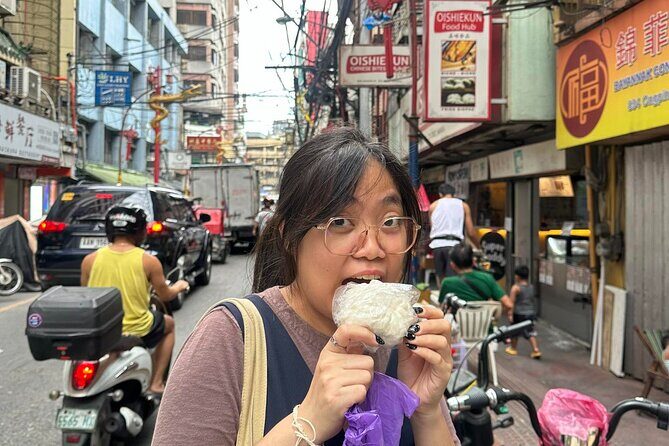
A good food tour guide can do two things at once: help you eat well and help you feel okay moving around. This tour is set up with that exact idea.
Venus (sometimes labeled as V) is described as enthusiastic and easy to talk to, and that matters more than people think. When you feel comfortable with the guide, you’ll ask the question you need—like what something is, how it’s usually eaten, or whether you should try it warm or after it cools slightly.
You’ll also get navigation help that’s hard to replicate alone. Manila can feel confusing fast, especially in busy market zones. The guide’s job is to manage the route and keep the group moving while you’re focused on tasting, not guessing where to stand.
One specific detail I really liked from the provided feedback: the tour can include hidden corners around Tutuban town. That’s a good example of the tour’s real “value add.” You’re not just walking along obvious lanes. You’re getting pointed toward everyday food life that you’d miss without local knowledge.
And yes, photo-friendly moments show up too. One reason the guide gets mentioned is how good she is at taking photos and helping you capture the tour without making it feel staged.



Group Size and Why It Impacts Your Experience
This tour is sold as an intimate experience with a small cap. The details provided include a maximum of 8 travelers in the additional info, even though the overall description mentions a small-group limit that can be slightly higher. Either way, the takeaway is consistent: this isn’t a big bus tour.
Smaller groups change the experience in practical ways:
- You spend less time waiting for everyone to catch up.
- It’s easier for the guide to pivot if a stall is busy or an item isn’t available.
- You can hear explanations and ask quick questions without shouting over a crowd.
There’s also a nice solo-traveler angle. One provided account described booking as a solo person and getting a private tour. That’s not guaranteed by the base description, but it’s a good sign: if you prefer a quieter walk and more one-on-one attention, this is the kind of tour that can potentially work well.
Price and Value: Is $70 a Good Deal?
At $70 per person, this isn’t a cheap snack walk. But when I look at value, I don’t just think about the sticker price. I think about what $70 buys you in Manila: direction, ordering confidence, and access to food stops across two neighborhoods in a controlled time window.
What you’re getting for the price:
- About 2 hours of guided tasting time
- 6–10 tastings (not just one or two items)
- A route that covers Tondo and Binondo
- Local guidance from Venus/V with an emphasis on comfort and navigation
- A mobile ticket so the tour itself stays smooth from the start
Where value might feel weaker for some people:
- If you already know the exact food stalls you want and plan to eat heavily anyway, you might compare against DIY street-food spending.
- If you have very specific dietary limits, you could end up wanting more control over the menu than a guided street-food approach offers.
For most people, though, the math works because this tour prevents a common first-time Manila mistake: walking around hungry, then paying more later in a touristy place, or skipping dessert because you’re too full. Here, the tasting structure helps you land in the sweet spot.
Getting Oriented: Starting Point, Timing, and What to Bring
The tour starts in Tondo, Manila, and it ends back at the meeting point. That reduces stress. You’re not stuck wondering how to get across the city after eating your way through two neighborhoods.
Timing-wise, each stop is about 1 hour, with the entire experience running around 2 hours total. Plan on being ready to move and sample right away. If you show up late, your tasting sequence can get compressed.
What to bring (based on the nature of the activity):
- Comfortable walking shoes
- Light layers for indoor-to-outdoor transitions
- A small amount of cash for anything that might not be included in specific parts (especially since Binondo admission is listed as not included)
- Your appetite, but not so much that you feel sick halfway through
And if you’re the kind of person who likes to ask questions, bring that curiosity. A lot of the value comes from knowing what you’re eating while you eat it.
Who This Tour Is Best For
This is a strong fit if you:
- Want to taste your way through Manila in a short time
- Like street food but don’t want to guess what to order
- Enjoy a mix of Filipino classics and Chinese-Filipino favorites
- Want a guide who helps you feel comfortable navigating busy areas
It’s also a good choice for solo travelers if you’re comfortable joining a small group, and there’s a chance of a private setup depending on how bookings work.
It may feel less ideal if:
- You hate walking in crowded spaces
- You need a highly controlled diet (because food availability can change)
- You’re expecting a restaurant-style menu with fixed items
Should You Book This Manila Food Tour?
Yes, I’d book it if your main goal is to eat well fast, and you like street-level flavors more than polished restaurant meals. The pairing of Tondo + Binondo gives you a fuller picture of Manila food culture than a single neighborhood stop, and the 6–10 tastings in ~2 hours is a practical format for real travel schedules.
Book it especially if Venus/V’s approach is appealing to you: enthusiastic, chat-friendly, and focused on helping you move safely through local areas. Just go in knowing that the exact foods can vary with what’s available on the street, so keep your expectations flexible—and keep your energy up for both savory bites and sweet stops.
FAQ
FAQ
How long is the Manila Food Tour experience?
It runs for about 2 hours (approximately).
How many tastings will I get?
The tour includes between 6 and 10 food tastings.
What neighborhoods does the tour cover?
It includes a stop in Tondo (Metro Manila) and a stop in Binondo.
What foods might I try?
You may try items like adobo, biko, kwek kwek, halo-halo, siopao, and dumplings, depending on what’s available.
Where does the tour start and end?
It starts in Tondo, Manila, Metro Manila, Philippines, and ends back at the meeting point.
How much does the tour cost?
The price is $70.00 per person.
Is there a small group size?
Yes. The tour is limited to a small group, with a maximum of 8 travelers listed in the additional info.
Is a mobile ticket provided?
Yes, the tour uses a mobile ticket.
Is the tour admission included for both stops?
The Tondo stop lists admission ticket as free. The Binondo stop lists admission ticket as not included.
What is the cancellation policy?
Free cancellation is available up to 24 hours in advance for a full refund. Changes made less than 24 hours before start time aren’t accepted.