REVIEW · LUZON
The Jeepney & Tuk Tuk Adventure ride with Local Guide
Book on Viator →Operated by MstarToursPh · Bookable on Viator
Jeepneys turn Manila into motion. This 2-hour adventure uses local jeepney and tricycle transport to get you into the real flow of the city, including Divisoria wet markets, where you’ll see how locals shop, bargain, and snack along the way. I like that the focus stays on everyday neighborhoods instead of staged sights, and I also like that you’ll spend time walking and learning what to look for. One thing to plan for: expect a lot of walking, so it’s not ideal for wheelchair users.
Divisoria is a famous shopping district for low prices and everything-from-everywhere variety, and the tour leans into that energy. You’ll get a local guide to help you read the market scenes, talk to friendly people, and understand the everyday rhythm—plus you’ll have chances to try street food (snacks aren’t included). It’s a small group experience (max 10), so it’s easier to keep up and ask questions when you need a quick reality check.
You meet in Binondo at 1919 Grand Cafe (117 Juan Luna St), and the tour ends back at the same meeting point. Bottled water is included, and you’ll use a mobile ticket. Bring comfortable shoes, because this is one of those tours where your feet do a big chunk of the exploring.
In This Review
- Key highlights you’ll actually feel
- Why jeepneys and tricycles make Manila click fast
- Binondo meet-up to Divisoria: how the day flows
- Divisoria wet markets: what you’ll see and how to shop smart
- Street food reality check: plan for snacks, but budget for it
- Your guide and group size: how the pace feels
- Price and value: is $50 worth two hours?
- Who this tour suits best
- Should you book this Jeepney & Tuk Tuk Adventure?
- FAQ
- How long is the Jeepney & Tuk Tuk Adventure?
- Where does the tour start?
- Does the tour end at the same meeting point?
- What does the tour cost?
- What’s included in the price?
- Are snacks included?
- How many people are in the group?
- Is this tour suitable for wheelchair users?
- Can I cancel for a full refund?
Key highlights you’ll actually feel
- Jeepney and tricycle transport: You’re traveling the way locals do, not sitting in a private car the whole time.
- Divisoria wet markets on foot: Great for seeing prices, produce, seafood, and the shopping mindset up close.
- Street-food time with guidance: You’ll know what to look for, even though snacks aren’t included in the price.
- Small group limit (10 max): A more manageable pace for questions and quick route tweaks.
- Water included: A small detail that helps when you’re walking in busy market areas.
- Guide support for different needs: The tour is not wheelchair-friendly, but the guide may be able to make alternative arrangements.
Why jeepneys and tricycles make Manila click fast
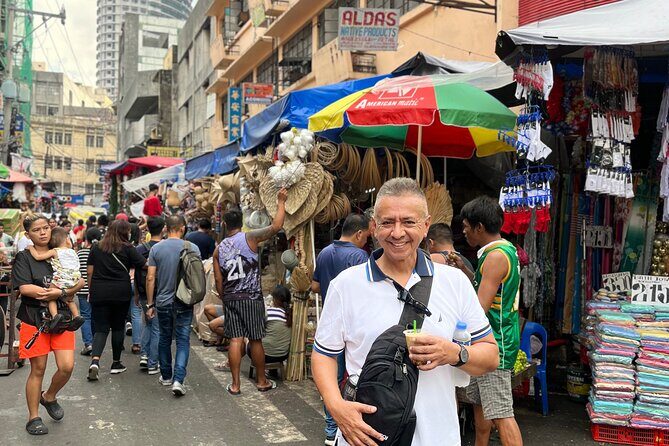
The best thing about this tour is that it doesn’t treat Manila like a photo set. It treats Manila like a working city. Jeepneys and tricycles are loud, crowded, and full of movement—so when you ride them with a local guide, you learn the city’s logic quickly: where people go, how they navigate tight roads, and how everyday life keeps flowing even during peak activity.
In a short 2-hour window, that matters. You get a fast cultural shortcut because the transport itself is the experience. You’re not just watching Manila from a sidewalk. You’re getting jostled a little, smelling what’s on offer nearby, and seeing how neighborhoods change block by block.
And because there’s a local guide with you, you’re less likely to wander around with no bearings. They help you spot what’s worth your time at market level—whether that’s fresh produce, seafood stalls, or the kinds of items people line up for.
You can also read our reviews of more guided tours in Luzon

Binondo meet-up to Divisoria: how the day flows
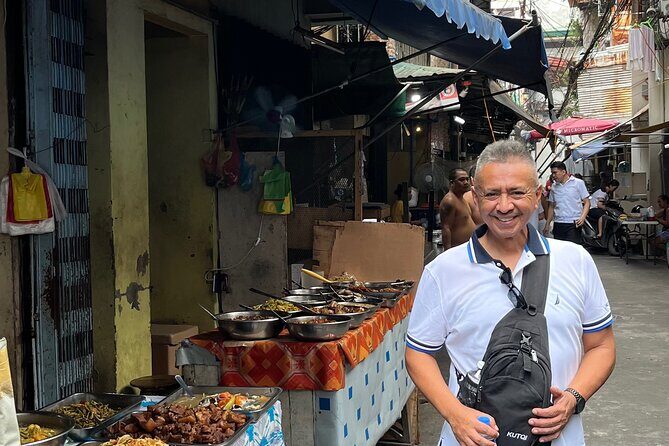
The tour starts at 1919 Grand Cafe in Binondo (117 Juan Luna St). Binondo is a practical place to begin because it’s already connected to lots of movement in Manila, and meeting at a fixed point keeps the start simple. From there, you’ll head into the areas that feel like real Manila street life—especially the Divisoria zone described as a major shopping district.
The tour includes a walking tour, so you’re not just hopping on and off rides. Plan on a mix: some time traveling by local transport, then time on foot in market lanes and nearby streets. That combo is ideal for a first visit because you get both perspectives:
- From the ride: you see the wider neighborhood texture.
- On foot: you slow down and really look at what people buy and how they bargain.
Because the tour ends back at the meeting point, you’re not stuck figuring out a long return plan. That’s a comfort factor when you only have two hours and you want the day to stay easy.
Divisoria wet markets: what you’ll see and how to shop smart
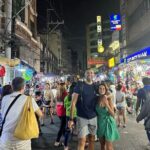
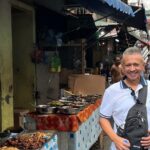
Divisoria is known for affordable prices and an enormous range of goods, and the wet market angle is key. You’re not just browsing shelves. You’re walking through a shopping world where fresh items are central—produce, seafood, and everyday ingredients people use right away.
Here’s what I’d watch for during the market part of the walk:
- What people pick up first: locals often grab items that look freshest or best value, not what looks the fanciest from a distance.
- How stalls are arranged: you’ll notice practical layouts where selling is fast and decisions happen quickly.
- Price conversations: if you’re the type who likes to try the local shopping rhythm, this is the kind of place where bargaining culture shows up naturally.
This is also where you’ll get the most value from having a local guide. When you know what to ask—What’s in season? Why this stall? What’s a fair price?—your experience shifts from sightseeing to actually understanding how the market works.
One caution: markets can be crowded and tight. Keep your phone and wallet secure, and don’t plan to stop for long photos right in the middle of a pathway. If you want a clear shot, step slightly to the side and let the flow pass.
Street food reality check: plan for snacks, but budget for it
Street food is part of the overall vibe of the tour—especially around market areas where locals eat between shopping errands. The key point for you is that snacks are not included. That means you’ll want to bring extra money for small bites, drinks, or whatever looks best to you in the moment.
I like that the tour doesn’t force a set menu. Instead, you have guidance to help you choose. That’s helpful because street food quality can vary from stall to stall, and a local guide can point you toward choices that make sense.
Practical tip: since bottled water is included, you don’t need to buy a drink immediately, but you’ll likely want something else to pair with food. Build a simple budget for:
- one or two small snacks
- a drink (if you don’t want water the whole time)
Also, go into it with flexible expectations. Some street food will be more about texture and comfort than fancy presentation. If you’re open to that, you’ll have a better time.
Your guide and group size: how the pace feels
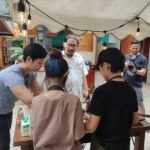
This tour runs with a maximum of 10 travelers, which changes the experience. Big tours can feel like you’re being dragged from stop to stop. A smaller group usually means the guide can slow down when people need time, and they can give direct answers instead of speaking at everyone like a crowd.
The walking is a real part of the plan. One review made it clear that the tour includes a lot of walking and isn’t suitable for wheelchair users. The helpful piece is that the guide can make alternative arrangements. So if you have mobility concerns, don’t assume it will work automatically—but do know the guide may be able to adjust how you participate.
What you can do to make the walking easier:
- wear shoes with grip (market floors can be slick)
- bring light layers (indoors and outdoors can feel different)
- pace yourself on the first stretch so you don’t run out of energy before the market segment
The guide’s job isn’t only to explain. It’s also to keep the group safe and moving, especially in dense market corridors. When that’s done well, the whole thing feels smooth, even if the streets are not.
Price and value: is $50 worth two hours?
At $50 per person for about 2 hours, you’re paying for more than a ride. You’re paying for a local guide, the walking tour component, and bottled water. For a city like Manila, the guide piece is the value driver.
Why? Because the difference between seeing a market and understanding a market is massive. In places like Divisoria, small details matter—what people buy, where foot traffic makes sense, how locals shop, and how to avoid feeling lost. A guide helps you get those answers quickly, and you’re not spending your limited time guessing.
Also, you’re getting local transport included in the experience flow. That matters because riding jeepneys and tricycles isn’t just transportation—it’s an on-the-street window into daily life. It gives the tour a Manila feel right away.
What’s not included is snacks. That’s normal for short tours, but it means your real cost may be a bit higher if you plan to eat. Still, that’s usually a good trade because you can choose exactly what you want rather than paying for a fixed food stop you might not like.
If you’re traveling with friends and sharing costs for food, this can feel even better. If you’re solo and want to taste a lot, set aside a little extra for bites.
Who this tour suits best
This is a great fit if you want:
- A first-timer Manila taste without needing all-day planning
- Market and street-level experiences, especially Divisoria shopping energy
- Local transport as part of the cultural lesson
- A guide who helps you navigate and interpret what you’re seeing
It’s not a great fit if you:
- need a wheelchair-friendly route (the tour is not fully suitable for wheelchairs)
- hate walking or can’t handle a lot of time on foot
- want a low-effort, minimal-walking day
Also, if you’re the type who loves food but hates making decisions, you might appreciate that there’s guidance—just remember snacks aren’t included, so you’ll still choose and pay for bites.
Should you book this Jeepney & Tuk Tuk Adventure?
I think it’s worth booking if you’re trying to understand Manila as a living city, not just a list of landmarks. The combination of local transport, Divisoria wet market time, and a small-group walking tour gives you a high return on a short schedule.
Before you go, be honest with yourself about one thing: walking. If you’re comfortable on your feet and you enjoy shopping-energy streets, you’ll likely have a great time. If mobility is limited, ask for alternative arrangements early and confirm what the guide can do for your needs.
If you want a Manila day that feels like real life—market chatter, local buying habits, quick street-food moments—this is a strong choice.
FAQ
How long is the Jeepney & Tuk Tuk Adventure?
The tour lasts about 2 hours.
Where does the tour start?
It starts at 1919 Grand Cafe, 117 Juan Luna St, Binondo, Manila, 1006 Metro Manila, Philippines.
Does the tour end at the same meeting point?
Yes. The activity ends back at the meeting point.
What does the tour cost?
It costs $50.00 per person.
What’s included in the price?
The tour includes bottled water, a local tour guide, and a walking tour.
Are snacks included?
No. Snacks are not included.
How many people are in the group?
The maximum group size is 10 travelers.
Is this tour suitable for wheelchair users?
The tour is not fully suitable for wheelchairs. It is not wheelchair friendly, but the guide may be able to make alternative arrangements.
Can I cancel for a full refund?
Yes. You can cancel up to 24 hours in advance of the experience start time for a full refund.