REVIEW · MANILA
A Night in Old Manila: Intramuros Walking Tour
Book on GetYourGuide →Operated by Let's Go Intramuros · Bookable on GetYourGuide
Intramuros at night hits different. This 2-hour walk turns the walled city into a living story, with glowing streets and historic stops placed in the right order for an evening pace. I especially like the DOT-accredited guide who translates tough moments into clear, human scenes, and the chance to stand where Dr. Jose Rizal’s final days unfolded. The one drawback to plan for is that it is a public joiner tour, so you will share the walk with up to 25 people and you should expect some crowding at popular photo points.
I also love how the tour mixes famous landmarks with the places that feel more personal at night, like the Fort Santiago dungeon and the wartime stops that explain why Intramuros still matters. If you want history without a lecture vibe, this is built for that. Just know it is not a sit-down museum day, so bring a steady walking mindset and an umbrella if the weather turns.
In This Review
- Key things to know before you go
- Why Intramuros Looks Different After Sunset
- Starting at Fort Santiago Ticket Booth and Getting Through Faster
- Fort Santiago at Night: Walls, the Dungeon, and Rizal’s Final Days
- Manila Cathedral in the Evening: A Quick Stop That Sets the Tone
- Memorare Manila 1945: Understanding the Wartime Reminder
- San Agustin Church: Colonial Stone and the Calm of Night
- Plaza San Luis Complex and the Walk to Casa Manila
- Guides Like Cedhie and Steven Make the Stories Click
- Price and Value: What $23 Buys You (and What It Doesn’t)
- Who This Tour Is Best For
- Small tips so your night goes smoothly
- Should You Book A Night in Old Manila Walking Tour?
- FAQ
- FAQ
- Where do I meet the guide, and when does the tour start?
- How long is the A Night in Old Manila walking tour?
- What sites are included during the tour?
- Is a guide included, and what languages do they speak?
- Is the price ($23) for admission and the guide?
- Do I need to bring anything?
- Is skipping the ticket line included?
- Is it wheelchair accessible, and can I book a private group?
- Are alcohol, drugs, or food included?
Key things to know before you go
- DOT-accredited English-speaking local guide (English and Tagalog support)
- Fort Santiago first, including the dungeon and Rizal’s chapel cell area
- Four short landmark visits after Fort Santiago: Manila Cathedral, Memorare Manila 1945, San Agustin Church, and Plaza San Luis complex
- Finish at Casa Manila, where colonial-life details land at the end of the walk
- Skip-the-ticket-line style entry at covered sites, plus bottled water and photo stops
- Small group size (max 25), with a private group option if you want more control
Why Intramuros Looks Different After Sunset
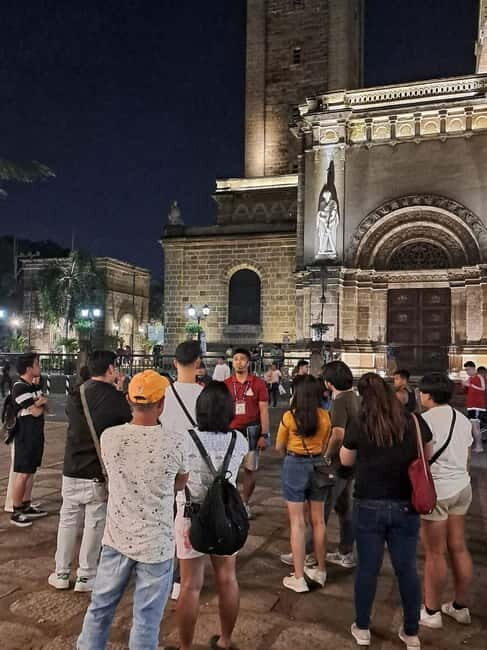
Daytime Intramuros is interesting. Nighttime Intramuros is clearer. Street lighting, the calm pace, and the way the stone structures hold the darkness all make the stories feel less like facts on a board and more like something that happened right here.
You get a guided route designed for evening attention spans. Stops are frequent, but each one is short enough that you’re not stuck waiting around. That matters because the real “wow” in Intramuros is the combination of place + timing.
You can also read our reviews of more walking tours in Manila


Starting at Fort Santiago Ticket Booth and Getting Through Faster
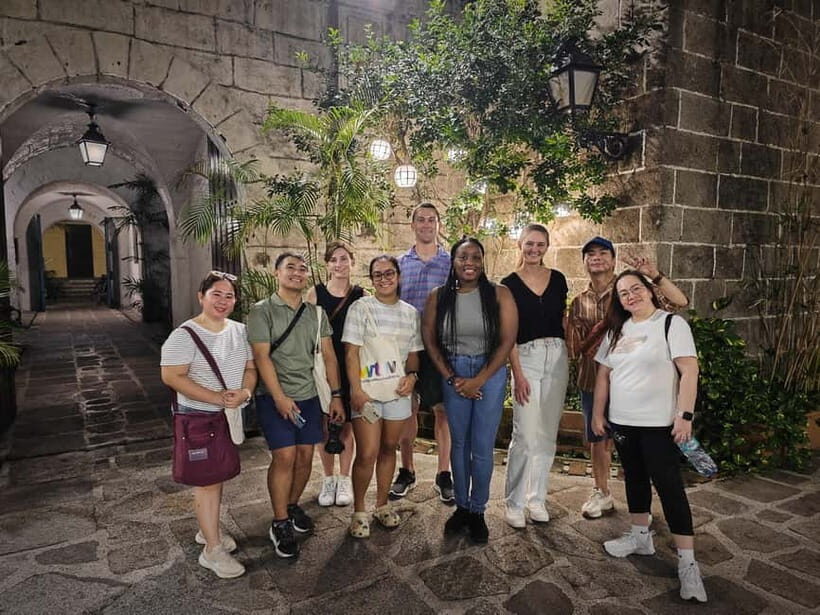
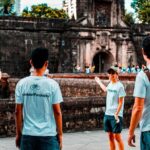
The tour meeting point is at the Fort Santiago Ticket Booth, with a call time of 5:15 PM and a 5:30 PM start. This timing is smart: you arrive while there’s still light to get your bearings, then you move into full night atmosphere as the walk continues.
One practical win is that you get admission fees included and the tour is set up to help you skip the ticket line at participating stops. For an evening tour, that can save you from losing your prime sunset-to-night window to queues.
If your group includes kids or you just prefer momentum, this kind of planned flow is a big deal. It keeps the walk moving, and you’re not doing the awkward “Where do we wait?” dance outside major sites.
Fort Santiago at Night: Walls, the Dungeon, and Rizal’s Final Days
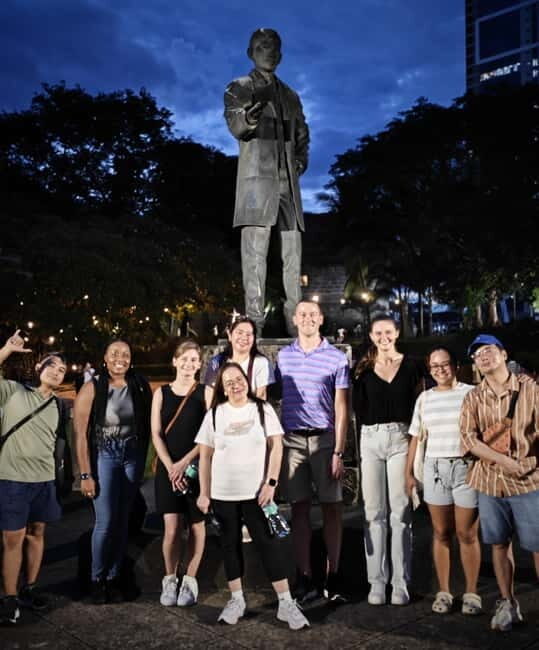
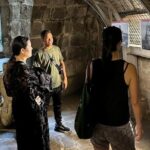
Fort Santiago is where the tour’s emotional weight starts, and it is also where you get your longest guided block (about an hour). You’re walking the citadel that shaped major chapters of Philippine history, and at night the fortress walls feel more imposing than they do in daylight.
You will hear the stories tied to the dungeon, including haunting wartime context. The value here is not shock for shock’s sake. It’s understanding the space: how prisoners were held, how the environment connects to the events, and why this place became a symbol.
Then the tour focuses on Dr. Jose Rizal’s final days, taking you to his chapel cell area. This is one of the most powerful parts of the walk because it shifts from big-picture conflict to a person’s timeline. You’re not just hearing about history; you’re connecting dates and decisions to a specific room and structure.
Manila Cathedral in the Evening: A Quick Stop That Sets the Tone
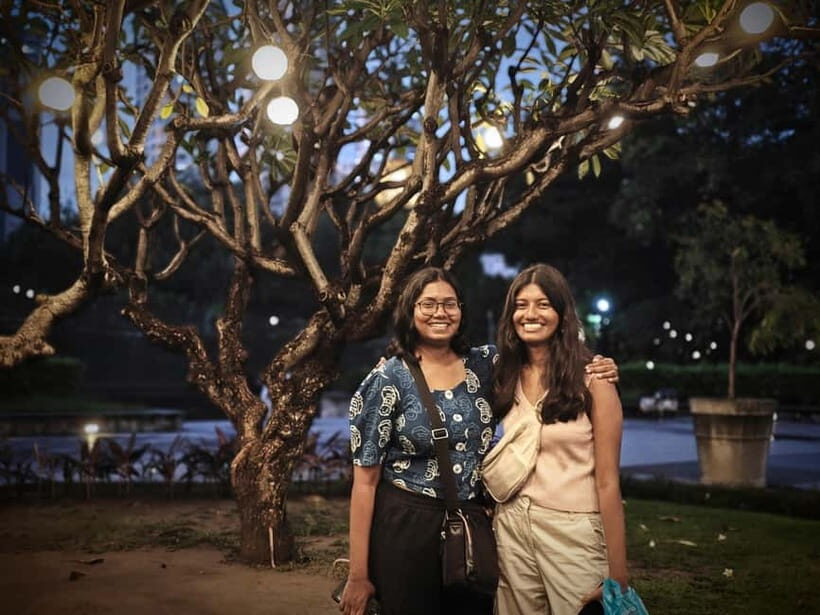
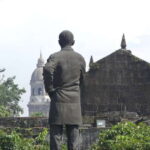
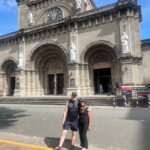
After Fort Santiago, you move to Manila Cathedral for a shorter guided visit (around 15 minutes). This is the kind of stop that works well after a heavier site like Fort Santiago. You get a reset without losing the overall story arc.
At night, churches read differently. Details you might miss during the day—shadow edges, doorway framing, and how the building holds light—become easier to notice. The guide helps connect the cathedral to the broader layers of colonial-era Manila, so the stop feels purposeful instead of rushed.
A practical tip: if you like photos, do not wait until the last minute here. Night lighting looks great, but it also means you’ll get fewer chances to adjust your shot once the group keeps moving.
Memorare Manila 1945: Understanding the Wartime Reminder
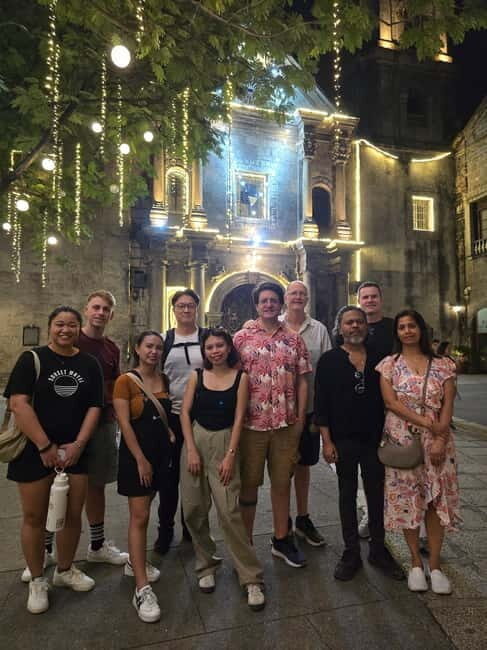
Next up is Memorare Manila 1945 (also about 15 minutes). The name alone tells you this is not just a pretty evening stop. It’s a wartime memory point, and the guide’s job is to explain what the site represents and why it belongs in a night walk through Intramuros.
This stop is valuable for two reasons. First, it anchors Intramuros in the modern story of surviving conflict, not just the Spanish-era chapters. Second, it helps you see why the city’s walls weren’t only about defense in the past—they carry meaning now.
If you’re the type who likes to make sense of the “why” behind a landmark, you’ll appreciate that this part is brief but focused.
You can also read our reviews of more evening experiences in Manila


San Agustin Church: Colonial Stone and the Calm of Night
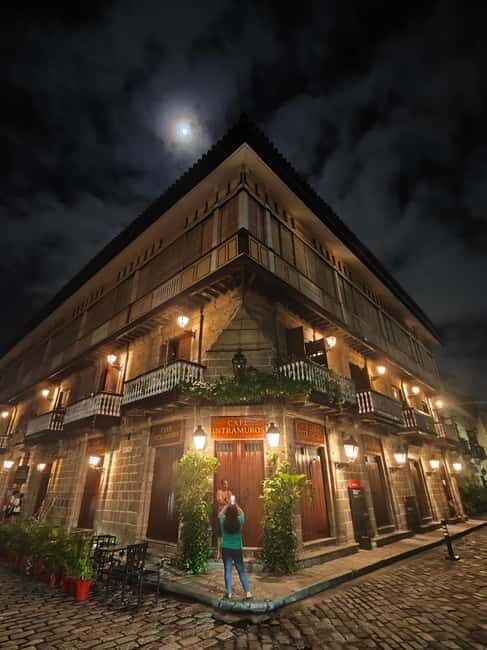
Then you go to San Agustin Church for another short guided visit. San Agustin works at night because it feels steady and grounded, like the city is holding still for a moment.
This is one of those stops where you’re watching the guide do two things: explain context and point out what to look at. Even with only about 15 minutes, you can get a real sense of how the church fits into Intramuros as a whole.
If you’re not a museum person, you might still enjoy this part because it’s visual and human-scale. You’re not just collecting facts; you’re learning how to look at old structures in a way that makes them make sense.
Plaza San Luis Complex and the Walk to Casa Manila
You finish the middle stretch at Plaza San Luis Complex for around 15 minutes. This stop helps tie together the surrounding feel of Intramuros—its streets, its transitions, and the colonial design language that shows up across buildings.
The final stop is Casa Manila, where you get the most natural “end point” for an evening tour. By the time you arrive here, you’ve already traveled through fortress stories, wartime reminders, and church context. Casa Manila then acts like a bridge to everyday colonial life, so the night ends with a clearer picture of what life inside these walls looked like, not just what happened to them.
Because Casa Manila is at the finish, you can slow down and absorb the atmosphere without the pressure of catching the next site. It’s also a good moment for photos, since the tour includes photo opportunities on key landmarks.
Guides Like Cedhie and Steven Make the Stories Click
One of the biggest reasons this tour earns high marks is how the guide communicates. People highlight guides such as Cedhie and Steven, with the common thread being clear structure and engaging explanations.
I like the way the best guides use supporting tools to make old material feel real. In past experiences with this tour style, you may even see the guide use old photos to help you picture what the area looked like before cars and neon changed the scene. That makes it easier to follow when history gets complicated.
It also helps that the tour encourages questions. If something feels confusing, you can ask and get an answer right there in the setting, not later when you’re back at your hotel.
Price and Value: What $23 Buys You (and What It Doesn’t)
At $23 per person for about 2 hours, the value is strong if you want guided access and organized timing. Your ticket covers a Department of Tourism English speaking local guide, admission fees to the sites, and even bottled water.
You also get two things that are hard to price: time savings and focus. The included setup helps you move through major stops without the typical delay of figuring out entrances and lines on your own. And since the guide runs a planned route, you’re not guessing which areas matter most at night.
What’s not included is equally important: hotel pickup/drop-off, transportation, and food and beverages. So if you’re staying farther out, you’ll want to plan your own way to the meeting point and then grab dinner afterward.
Who This Tour Is Best For
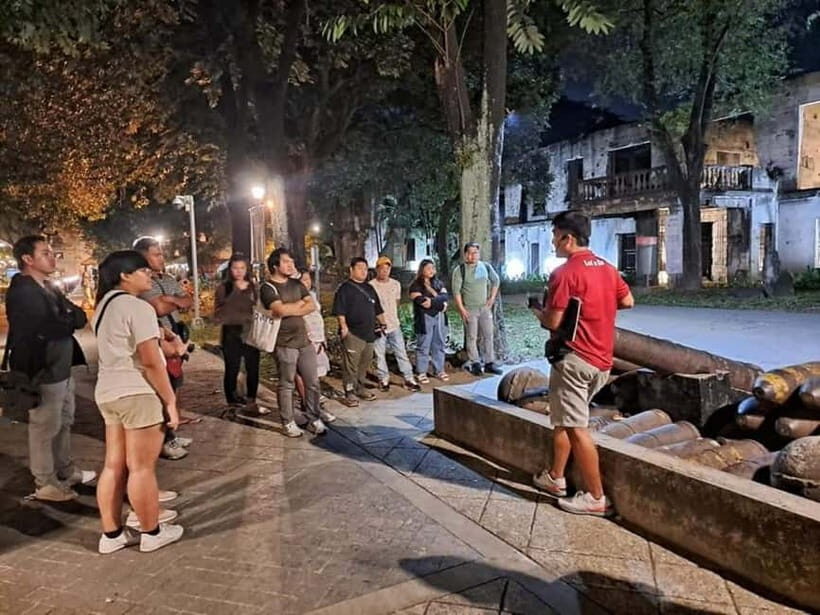
This is a great fit if you like history but don’t want a full-day crawl through exhibits. The pacing works well for people who want a guided story walk with short stops and enough time to feel the atmosphere.
It’s also a strong choice for families. Even with an 8-year-old in the group in at least one experience, the tour still landed as a fun, educational adventure. You’ll still want to manage expectations: this is a walking tour, and some kids do better with snacks and breaks than adults do.
If you’re traveling solo, you’re not stuck on your own either. It’s a public joiner tour with a small group cap, plus private group availability if you want a quieter experience.
Small tips so your night goes smoothly
Bring an umbrella and water. Weather can change fast, and you’ll appreciate being ready. Also remember the basic rules: no alcohol or drugs.
Wear shoes with good grip. Cobblestones and uneven ground are part of the Intramuros vibe, especially at night. And since the tour is designed for a steady flow, you’ll be happiest if you treat it like an evening stroll with stops, not a slow wandering day.
Should You Book A Night in Old Manila Walking Tour?
Book it if you want Intramuros at the time when it feels most alive. The mix of Fort Santiago, the dungeon, Rizal’s chapel cell, and the ending at Casa Manila gives you a full arc: fortress to faith, war to memory, and daily life to finish.
Skip it if you hate walking or if you need lots of downtime between stops. Also, it’s not suitable for people over 95 years, so check your group’s comfort level first.
FAQ
FAQ
Where do I meet the guide, and when does the tour start?
Meet your guide at the Fort Santiago Ticket Booth. Call time is 5:15 PM and the tour starts at 5:30 PM.
How long is the A Night in Old Manila walking tour?
The tour lasts 2 hours.
What sites are included during the tour?
You’ll visit Fort Santiago, Manila Cathedral, Memorare Manila 1945, San Agustin Church, Plaza San Luis Complex, and you’ll finish at Casa Manila.
Is a guide included, and what languages do they speak?
Yes. The tour includes a DOT-accredited English-speaking local tour guide, and languages offered are English and Tagalog.
Is the price ($23) for admission and the guide?
Yes. The price includes the local guide fee, admission fees to sites, and bottled water.
Do I need to bring anything?
You should bring an umbrella and water.
Is skipping the ticket line included?
Yes. The tour includes a skip the ticket line arrangement.
Is it wheelchair accessible, and can I book a private group?
It is wheelchair accessible, and private group options are available.
Are alcohol, drugs, or food included?
Alcohol and drugs are not allowed. Food and beverages are not included in the tour price.