REVIEW · LUZON
Manila Private Walking Tour With A Local Guide (Private Tour)
Book on Viator →Operated by Guydeez · Bookable on Viator
A quick walk turns Manila from chaos into order. You’ll follow a local guide through some of the city’s most important landmarks—mainly from the outside—with history you can actually connect to what you see. This private walking tour keeps things manageable, and the itinerary can shift to match your interests.
I especially like two things about it. First, the focus on local perspective at each stop helps you understand why these places matter, not just what they look like. Second, the tour can be customized, and guides such as Alvin, Jonas, and JoMarie have been praised for adjusting the plan to your pace—Jonas even modified the route when someone needed to walk less.
One thing to consider: this is a city tour that centers on exteriors, so if your main goal is lots of time inside museums or churches, you may need to add that separately. The itinerary’s listed entries are free for the stops shown, but extra museum time can change the overall cost.
In This Review
- Key highlights worth your attention
- Why a private Manila walking tour fixes the city’s biggest problem
- Price and value: what $78.28 buys (and what changes it)
- Meeting up, pace, and language: how to make the day feel smooth
- Stop 1: National Museum of Fine Arts—how to use a “free” exterior visit
- Intramuros core: Manila Cathedral and San Agustin Church in one continuous story
- Manila Cathedral (30 minutes)
- San Agustin Church – Immaculate Conception Parish (30 minutes)
- Rizal Park (Luneta and Bagumbayan): where the walk shifts from walls to ideas
- Binondo Church near Ongpin Street: a powerful final stop before you branch off
- Customization that actually helps: adding museum time without wasting hours
- Logistics on the ground: private doesn’t mean complicated
- Who this tour fits best (and who should think twice)
- Should you book this private walking tour of Manila?
- FAQ
- FAQ
- How long is the Manila private walking tour?
- Is this tour private or shared?
- Where does the tour start and end?
- Which languages do the guides speak?
- Are transport costs included in the price?
- Are food and drinks included?
- Are tickets included for the attractions?
- Can the itinerary be customized?
- Is the tour wheelchair-friendly or accessible?
- Can I cancel for a full refund?
Key highlights worth your attention
- Private, exclusive group: it’s just your party, with no mixing with strangers.
- Guide-led, not script-led: you can tell the guide what you care about ahead of time.
- Intramuros focus: cathedral + the old church area that survived the worst of Manila’s fighting.
- Rizal Park timing: a calm mid-route stop called Luneta and Bagumbayan.
- Binondo add-on area: Binondo Church near Ongpin Street, a key stop for Manila’s older Catholic footprint.
- Free listed access for main stops: the planned stops are shown with free admission for the experience as listed.
Why a private Manila walking tour fixes the city’s biggest problem
Manila can feel like a lot at once. Roads, neighborhoods, and landmarks all blur together—especially if you’re trying to line up history, photos, and food while also dealing with heat and crowds. This kind of private walking tour is a simple solution: one guide, one plan, and you don’t waste time figuring out what to prioritize.
What makes this work particularly well is the “talk first, walk second” approach. Before you start, the guide contacts you to understand what you want out of Manila, and that shapes what you see. You’re not stuck in a rigid route that ignores your interests.
You’ll also get more than facts. The value is how the guide connects buildings to the city’s changing identity—Spanish Intramuros, the national story around Rizal Park, and the older religious institutions in Binondo. It’s a good way to get your bearings fast.
You can also read our reviews of more walking tours in Luzon


Price and value: what $78.28 buys (and what changes it)
At $78.28 per person, this tour sits in the “pay for convenience and guidance” category rather than “cheap sightseeing.” That’s not automatically good or bad—it depends on what you’re buying with your money.
Here’s the value logic I’d use:
- You’re paying for a private guide who customizes your route and keeps the flow efficient.
- The time window is flexible (listed as about 2 to 8 hours), so you can match the tour to how fast you move and how much you want to do.
- The tour includes help booking tickets if you decide to add museum visits.
Now the cost reality check. The tour doesn’t include transport during the walk, and it also says tickets to any attractions aren’t included. That said, the itinerary’s planned stops are marked with free admission on the listing you provided. So if you keep the trip to the planned exteriors, you may control costs better than with a tour that stacks paid attractions.
If you expect to walk inside multiple museums or pay for major paid sites, expect your total spend to rise. One of the weaker points from past feedback was that the price felt high compared with what you could find on your own—so if you’re a “go solo and book everything myself” type, this may not feel like the best deal.
Meeting up, pace, and language: how to make the day feel smooth
This tour starts with a meetup at your accommodation (if you’re in the city) or at the cruise terminal. It ends back at the meeting point, so you’re not scrambling to figure out how to close the loop.
You’ll want to use the customization part of the process. Tell your guide what you care about—art, churches, early Manila, or simply landmarks you can photograph well from the street. In particular, some guides have been praised for advising extra ideas beyond the official plan, and that’s a big practical win if you’re trying to use your limited time well.
Language-wise, the guide can speak English, Spanish, or French. That matters more than you might think. If you’re able to ask simple questions and get direct answers, the whole walk becomes more meaningful.
Also keep in mind: service animals are allowed, and the route is near public transportation. So even if you need to step out briefly for a break, it’s not a remote trek.
Stop 1: National Museum of Fine Arts—how to use a “free” exterior visit

The day often begins at the National Museum of Fine Arts, located between Intramuros and Rizal Park. This matters because it’s a natural hinge point: you’re transitioning from the old walled city area toward the national spotlight around Rizal Park.
The museum is described as the most important museum in the Philippines in the information you provided. Even if the tour’s emphasis is mainly on exteriors, this stop works as a setup. You get context for what the museum represents before you move into the next historic zones.
One practical advantage here: it’s listed with free admission for the experience as shown. That makes it a low-pressure start. You can appreciate the building and the bigger story without committing to paid entry right away—then decide later if you want to add museum time through the guide’s customization.
Possible downside: if you love museums and want a lot of indoor time, this stop may feel like a warm-up rather than the main event. Think of it as the orientation piece.
Intramuros core: Manila Cathedral and San Agustin Church in one continuous story
The tour then moves into Intramuros territory, which is the old Spanish city fortress area. This is where Manila’s layered identity becomes visible fast: colonial-era architecture, religious landmarks, and the sense that many chapters of the city are written on stone.
You can also read our reviews of more guided tours in Luzon




Manila Cathedral (30 minutes)
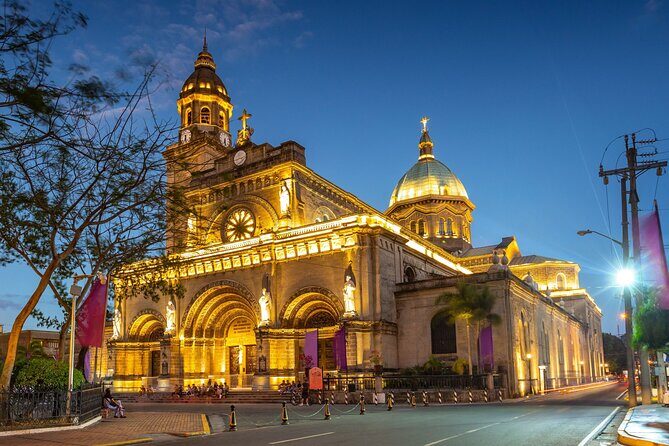
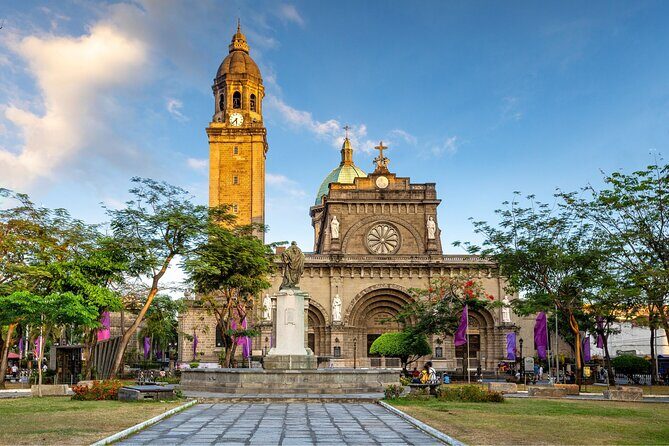
Manila Cathedral is identified as one of the four basilicae minores and the seat of the Archdiocese of Manila. Located in Intramuros, it’s part of the central square area opposite other historic structures.
Why this stop is good on a walking tour: it gives you a “center of gravity.” Once you understand what the cathedral represents, other details around Intramuros make more sense. You’re also in an area where you can line up future sights easily after your walk, because the cathedral is a landmark people build their plans around.
San Agustin Church – Immaculate Conception Parish (30 minutes)
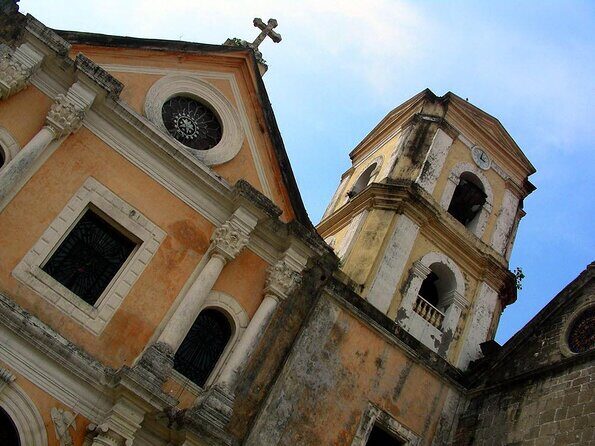
Then comes San Agustin Church, described as the oldest church foundation in the Philippines. The first church was built in 1571, and this church is noted as the only building that escaped destruction of Intramuros during the Battle of Manila.
That last detail is huge. It’s not just about age; it’s about survival through a major rupture in Manila’s history. On a street-level tour, that’s the kind of fact that turns “interesting building” into “I understand why this building carries weight.”
Even if you’re mainly seeing the exterior, this stop earns its time because it creates a mental map: this is the physical Manila that endured.
Rizal Park (Luneta and Bagumbayan): where the walk shifts from walls to ideas
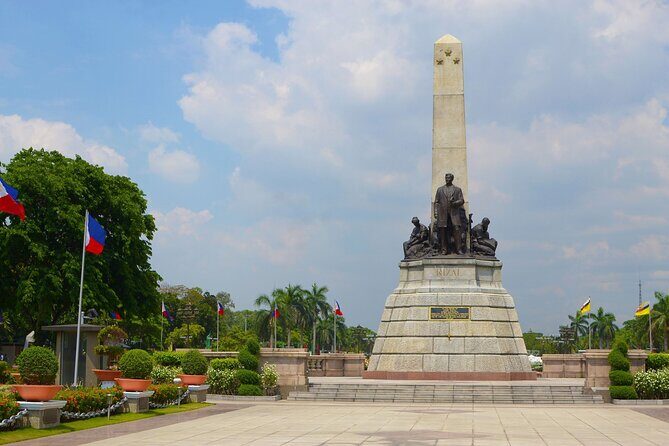
Next is Rizal Park, also known as Luneta and Bagumbayan. It’s described as being in the heart of Manila and located south of Intramuros at the northern end of Rox—so you’re moving from the fortress mindset to the national story around José Rizal.
The benefit of a guide here is simple: you don’t just stop at a park. You get a sense of what makes this public space important and how it connects to the city beyond Intramuros.
The listed time is 30 minutes. That’s enough to slow down, take photos, and get your head out of “architecture mode” for a bit. It also gives you a chance to adjust your day if your group wants a longer break or if you’re feeling a bit tired.
One consideration: if you’re walking in the midday heat, parks can still feel long if you’re rushing. If you want a calmer rhythm, ask your guide to manage pacing so you’re not racing between stops.
Binondo Church near Ongpin Street: a powerful final stop before you branch off
The route then heads to Binondo Church, located in Barangay Binondo on Ongpin Street. It’s also identified as one of the four basilicae minores of the Archdiocese of Manila.
Binondo is known as a historic district, and this stop helps anchor that area in something more specific than “a neighborhood to wander.” The listed time is 40 minutes, which suggests it’s treated as a slightly bigger or more photo-friendly segment.
Why I like ending here: it’s a useful springboard. Even after the tour ends back at the meeting point, you’ll have a stronger sense of where you are relative to Manila’s older commercial and religious corridors. If your guide also gave you ideas beyond the official list (some have been praised for exactly that), you can use that advice to keep exploring in a more targeted way.
Potential drawback: if you only want a tight “best-of” list, a 40-minute stop can feel like more time than you planned. But if you like churches and want time to look closely at details, it’s a fair allocation.
Customization that actually helps: adding museum time without wasting hours

A key part of this tour is that it’s not just a fixed route. The overview states that if you wish to include a museum visit, your guide can customize the itinerary to fit your interests, and the guide contacts you beforehand to learn your preferences.
There’s an important practical detail embedded in the fine print: you get help from the team to book tickets for the visits you want. That reduces the “where do I buy this” stress and can save time if you’re trying to fit more than exterior sightseeing into one day.
Just remember: tickets to attractions are listed as not included. So if you add a paid museum, you’ll likely pay those costs on top of the tour price. Think of the guide as your time-saver and decision-helper, not a magic ticket machine.
If you want the best experience, tell the guide what success looks like. Example: art focus vs. church focus vs. neighborhood focus. That way the customization stays aligned with what you actually care about.
Logistics on the ground: private doesn’t mean complicated
Because it’s private and exclusive, your guide isn’t balancing multiple groups. That often means better pacing and easier adjustments. Some guides have been praised for being on time and for modifying the tour when someone had physical restrictions—so the walking element doesn’t have to be rigid if you communicate your needs.
Transportation isn’t included. You can use public transport at your own expense if you need it during the day. The tour is near public transportation, which helps if you decide to move between zones without it turning into a long taxi debate.
Also, the tour uses a mobile ticket. That’s handy for entry days and reduces paper clutter.
One more small note: the listed stops are described as admission-free in the experience as shown. That’s a good sign for controlling spending if you’d rather put money into meals and local snacks instead of repeated attraction fees.
Who this tour fits best (and who should think twice)
This tour is a great match for:
- Families who want a structured route but also prefer flexibility.
- Solo travelers who want context and direction instead of staring at maps all day.
- Couples who like walking at a comfortable pace with someone explaining what matters.
It’s also smart for people who want a meaningful cultural orientation without committing to long museum marathons.
Who should think twice:
- If your plan is mostly indoor museum time, this tour’s “city tour and not inside monuments” emphasis may feel too exterior-focused.
- If you’re extremely budget-driven and don’t mind organizing sites on your own, some people have found the price less appealing compared with DIY options.
If you’re somewhere in the middle—want guidance, but also want control—this is a strong option.
Should you book this private walking tour of Manila?
I’d book it if you want a clean way to connect Manila’s major landmarks—Intramuros, Rizal Park, and Binondo—into one easy story. The private format, the guide’s ability to tailor your interests, and the way some guides like Alvin, Jonas, JoMarie, and Perlie have been described as friendly and flexible are all exactly what make a walking tour worth it.
I wouldn’t book it if your main goal is maximum time inside monuments and paid attractions. In that case, you’ll probably end up paying extra anyway, and you may feel the tour price is more than you needed.
Here’s my simple decision rule: if you want direction, context, and a plan you can adjust, this tour is likely a good fit. If you want to do everything independently with zero guidance, you can probably build a similar route—but you’ll spend more time figuring it out.
FAQ
FAQ
How long is the Manila private walking tour?
The duration is listed as about 2 to 8 hours, depending on how your itinerary is customized.
Is this tour private or shared?
It’s private and exclusive. Only your group participates.
Where does the tour start and end?
It starts at HXVC+M5V, Manila, Metro Manila, Philippines, and ends back at the meeting point.
Which languages do the guides speak?
Guides can speak English, Spanish, or French in-person.
Are transport costs included in the price?
No. Transportation isn’t included, and if you use public transport during the tour, that cost is at your own expense.
Are food and drinks included?
No. Drink or food breaks are not included, so you’ll handle that separately if you want a pause.
Are tickets included for the attractions?
Tickets to attractions are listed as not included. The planned stops shown are marked as free admission in the itinerary, and the team can help you book tickets if you add museum visits.
Can the itinerary be customized?
Yes. You can request a custom itinerary, including the possibility of adding a museum visit.
Is the tour wheelchair-friendly or accessible?
The tour notes say that most travelers can participate, and a guide can modify the tour to accommodate physical restrictions (based on guide feedback). The exact accessibility details aren’t listed beyond that.
Can I cancel for a full refund?
You can cancel for a full refund if you cancel at least 24 hours before the experience starts.